
Short Answer
Definition of Unresolved Questions in Physics
Physics is the scientific discipline dedicated to uncovering the fundamental principles governing the universe. Despite remarkable progress in understanding phenomena such as gravity, electromagnetism, and quantum mechanics, significant aspects of reality remain elusive. These unresolved questions represent the frontiers of physics, where current theories fall short of providing comprehensive explanations. Addressing these mysteries is crucial not only for advancing scientific knowledge but also for deepening our grasp of existence and the cosmos.
Current Limitations in Physics
Modern physics, epitomized by the Standard Model, offers a detailed framework describing elementary particles and their interactions. However, this model is incomplete, leaving critical gaps in our understanding of the universe’s composition and behavior. Key unknowns include the nature of dark matter and dark energy, as well as the challenge of unifying quantum mechanics with general relativity. These gaps highlight the complexity of the cosmic puzzle and the need for new theoretical breakthroughs.
Dark Matter: The Invisible Cosmic Scaffold
Dark matter constitutes approximately 27% of the universe’s total mass-energy content, yet it remains undetectable through direct electromagnetic observation. It exerts gravitational influence, shaping the formation and dynamics of galaxies, but its fundamental particles have not been identified. This mysterious substance acts as an unseen framework, guiding the large-scale structure of the cosmos. Understanding dark matter is pivotal for explaining how matter aggregates and how galaxies evolve over cosmic time.
Dark Energy and the Accelerating Universe
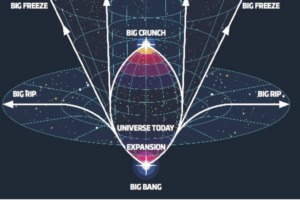
Dark energy is a perplexing force responsible for the observed acceleration in the expansion of the universe. Unlike gravity, which attracts, dark energy appears to exert a repulsive effect, pushing galaxies apart at an increasing rate. Theoretical models attempt to characterize this phenomenon, but no consensus has emerged. Its existence suggests that Einstein’s theory of general relativity may require modification or extension. Deciphering dark energy is essential for predicting the ultimate fate of the cosmos.
Reconciling Quantum Mechanics and Gravity
One of the most profound challenges in physics is integrating the principles of quantum mechanics, which govern the microscopic world, with general relativity, which describes gravitation and the structure of spacetime on large scales. These two frameworks operate under fundamentally different assumptions, making their unification difficult. Theories such as string theory and loop quantum gravity propose potential solutions, but experimental verification remains elusive. Achieving a quantum theory of gravity would revolutionize our understanding of black holes, the Big Bang, and the nature of space and time.
The Enigma of Time in Physics
Time presents a conceptual paradox within physics. In quantum mechanics, time is treated as a constant, external parameter, whereas in relativity, it is dynamic and influenced by gravity and velocity. This duality raises profound questions about the essence of time: whether it is a fundamental dimension, an emergent phenomenon, or a construct shaped by human perception. Resolving this paradox could provide deeper insights into causality, the flow of events, and the structure of reality.
Quantum Entanglement and Nonlocality
Quantum entanglement describes a phenomenon where particles become interconnected such that the state of one instantly influences the state of another, regardless of the distance separating them. This challenges classical ideas of locality and causation, famously described by Einstein as “spooky action at a distance.” Entanglement has practical implications for emerging technologies like quantum computing and secure communication, yet its fundamental nature remains a subject of intense investigation.
The Measurement Problem in Quantum Mechanics
The measurement problem concerns the process by which quantum systems transition from a superposition of states to a single observed outcome. This issue blurs the line between the observer and the observed, raising philosophical questions about the role of consciousness in physical reality. Resolving this problem could reshape our understanding of observation, reality, and the interplay between mind and matter.
Significance of Unanswered Questions in Physics
The unresolved mysteries in physics extend far beyond theoretical interest. Historically, breakthroughs in understanding natural laws have driven technological innovation, from electricity and semiconductors to nuclear power. Future advancements, including quantum technologies and novel energy solutions, depend on solving today’s enigmas. Moreover, these questions inspire philosophical reflection and cultural creativity, bridging science with broader human inquiry.
Interdisciplinary Impact and Cultural Relevance
The unknown aspects of physics stimulate dialogue across disciplines such as philosophy, theology, and the arts. These fields explore existential themes inspired by scientific mysteries, enriching our collective imagination and worldview. The boundary between empirical science and metaphysical speculation becomes a fertile ground for redefining humanity’s place in the universe.
Conclusion: The Ongoing Journey of Discovery
The mysteries that physics has yet to unravel are not mere gaps but vital frontiers that reveal the universe’s profound complexity. Each unanswered question invites new generations of scientists to explore with innovative perspectives and tools. This pursuit is a journey into the very fabric of reality, promising to transform our understanding of existence and the cosmos. As explorers charting unknown territories, physicists continue to decode the cosmic manuscript, advancing the narrative of human knowledge and wisdom.
FAQ
What are the main unresolved questions in physics?
The main unresolved questions include the nature of dark matter, dark energy, the reconciliation of quantum mechanics and general relativity, and the concept of time.
Why is understanding these mysteries important?
Understanding these mysteries is crucial for advancing scientific knowledge, driving technological innovation, and enriching philosophical and cultural dialogue.


Leave a Reply