
Short Answer
Definition of Solar Gravity
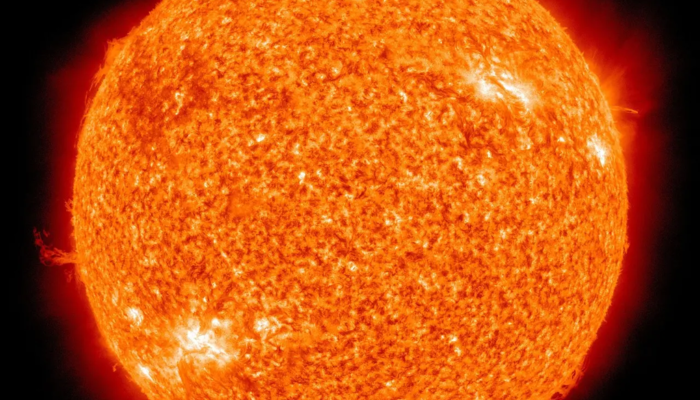
Solar gravity refers to the gravitational force exerted by the Sun, the central star of our solar system, which governs the motion and arrangement of all celestial bodies orbiting it. This force is the fundamental reason behind the stable orbits of planets, comets, asteroids, and smaller particles, maintaining the solar system’s intricate balance and structure.
The Sun’s Gravitational Influence in the Solar System
At the core of the solar system lies the Sun, whose mass accounts for about 99.86% of the entire system’s mass. This immense concentration of matter generates a powerful gravitational field that attracts and holds planets and other objects in their orbits. The Sun’s gravity acts as the centripetal force that prevents these bodies from drifting away into interstellar space, ensuring their continuous elliptical paths around the star.
Gravitational Attraction and the Inverse-Square Law
The strength of the Sun’s gravitational pull decreases with the square of the distance from it, a principle described by Newton’s law of universal gravitation. This inverse-square relationship means that while the Sun’s gravity is strongest on nearby planets, it still extends far beyond Neptune’s orbit, influencing distant regions such as the Kuiper Belt and the Oort Cloud. These outer zones contain icy bodies and comets, many of which occasionally get nudged inward by gravitational disturbances, yet remain under the Sun’s gravitational control.
Mechanics of Planetary Motion
Planetary orbits result from a delicate balance between two forces: the inertia of a planet moving forward in a straight line and the Sun’s gravitational pull drawing it inward. Without the Sun’s gravity, planets would continue in straight trajectories, escaping the solar system. Instead, the Sun’s gravity continuously redirects their motion, producing centripetal acceleration that curves their paths into stable, elliptical orbits as described by Kepler’s laws. This dynamic equilibrium between gravitational attraction and the planets’ forward momentum shapes the solar system’s orderly motion.
Orbital Velocity and Period Variations
The intensity of the Sun’s gravitational force varies with distance, which is reflected in the differing orbital speeds and periods of planets. For example, Mercury, the closest planet to the Sun, completes an orbit in just 88 Earth days at a speed of approximately 47 kilometers per second. In contrast, Neptune, the farthest recognized planet, takes about 165 Earth years to orbit the Sun, moving at a slower pace near 5.5 kilometers per second. This gradient illustrates how gravitational strength diminishes with distance, influencing the diverse orbital characteristics across the solar system.
Gravitational Spheres of Influence: Hill Spheres
Beyond governing planetary orbits, the Sun’s gravity also defines the gravitational domains around each planet, known as Hill spheres. These regions mark where a planet’s gravitational pull surpasses that of the Sun, allowing moons and satellites to orbit their host planet without being pulled away. For instance, Earth’s Hill sphere encompasses the Moon and numerous artificial satellites, maintaining their stable orbits despite the Sun’s dominant gravity. This hierarchical gravitational structure ensures the stability of moons, rings, and other satellite systems within the solar system.
Impact on Smaller Solar System Bodies
The Sun’s gravitational reach extends to smaller objects such as comets and asteroids, influencing their trajectories and behavior. Many periodic comets originate from the distant Oort Cloud, where gravitational perturbations from passing stars or galactic tides can alter their orbits, sending them into the inner solar system. As these comets approach the Sun, solar heat causes sublimation of their icy surfaces, forming the characteristic coma and tail. These phenomena highlight the Sun’s role in recycling material and shaping the dynamic environment of the solar system.
Solar Gravity and the Interplanetary Medium
Although the space between planets is sparsely populated, the Sun’s gravity still affects charged particles and cosmic dust within this interplanetary medium. These tiny particles experience continuous acceleration toward the Sun, contributing to the solar wind and influencing the shape of the heliosphere-the vast bubble that shields the solar system from harsh galactic radiation. The interplay between solar gravity and outward radiation pressure defines the boundaries of this protective region.
Orbital Resonances and Gravitational Interactions
Advances in astrophysics have revealed complex gravitational interactions within the solar system, such as orbital resonances. These occur when orbiting bodies exert regular, periodic gravitational influences on each other, often at ratios of whole numbers in their orbital periods. A notable example is the resonance between Jupiter and Saturn, whose combined gravitational forces have sculpted the asteroid belt and created gaps known as Kirkwood gaps. These resonances demonstrate that the Sun’s gravity is not a static force but an active participant in the solar system’s ongoing evolution.
Utilization of Solar Gravity in Space Exploration
Solar gravity is instrumental in spacecraft navigation through techniques like gravitational assists or slingshot maneuvers. By carefully flying close to planets, spacecraft can leverage the gravitational fields of the Sun and planets to increase speed or change direction without expending additional fuel. This method exemplifies how human technology harnesses natural gravitational forces to explore the solar system efficiently.
Why Solar Gravity Is Essential
The Sun’s gravitational force is the cornerstone of the solar system’s architecture and dynamics. It anchors planets in their orbits, governs the stability of moons and satellites, directs the paths of comets and asteroids, shapes resonant gravitational interactions, and influences the interplanetary environment. This invisible yet powerful force not only ensures the solar system’s long-term stability but also enables the spectacular celestial phenomena observed from Earth and beyond. Understanding solar gravity provides critical insights into gravitational physics and the cosmic mechanisms that govern astrophysical systems throughout the universe.
FAQ
What is solar gravity?
Solar gravity is the gravitational force exerted by the Sun that controls the motion of celestial bodies in the solar system.
How does solar gravity affect comets?
Solar gravity influences the trajectories of comets, often pulling them into the inner solar system from the Oort Cloud.
What role does solar gravity play in space exploration?
It is used in gravitational assists to enhance spacecraft speed and efficiency.


Leave a Reply