Is a hydrocarbon an atom or a molecule?

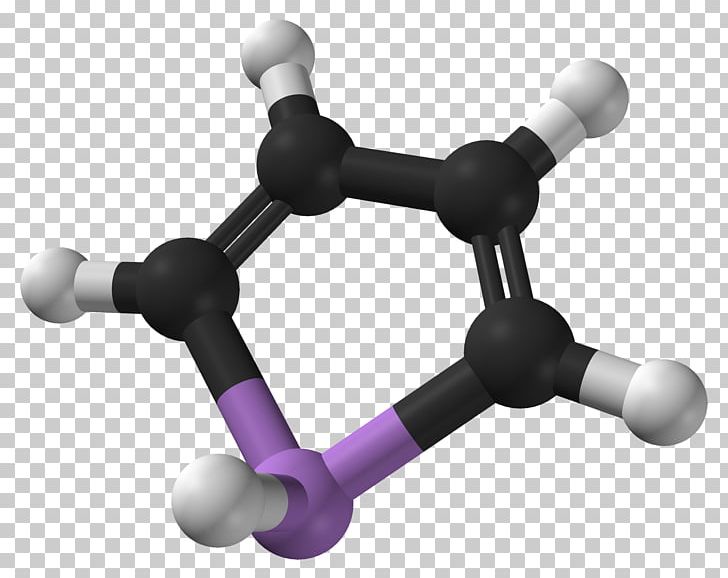
Definition of Hydrocarbons Hydrocarbons are organic compounds composed exclusively of carbon and hydrogen atoms. They serve as fundamental molecules in organic chemistry and play a pivotal role in various scientific fields such as materials science, energy production, and biological systems. Unlike atoms, which are the smallest units of matter, hydrocarbons are molecules formed by the […]

Read More →

What do the molecular orbitals of thiamine look like?

Definition and Molecular Composition of Thiamine Thiamine, commonly referred to as vitamin B1, is an essential nutrient that plays a critical role in cellular metabolism. It functions primarily as a coenzyme in the breakdown and utilization of carbohydrates, facilitating energy production within cells. At the molecular level, thiamine is composed of two key heterocyclic structures: […]

Read More →

How are instruments used to measure an electric current?

Definition of Electric Current Measurement Electric current measurement refers to the process of quantifying the flow of electric charge through a conductor over time. This fundamental task is essential in both theoretical physics and practical applications, enabling the monitoring and control of electrical systems. The unit of electric current is the ampere (A), which represents […]

Read More →

Can a particle accelerator be used as an energy source?

Definition of Particle Accelerators Particle accelerators are sophisticated devices designed to propel charged subatomic particles, such as protons and electrons, to extremely high velocities-often approaching the speed of light. These machines are fundamental tools in modern physics, enabling scientists to explore the fundamental components and forces of the universe by inducing high-energy collisions between particles. […]

Read More →

What are the hot research topics for nanotechnology?

Understanding Nanotechnology Nanotechnology is a multidisciplinary field that intersects physics, chemistry, and biology, focusing on the manipulation and study of materials at the nanoscale-approximately one billionth of a meter. At this scale, substances exhibit distinct physical and chemical behaviors that differ significantly from their bulk counterparts, opening vast opportunities for innovative research and applications across […]

Read More →

What are the uses of measuring cylinder?

Definition of Measuring Cylinders Measuring cylinders are essential laboratory tools designed to accurately quantify the volume of liquids. Characterized by their tall, cylindrical shape and graduated markings, these instruments provide precise volume measurements crucial for scientific experiments and various practical applications. Their versatility spans multiple fields, including chemistry, biology, engineering, and even culinary arts, highlighting […]

Read More →

Are MOSFETs an ideal choice for the qubits implementation?

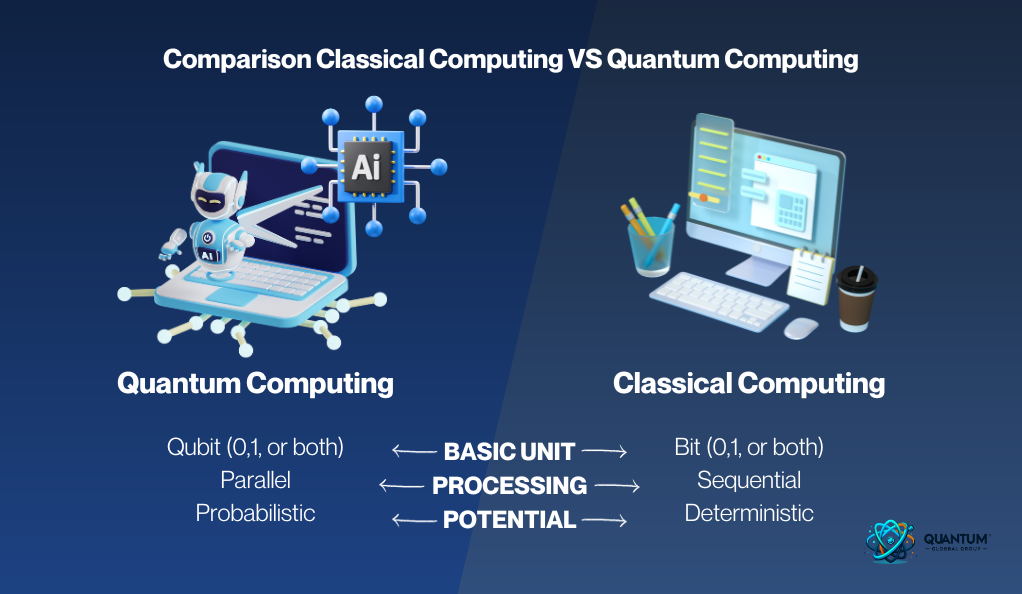
Definition of MOSFETs and Qubits Metal-Oxide-Semiconductor Field-Effect Transistors (MOSFETs) are semiconductor devices widely used as electronic switches in classical computing. They regulate electrical current flow by applying voltage to a gate terminal, which modulates charge carriers within a channel. Qubits, on the other hand, are the fundamental units of quantum information, capable of existing simultaneously […]

Read More →

Could quantum computing cause a technological singularity?

Understanding the Technological Singularity The technological singularity refers to a speculative future moment when technological progress accelerates beyond human control or comprehension, resulting in profound and unpredictable transformations in society. This concept has intrigued scientists, futurists, and technology enthusiasts, who debate the potential catalysts that might trigger such a radical shift. Among these, quantum computing […]

Read More →

What is the meaning of ‘Lagrangian’ in particle physics?

Definition of the Lagrangian in Particle Physics In particle physics, the term “Lagrangian” refers to a fundamental function that encapsulates the dynamics governing physical systems. Originating from analytical mechanics, the Lagrangian provides a framework to describe how particles and fields evolve over time. It is typically symbolized as L and defined as the difference between […]

Read More →

105-Bit Optical Memory on a Chip: Data Density Redefined

Definition of 105-Bit Optical Memory 105-bit optical memory on a chip is an advanced data storage technology that utilizes light to encode and retrieve information, offering a revolutionary alternative to traditional electronic memory systems. This innovation significantly increases data density by encoding multiple bits within a single photon pulse, enabling compact, high-capacity storage solutions that […]

Read More →