
Short Answer
Definition of Scalable Quantum Computing
Scalable quantum computing refers to the development of quantum systems that can expand the number of quantum bits (qubits) efficiently, without compromising performance or incurring excessive costs. This capability is essential for building quantum computers that can tackle complex problems far beyond the reach of classical machines, marking a transformative leap in computational power and speed.
Fundamental Components of Scalable Quantum Technology
Quantum Bits: The Core Units
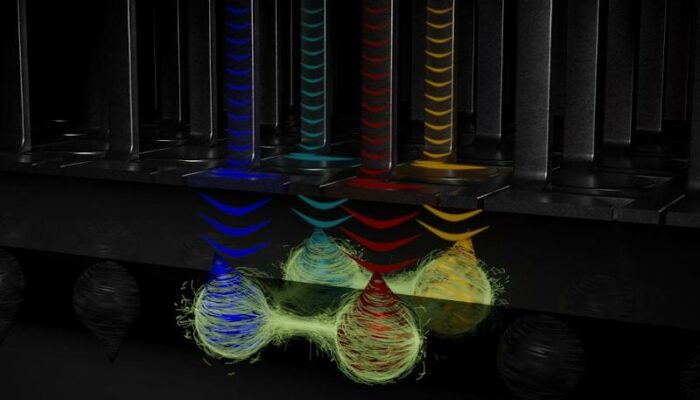
Qubits serve as the fundamental units of quantum computation, differing significantly from classical bits. While classical bits represent either a 0 or 1, qubits exploit quantum phenomena such as superposition and entanglement, allowing them to exist in multiple states simultaneously. This property enables quantum computers to perform many calculations at once, exponentially increasing their processing capabilities.
- Physical Implementations:
Various qubit technologies are under exploration, including superconducting circuits, trapped ions, topological qubits, and photonic qubits. Each type offers distinct benefits and challenges, particularly in maintaining coherence time-the period during which a qubit preserves its quantum state, crucial for reliable computation. - Scalability Considerations:
To achieve scalability, qubits must be designed for easy integration and expansion, ensuring that increasing their number does not degrade system performance.
Quantum Error Correction: Maintaining Computational Integrity
Quantum systems are highly sensitive to environmental disturbances, leading to errors through noise and decoherence. As quantum processors grow in size, the probability of errors rises, making error correction indispensable for scalable quantum computing.
- Surface Code:
One prominent error correction method is the surface code, which encodes logical qubits into a lattice of physical qubits. This approach detects and corrects errors without directly measuring the qubits, preserving their quantum information. - Importance for Scalability:
Advanced error correction techniques enable longer computation times and more complex algorithms by protecting quantum states from degradation.
Quantum Algorithms: Harnessing the Power of Scale
The true potential of scalable quantum computers is realized through specialized algorithms that exploit their unique capabilities. Notable examples include Shor’s algorithm for integer factorization and Grover’s algorithm for database searching, both demonstrating significant speedups over classical methods.
- Emerging Algorithms:
As quantum systems scale, new algorithms in quantum machine learning, optimization, and quantum simulations are being developed, promising breakthroughs in fields like pharmaceuticals, logistics, and cryptography.
Technological Foundations of Scalable Quantum Systems
Quantum Hardware Development
Building scalable quantum computers requires advances in hardware engineering, materials science, and nanoengineering. Key challenges include integrating a large number of qubits while maintaining coherence and minimizing errors.
- Superconducting Qubits:
These qubits operate at cryogenic temperatures, necessitating sophisticated cooling systems to maintain operational stability. - Integration Techniques:
Combining quantum processors with control electronics in compact, efficient designs is critical to support scalability and reduce error rates.
Quantum Networks: Expanding Beyond Computation
Scalable quantum technology also underpins the development of quantum communication networks, which promise unprecedented security through quantum key distribution (QKD). These networks leverage quantum mechanics to enable secure data transmission that is theoretically immune to interception.
- Quantum Teleportation and Distributed Computing:
By linking multiple quantum systems, quantum networks can facilitate teleportation of quantum states and distributed quantum processing, potentially transforming information sharing over long distances.
Challenges and Prospects in Scaling Quantum Computing
Despite significant progress, several obstacles remain in achieving fully scalable quantum computers. These include managing qubit cross-talk, mitigating error propagation, and overcoming material limitations inherent in qubit fabrication. Economic factors also play a role, as scaling quantum technology demands substantial investment balanced against manufacturing feasibility.
Future directions are likely to focus on hybrid quantum-classical computing models, expanding access through quantum cloud services, and refining error correction methods. Success will depend on interdisciplinary collaboration among physicists, engineers, and computer scientists to address these multifaceted challenges.
Significance of Scalable Quantum Computing
The advancement of scalable quantum computing technology holds the promise to revolutionize computational science and numerous industries. By enabling the solution of problems currently intractable for classical computers, it can accelerate drug discovery, optimize complex logistics, enhance cryptographic security, and deepen our understanding of quantum systems themselves. This transformative potential underscores the critical importance of ongoing research and development in scalable quantum technologies.
FAQ
What is scalable quantum computing?
Scalable quantum computing is the capability to efficiently increase the number of qubits in a quantum system, allowing for enhanced computational power and the ability to solve complex problems.
What are qubits?
Qubits are the fundamental units of quantum computation, capable of existing in multiple states simultaneously due to quantum phenomena like superposition and entanglement.
What is quantum error correction?
Quantum error correction is a technique used to manage errors in quantum computing, essential for maintaining the integrity of quantum information as systems scale.
What is the significance of scalable quantum computing?
Scalable quantum computing has the potential to revolutionize various industries by solving problems that are currently intractable for classical computers, such as drug discovery and optimization.






Leave a Reply