
Short Answer
Definition of Monoatomic Molecules
Monoatomic molecules are chemical entities consisting of a single atom, distinguishing them from polyatomic molecules that contain two or more atoms bonded together. This unique classification plays a crucial role in chemistry and physics by providing insight into elemental characteristics, atomic interactions, and the fundamental components of matter.
- Monoatomic:
Composed of only one atom. - Polyatomic:
Made up of multiple atoms bonded together.
Characteristics and Examples of Monoatomic Molecules
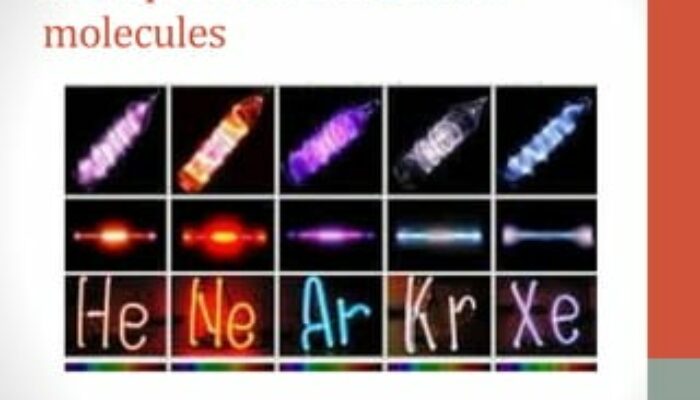
Monoatomic molecules are most commonly found among the noble gases, which include helium (He), neon (Ne), argon (Ar), krypton (Kr), xenon (Xe), and radon (Rn). These elements naturally exist as single atoms under standard conditions due to their fully filled valence electron shells, which render them chemically inert and resistant to forming bonds with other atoms.
- Noble Gases:
Exemplify monoatomic molecules with stable electron configurations. - Monoatomic Metals:
Certain metals like sodium (Na) and potassium (K) can exist as monoatomic gases at very high temperatures when thermal energy overcomes metallic bonds.
Physical Properties and Practical Uses
The physical attributes of monoatomic molecules, such as atomic mass and size, vary across the periodic table and influence their behavior in different states of matter. For example, helium’s low atomic mass makes it ideal as a lifting gas in balloons and airships due to its low density. Conversely, heavier noble gases like argon are frequently employed to create inert atmospheres in industrial processes, such as metal fabrication and material preservation. Their low chemical reactivity and distinctive thermal conductivity further enhance their utility in scientific and industrial applications.
Monoatomic Molecules in Atomic Theory
Monoatomic gases provide a clear framework for understanding atomic theory and the kinetic molecular model. Their behavior aligns with the ideal gas law (PV = nRT), which relates pressure (P), volume (V), temperature (T), and the amount of substance (n) through the gas constant (R). The rapid, random motion of these single atoms exemplifies fundamental principles of kinetic energy and collision frequency, deepening our grasp of thermal dynamics and gas behavior.
Quantum Mechanical Insights
The simplicity of monoatomic molecules allows for focused study of atomic orbitals and electron configurations without the complexity introduced by molecular bonding. This facilitates exploration of quantized energy levels and atomic spectra, providing clear examples of electron transitions and photon emissions. Such investigations are foundational in quantum mechanics and help elucidate the nature of atomic energy states.
Monoatomic Molecules Beyond Noble Gases
While noble gases are the most familiar monoatomic molecules, certain metals can also exist in a monoatomic gaseous state under extreme conditions. At elevated temperatures, metals like sodium and potassium can vaporize into individual atoms, overcoming metallic bonds. This phenomenon challenges traditional views in solid-state physics and opens new research avenues into the gaseous behavior of metals.
Applications in Nanotechnology and Materials Science
Monoatomic layers, such as graphene, represent a frontier where the properties of individual atoms combine to create novel materials with exceptional strength, conductivity, and flexibility. Manipulating matter at the atomic scale enables the development of advanced electronic devices, energy storage solutions, and biomedical technologies, highlighting the transformative potential of monoatomic structures in modern science and engineering.
Environmental and Planetary Science Relevance
Understanding monoatomic gases is vital in atmospheric and planetary sciences. Although noble gases are chemically inert, their trace presence in the atmosphere provides valuable information about geochemical cycles and climatic processes. Additionally, the accumulation of noble gases in geological formations serves as a tool for dating the Earth and archaeological artifacts, linking monoatomic molecules to broader environmental and historical studies.
Common Misconceptions About Monoatomic Molecules
Monoatomic molecules only exist as noble gases.
While noble gases are the most common, certain metals can also form monoatomic gases under specific high-temperature conditions.
Monoatomic molecules are always inert.
Although noble gases are largely inert, monoatomic metals in gaseous form can exhibit reactive properties depending on their environment.
Significance of Monoatomic Molecules
The study of monoatomic molecules is fundamental to advancing knowledge in multiple scientific disciplines. Their unique properties aid in refining atomic theory, improving industrial processes, and fostering innovations in nanotechnology and materials science. Moreover, their role in environmental and planetary sciences underscores their importance in understanding Earth’s history and atmospheric dynamics. Ultimately, monoatomic molecules exemplify how the simplest atomic forms contribute profoundly to science and technology.
Summary and Future Perspectives
Monoatomic molecules offer a rich field for scientific exploration, bridging foundational atomic concepts with practical applications across various industries. Their study continues to inspire new research directions, from quantum mechanics to advanced material design. By delving into the properties and behaviors of these single-atom entities, scientists can unlock further insights into the fundamental nature of matter and develop innovative technologies that shape the future.
FAQ
What are monoatomic molecules?
Monoatomic molecules are chemical entities consisting of a single atom, such as noble gases like helium and neon.
Are there any metals that exist as monoatomic gases?
Yes, certain metals like sodium and potassium can exist as monoatomic gases at high temperatures.





Leave a Reply