
Short Answer
Definition of MRI Magnetic Field Strength
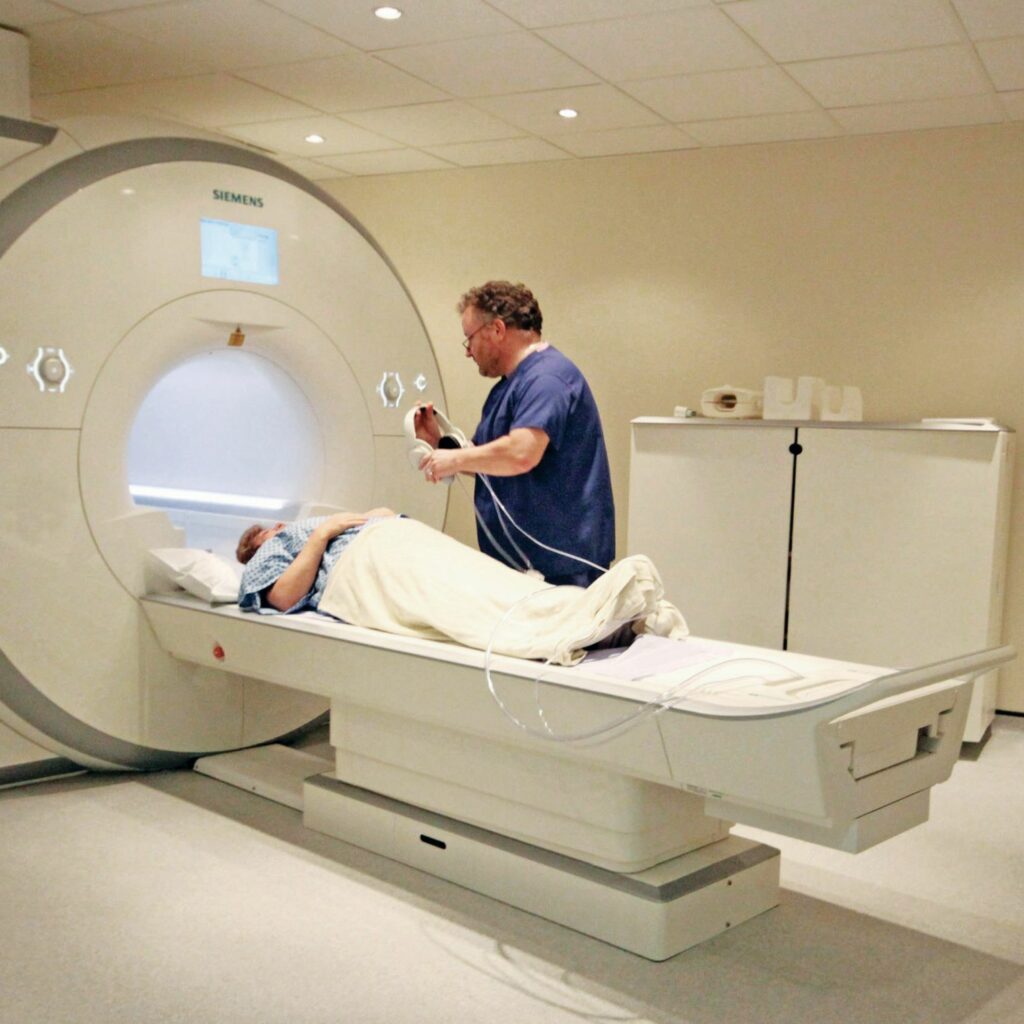
Magnetic Resonance Imaging (MRI) relies fundamentally on the strength of its magnetic field to produce detailed images of soft tissues within the human body. This magnetic field strength is a crucial factor that determines the clarity, resolution, and overall diagnostic value of MRI scans. Measured in Tesla (T), the magnetic field intensity varies across different MRI systems, influencing both the quality of images and patient experience.
Understanding Tesla: The Unit of Magnetic Flux Density
The Tesla (T) is the SI unit used to quantify magnetic flux density, named in honor of the inventor Nikola Tesla. One Tesla corresponds to the magnetic force that exerts one newton of force on a one-meter-long wire carrying an electric current of one ampere. To put this into perspective:
- Earth’s Magnetic Field:
Approximately 0.00005 T, which is extremely weak compared to MRI magnets. - Common Refrigerator Magnet:
Around 0.001 T, still minuscule relative to MRI field strengths. - Clinical MRI Machines:
Typically operate between 0.2 T and 3.0 T, with research-grade systems reaching 7.0 T or higher.
This comparison highlights the immense power of MRI magnets, which are many orders of magnitude stronger than everyday magnetic fields.
Classification of MRI Systems by Magnetic Strength and Design
MRI devices are categorized not only by their magnetic field intensity but also by their structural design, which impacts patient comfort and image quality.
- Closed MRI Systems:
These traditional machines generate a highly uniform magnetic field, typically at 1.5 T or 3.0 T. They are favored for producing high-resolution images essential for detailed diagnostic work. - Open MRI Systems:
Designed to alleviate claustrophobia and improve patient comfort, open MRIs usually operate at lower magnetic strengths ranging from 0.2 T to 1.2 T. This reduction in field strength often results in lower image resolution compared to closed systems.
The choice between open and closed MRI systems involves balancing patient comfort against the need for diagnostic precision.
Impact of Magnetic Field Strength on MRI Imaging
The intensity of the magnetic field directly affects several critical aspects of MRI performance:
- Signal-to-Noise Ratio (SNR):
Higher magnetic fields increase the SNR, leading to clearer and more detailed images, which is vital for detecting subtle abnormalities in complex anatomical regions like the brain and spinal cord. - Scan Duration:
Enhanced signal acquisition at stronger fields allows for faster imaging, reducing the time patients spend in the scanner and minimizing discomfort. - Susceptibility to Motion Artifacts:
While high-field MRI improves image quality, it also becomes more sensitive to patient movement, which can introduce artifacts and complicate image interpretation.
Safety and Contraindications Related to Magnetic Field Strength
Due to the powerful magnetic fields involved, MRI safety protocols are stringent and essential to prevent accidents and ensure patient well-being:
- Screening for Ferromagnetic Objects:
Patients must be carefully evaluated for implants or foreign bodies containing ferromagnetic materials, as these can be attracted by the magnetic field, posing serious risks. - Implanted Medical Devices:
Devices such as pacemakers or certain stents may malfunction or move during high-field MRI scans, making some patients ineligible for these procedures. - Projectile Effect:
Metallic objects inadvertently brought into the MRI environment can become dangerous projectiles due to the strong magnetic pull, necessitating strict control of the MRI suite.
Advancements and Future Prospects in MRI Magnetic Field Technology
Ongoing research is pushing the boundaries of MRI technology, particularly in the realm of ultra-high field imaging:
- Ultra-High Field MRI:
Systems operating above 7.0 T are being explored for their potential to reveal physiological and pathological details previously inaccessible with lower field strengths. - Artificial Intelligence and Software Innovations:
Enhanced image reconstruction algorithms and AI-driven diagnostics are improving the speed and accuracy of MRI interpretations, broadening the clinical applications of MRI.
Significance of Magnetic Field Strength in MRI
The magnetic field strength in MRI machines is a cornerstone of modern diagnostic imaging, influencing image quality, patient safety, and clinical outcomes. Understanding the interplay between magnetic intensity, machine design, and safety considerations enables healthcare providers to optimize MRI use for accurate diagnosis while ensuring patient comfort. As technology advances, the potential for higher field strengths and smarter imaging techniques promises to revolutionize medical diagnostics and deepen our understanding of human health.
FAQ
What is the typical magnetic field strength of MRI machines?
Clinical MRI machines typically operate between 0.2 T and 3.0 T, while research-grade systems can reach 7.0 T or higher.
How does magnetic field strength affect MRI imaging?
Higher magnetic field strengths improve the signal-to-noise ratio, resulting in clearer images and faster scan times, but may also increase sensitivity to motion artifacts.




Leave a Reply