
Short Answer
Definition of Magnetic Plasmons and Fused Molecules
Magnetic plasmons are collective oscillations of free electrons that incorporate magnetic interactions, extending beyond the traditional surface plasmon phenomena observed at metal-dielectric interfaces. These excitations enable the manipulation of electromagnetic waves at the nanoscale, offering new dimensions in photonic and electronic device engineering. Fused molecules, on the other hand, are complex organic compounds formed by covalently bonding multiple molecular units, creating interconnected structures with unique electronic and magnetic properties. When employed as guiding frameworks for magnetic plasmons, fused molecules provide a novel platform for controlling plasmonic behavior with enhanced precision and functionality.
Fundamentals of Plasmonic Phenomena
Plasmons arise from the interaction between electromagnetic radiation and the conduction electrons in metals, leading to coherent oscillations that can be harnessed for various technological applications. Traditionally, research has focused on surface plasmons, which are confined to the interface between conductive and dielectric materials. These surface plasmons have been instrumental in advancing fields such as sensing, imaging, and solar energy conversion. The emergence of magnetic plasmons introduces magnetic dipole contributions to these oscillations, broadening the scope of plasmonic manipulation and enabling new hybrid electromagnetic effects.
Role of Fused Molecules in Enhancing Magnetic Plasmons
The integration of fused molecules into plasmonic systems leverages their distinctive structural and electronic characteristics. By fusing different molecular components, researchers can design materials that not only support plasmonic excitations but also exhibit tailored magnetic responses. The interconnected geometry of fused molecules confines electrons in a manner that promotes the formation of magnetic dipoles, which interact with external electromagnetic fields to modulate plasmonic activity. This tunability allows for the precise engineering of resonant frequencies, optimizing the performance of plasmonic devices for specific applications.
Mechanism of Magnetic Plasmon Guidance via Fused Molecules
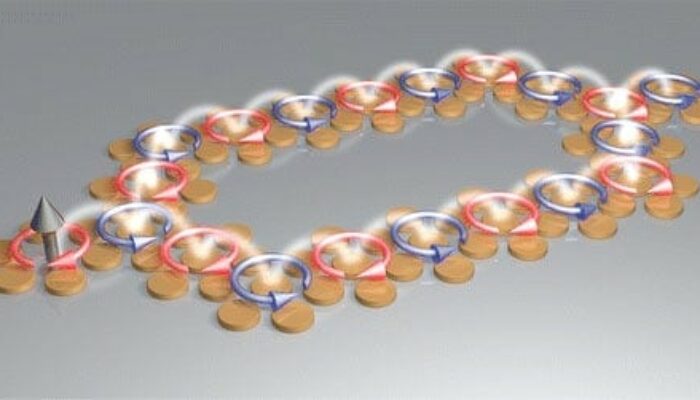
The structural configuration of fused molecules creates pathways that facilitate the propagation of magnetic plasmons with high spatial resolution. Electron confinement within these molecular frameworks generates magnetic dipoles that couple efficiently with incident electromagnetic waves, resulting in the excitation and guidance of magnetic plasmons. This mechanism enables the design of advanced photonic circuits capable of transmitting data with exceptional bandwidth and minimal energy dissipation. The nanoscale dimensions of these molecular guides contribute to enhanced device performance and miniaturization.
Applications in Photonics and Quantum Technologies
The ability to direct magnetic plasmons through fused molecular structures holds transformative potential for photonic technologies. Such control can lead to the development of sophisticated optical circuits that surpass current limitations in speed and energy efficiency. Beyond classical photonics, the interplay between plasmonic and magnetic components in these systems opens avenues for exploring quantum coherence phenomena. This interaction is particularly relevant for quantum computing, where manipulating quantum states with high fidelity is crucial for advancing computational capabilities.
Synthesis Challenges and Techniques
Creating fused molecules with the precise architecture required for effective magnetic plasmon guidance demands meticulous control over chemical synthesis. Factors such as bonding specificity, steric hindrance, and electronic distribution must be carefully managed to achieve the desired plasmonic and magnetic properties. Advanced fabrication methods, including molecular self-assembly and nanoscale lithography, provide the tools necessary to construct these complex molecular frameworks with high accuracy. The interdisciplinary collaboration among chemists, physicists, and materials scientists is essential to overcoming these synthetic challenges.
Biomedical Implications of Guided Magnetic Plasmons
The fusion of molecular design and magnetic plasmonics offers promising advancements in biomedical fields. Nanoscale manipulation of light can enhance imaging techniques, improving contrast and resolution in diagnostic procedures. Additionally, plasmonic nanocarriers engineered from fused molecules can enable controlled drug delivery, allowing for targeted therapeutic release with increased efficacy and reduced side effects. These innovations highlight the potential for plasmonic technologies to revolutionize healthcare by integrating molecular precision with advanced electromagnetic control.
Common Misconceptions About Magnetic Plasmons and Fused Molecules
Magnetic plasmons are simply a subset of surface plasmons without distinct properties.
Magnetic plasmons involve magnetic dipole interactions in addition to electronic oscillations, representing a fundamentally different excitation with unique applications.
Fused molecules are only relevant in organic chemistry and have limited use in plasmonics.
Fused molecules provide versatile platforms for engineering plasmonic and magnetic properties, making them highly valuable in nanoscale photonic device design.
Significance and Future Outlook
The convergence of fused molecular architectures with magnetic plasmonics marks a significant milestone in nanotechnology and materials science. This synergy enhances the capabilities of photonic devices, enabling faster, more efficient data transmission and opening new frontiers in quantum information processing. Furthermore, the biomedical applications underscore the societal impact of this research, promising improved diagnostic and therapeutic tools. As the field progresses, continued interdisciplinary efforts will be vital to fully realize the transformative potential of fused molecules guiding magnetic plasmons, shaping the future of technology and healthcare.
FAQ
What are magnetic plasmons?
Magnetic plasmons are collective oscillations of free electrons that include magnetic interactions, allowing for manipulation at the nanoscale.
How do fused molecules enhance magnetic plasmons?
Fused molecules create unique structures that tailor electronic and magnetic properties, improving the control and efficiency of plasmonic devices.




Leave a Reply