
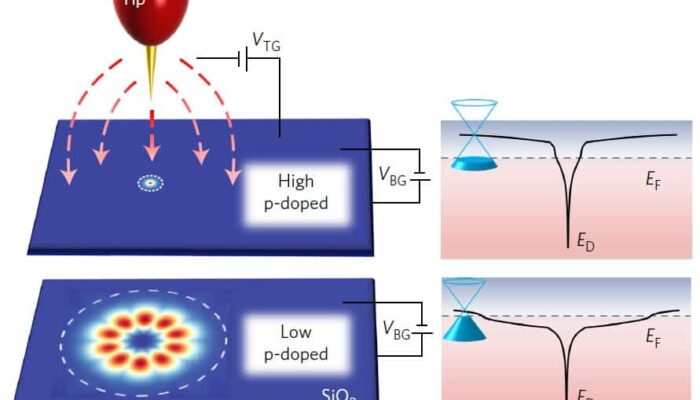
Short Answer
Definition of Designer Graphene
Designer graphene refers to the deliberate modification and control of graphene’s atomic structure and electronic properties to tailor its behavior for specific applications. Graphene itself is a single-atom-thick sheet of carbon atoms arranged in a two-dimensional hexagonal lattice, renowned for its exceptional electrical, mechanical, and thermal characteristics. The concept of designer graphene extends beyond the natural properties of pristine graphene by enabling precise engineering at the atomic scale, thereby unlocking new functionalities and enhancing performance across various technological domains.
Fundamental Properties of Graphene
- Atomic Structure:
Graphene consists of carbon atoms bonded in a planar honeycomb lattice, where each atom is sp2-hybridized, contributing to its remarkable strength and conductivity. - Electrical Conductivity:
It exhibits extraordinary electron mobility, making it an excellent conductor with potential applications in nanoelectronics. - Mechanical Strength:
Graphene is one of the strongest known materials due to its robust carbon-carbon bonds. - Thermal Conductivity:
It efficiently conducts heat, surpassing many conventional materials.
Techniques for Engineering Designer Graphene
Creating designer graphene involves various sophisticated methods that allow manipulation of its physical and chemical properties:
- Doping:
Introducing foreign atoms into the graphene lattice to alter its electronic characteristics, such as switching between n-type and p-type conductivity. - Functionalization:
Attaching specific chemical groups to graphene’s surface to modify its reactivity and interaction with other substances, useful in catalysis and sensing. - Structural Modification:
Techniques like chemical vapor deposition (CVD) and liquid-phase exfoliation enable the production of graphene with controlled size, shape, and morphology, including nanoribbons and quantum dots. - Defect Engineering:
Intentionally introducing and controlling defects to influence mechanical properties and electronic states, potentially inducing magnetism for spintronic applications.
How Designer Graphene Functions
The core principle behind designer graphene lies in the precise control of atomic arrangements and chemical composition to tailor its intrinsic properties. By adjusting parameters such as bandgap, defect density, and surface chemistry, researchers can fine-tune graphene’s behavior to meet the demands of specific technologies. For example, doping modifies charge carrier types and concentrations, enabling semiconductor-like behavior, while functionalization can enhance chemical sensitivity or catalytic activity. Structural modifications influence quantum effects, such as confinement in nanoribbons, which alter electronic band structures and enable novel device functionalities.
Mathematical and Physical Considerations
The electronic properties of graphene and its derivatives can be described using quantum mechanical models and band theory. A key parameter is the bandgap (Eg), which is zero in pristine graphene but can be engineered through doping or size confinement:
Bandgap Engineering:
Eg ∝ 1 / Ln
where L represents the characteristic size of graphene nanostructures (e.g., width of nanoribbons), and n is a constant depending on edge configuration and quantum confinement effects.
Additionally, the conductivity (σ) can be influenced by doping concentration (Nd) and mobility (μ):
σ = e × Nd × μ
where e is the elementary charge.
Applications and Real-World Examples
Designer graphene’s tailored properties have paved the way for numerous innovative applications:
- Flexible Electronics:
Graphene-based flexible circuits and displays benefit from its mechanical resilience and electrical conductivity. - Energy Storage:
Enhanced graphene electrodes improve battery capacity and supercapacitor performance through increased surface area and conductivity. - Biomedical Devices:
Functionalized graphene is used in biosensors and implants due to its biocompatibility and chemical tunability. - Quantum Devices:
Graphene nanoribbons and quantum dots enable the development of transistors and quantum computing components by exploiting size-dependent electronic properties. - Spintronics:
Defect-engineered graphene exhibits magnetism, opening new avenues for spin-based information processing.
Common Misconceptions About Designer Graphene
Designer graphene is just regular graphene with minor tweaks.
Designer graphene involves precise atomic-level modifications that fundamentally alter its properties, enabling functionalities unattainable with pristine graphene.
Graphene’s properties cannot be controlled or customized.
Through doping, functionalization, and structural engineering, graphene’s electronic, mechanical, and chemical characteristics can be finely tuned.
Graphene production is always environmentally harmful.
Emerging synthesis methods emphasize green chemistry principles to minimize environmental impact and improve sustainability.
Importance and Future Prospects
The ability to engineer graphene at the atomic scale represents a transformative advancement in materials science, with profound implications for technology and industry. Designer graphene’s customizable properties enable breakthroughs in electronics, energy, medicine, and quantum technologies, driving innovation across multiple sectors. Moreover, its potential for creating smart, responsive materials that adapt to environmental stimuli aligns with the growing demand for intelligent systems. As research progresses, scalable and eco-friendly production methods will be critical to realizing the full potential of designer graphene, ensuring its integration into sustainable and impactful applications worldwide.
FAQ
What is designer graphene?
Designer graphene is a modified form of graphene where its atomic structure is deliberately altered to enhance its electrical, mechanical, and thermal properties for specialized applications.
How is designer graphene produced?
It is produced through methods such as doping, functionalization, structural modification, and defect engineering to tailor its properties.
What are the applications of designer graphene?
Designer graphene is used in flexible electronics, energy storage, biomedical devices, quantum devices, and spintronics.




Leave a Reply