

Short Answer
Definition of DNA Mechanical Properties
Deoxyribonucleic acid (DNA) is widely recognized as the fundamental carrier of genetic information, encoding instructions vital for the growth and operation of all living organisms. Beyond its role as a genetic blueprint, DNA possesses distinct mechanical characteristics-such as twisting and bending-that are essential to its biological function. These physical properties are not mere structural details but are critical to how DNA interacts within the cellular environment and influences various molecular processes.
Structural Basis of DNA Mechanics
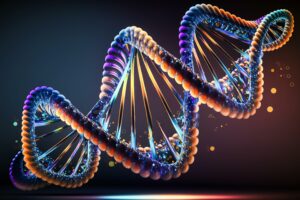
The iconic double helix structure of DNA, with its characteristic twist occurring approximately every 10.5 base pairs, underpins its mechanical behavior. This helical winding not only stabilizes the molecule but also facilitates the binding and activity of proteins involved in gene expression and replication. Proteins like transcription factors and DNA polymerases exploit the torsional strain and flexibility of the helix to regulate these processes effectively. Additionally, DNA can undergo supercoiling, a phenomenon where the double helix further twists upon itself, allowing the molecule to compact and adapt within the limited space of the cell nucleus.
Supercoiling and Cellular DNA Organization
Supercoiling serves as a vital cellular strategy to manage DNA’s spatial arrangement. DNA experiences varying degrees of torsional stress, which influences its shape and accessibility to enzymes and other molecular machines. When DNA is either overwound or underwound, supercoiling arises, potentially complicating replication and transcription. Cellular mechanisms continuously resolve these torsional tensions, akin to an expert carefully untangling a knotted thread, highlighting the dynamic and active role of DNA’s twisting and bending in genetic regulation.
Bending Mechanics and Sequence Specificity
DNA bending adds another dimension to its mechanical complexity. This flexibility is often sequence-dependent, with certain nucleotide arrangements-referred to as bending motifs-predisposed to adopt curved shapes. Such bending is crucial for DNA-protein interactions, particularly in chromatin organization. Proteins like histones and nucleosomes utilize DNA’s bending propensity to efficiently package the genome into compact structures, enabling the intricate folding patterns necessary for chromosome formation and gene regulation.
Experimental Insights into DNA Flexibility
Recent advancements in biophysical techniques, including optical tweezers and atomic force microscopy, have enabled detailed investigations into DNA’s mechanical properties. These studies reveal that DNA behaves not as a rigid rod but as a flexible and elastic polymer. The persistence length-a parameter indicating the stiffness of a polymer-is approximately 50 nanometers for DNA, signifying its ability to bend and twist without structural failure. This elasticity is fundamental to DNA’s biological functions, allowing it to conform to various shapes required for interaction with proteins and other biomolecules.
Applications in Biotechnology and Nanotechnology
The unique mechanical features of DNA have inspired innovative applications beyond biology. DNA’s capacity for precise self-assembly has given rise to the field of DNA origami, where synthetic DNA strands are engineered to fold into predetermined nanoscale shapes. These nanostructures are employed in creating molecular devices, targeted drug delivery systems, and biosensors, showcasing DNA’s versatility as a building material in nanotechnology.
DNA Nanostructures in Synthetic Biology
In synthetic biology, researchers are harnessing DNA’s mechanical properties to design dynamic systems that respond to environmental cues. These systems can perform molecular computations, where mechanical changes in DNA structure trigger programmed biological responses. This integration of DNA mechanics with biological function opens new avenues for engineering living systems with sophisticated control mechanisms.
Common Misconceptions About DNA Mechanics
DNA is a rigid, static molecule.
DNA exhibits significant flexibility and elasticity, allowing it to bend, twist, and supercoil dynamically within the cell.
The mechanical properties of DNA are irrelevant to its biological function.
DNA’s mechanical behavior is crucial for processes such as transcription, replication, and chromatin organization.
Significance of DNA Mechanical Properties
The mechanical characteristics of DNA-its twisting, bending, and supercoiling-represent a critical interface between molecular structure and biological function. These properties influence essential cellular activities and provide a deeper understanding of genetic regulation mechanisms. Furthermore, the exploration of DNA mechanics fuels technological innovation in biotechnology and nanotechnology, promising transformative advances in medicine, synthetic biology, and molecular engineering. As research progresses, the fusion of biological insight and engineering principles will continue to expand our ability to manipulate life at the molecular scale.
FAQ
What are the mechanical properties of DNA?
DNA exhibits twisting, bending, and supercoiling, which are essential for its biological functions.
How does DNA's mechanical flexibility affect its function?
The flexibility allows DNA to interact with proteins for processes such as transcription and replication.



Leave a Reply