
Short Answer
Definition of a Neutrino Knife
The idea of a “neutrino knife” is a speculative concept that merges particle physics with material science, envisioning a tool composed of neutrinos capable of splitting atoms. This thought experiment challenges our understanding of atomic structure and the fundamental interactions governing subatomic particles.
Understanding Neutrinos
Neutrinos are fundamental particles classified as leptons, notable for their extremely small mass and lack of electric charge. These elusive particles interact with matter almost exclusively through the weak nuclear force, one of the four fundamental forces in nature, making them incredibly difficult to detect. Neutrinos are predominantly produced in nuclear reactions, such as those in the sun’s core or during supernova explosions, and can pass through vast amounts of matter virtually unimpeded.
- Mass and Charge:
Neutrinos have a minuscule mass and no electric charge, which allows them to avoid electromagnetic interactions. - Interaction with Matter:
Their interaction cross-section is extraordinarily small, enabling them to traverse dense materials like lead without significant interaction. - Origin:
They are generated in nuclear processes, including fusion in stars and radioactive decay.
Atomic Structure and Nuclear Fission
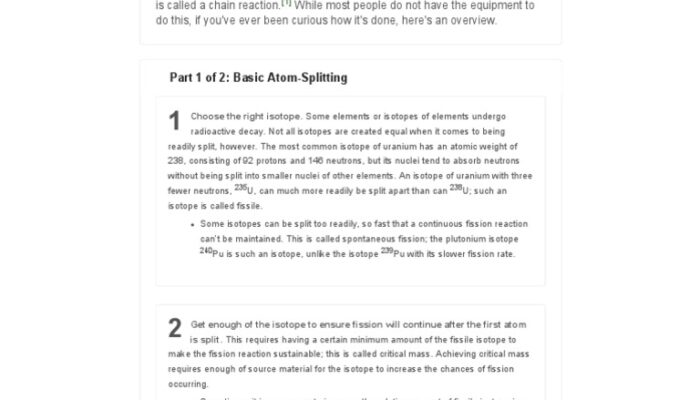
An atom consists of a nucleus made up of protons and neutrons, surrounded by electrons in defined energy levels. The nucleus is held together by the strong nuclear force, while electromagnetic forces govern the interactions between protons and electrons. Nuclear fission is the process by which an atomic nucleus splits into smaller fragments, releasing a substantial amount of energy. This process is typically initiated when a nucleus absorbs a neutron, causing it to become unstable and split, often triggering a chain reaction.
Feasibility of Using Neutrinos to Split Atoms
Given the properties of neutrinos, their potential to induce nuclear fission is extremely limited. The probability of neutrinos interacting with atomic nuclei is minuscule due to their tiny interaction cross-section-about a billion times smaller than that of protons. This means neutrinos can pass through enormous thicknesses of matter without causing any effect, making the concept of a neutrino-based cutting tool impractical.
- Interaction Cross-Section:
The extremely low likelihood of neutrino interactions with nuclei makes them ineffective for inducing fission. - Physicality of a Knife:
A knife requires a tangible force to cut or split material, which neutrinos inherently lack due to their intangible nature.
Quantum Mechanics and Virtual Particles
Exploring the theoretical underpinnings, quantum field theory introduces the concept of virtual particles-temporary fluctuations that mediate forces between particles. While virtual particles offer a framework for understanding particle interactions, harnessing neutrinos in a concentrated form to create a “knife” remains speculative. Current neutrino generation methods, such as particle accelerators, demand immense energy and infrastructure, far from practical application.
Advanced Quantum Concepts and Speculative Technologies
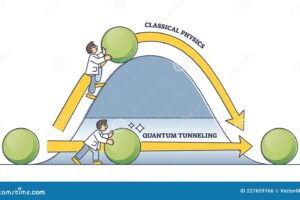
Speculation about future technologies includes the possibility of manipulating quantum phenomena like entanglement and tunneling to influence particle behavior in unprecedented ways. If such advanced control over neutrinos were achievable, it might allow localized disturbances in atomic nuclei, potentially enabling new methods of nuclear interaction. However, these ideas remain theoretical and beyond current scientific capabilities.
Ethical Considerations in Nuclear Manipulation
The potential use of novel technologies to alter nuclear materials carries significant ethical implications. Nuclear fission can provide vast energy resources but also poses risks of catastrophic destruction. The hypothetical use of neutrino-based tools to manipulate atomic nuclei raises important questions about scientific responsibility, governance, and the consequences of advancing nuclear technologies.
Why the Neutrino Knife Concept Is Important
Although a neutrino knife is not feasible with present-day physics, the concept serves as a valuable intellectual exercise. It highlights the complexities and paradoxes inherent in particle physics and encourages deeper inquiry into the fundamental forces shaping our universe. This thought experiment stimulates curiosity and inspires ongoing research in atomic and subatomic science, potentially guiding future breakthroughs.
Summary
In conclusion, the notion of a knife made from neutrinos capable of splitting atoms remains a fascinating but impractical idea. The extremely weak interaction of neutrinos with matter and the physical requirements of a cutting tool make this concept unworkable with current technology and understanding. Nonetheless, it underscores the dynamic and evolving nature of particle physics, inviting continued exploration into the mysteries of the atomic world.
FAQ
What is a neutrino knife?
A neutrino knife is a speculative concept involving a tool made of neutrinos that could split atoms, challenging our understanding of atomic structure.
Can neutrinos split atoms?
Neutrinos have an extremely low interaction probability with atomic nuclei, making them ineffective for splitting atoms.




Leave a Reply