
Short Answer
Definition of Electron Pair Bosonic Behavior
In quantum mechanics, particles exhibit dual characteristics, behaving both as waves and particles. Electrons, which are fermions, normally follow the Pauli exclusion principle, preventing any two electrons from occupying the same quantum state simultaneously. However, under specific conditions, pairs of electrons can collectively behave like bosons, particles that can share quantum states. This phenomenon is central to understanding unique quantum states such as superconductivity and superfluidity.
Fundamental Principles Behind Electron Pairing
Electron pairing arises from interactions that effectively overcome the natural repulsion between fermions. The Bardeen-Cooper-Schrieffer (BCS) theory explains that at sufficiently low temperatures, electrons near the Fermi surface can form bound pairs known as Cooper pairs. These pairs emerge due to an attractive interaction mediated by lattice vibrations, or phonons, which allows the electrons to pair up despite their fermionic nature. Once paired, these electron pairs behave as composite bosons, capable of occupying the same quantum state.
Role of Phonons in Pair Formation
Phonons, quantized vibrations of the crystal lattice, facilitate an effective attraction between electrons. When an electron moves through the lattice, it distorts the surrounding ions, creating a region of positive charge that attracts another electron. This indirect interaction enables the formation of Cooper pairs, which is essential for the transition from fermionic to bosonic behavior.
Manifestations in Superconductivity and Superfluidity
When electron pairs condense into a single quantum state, they form a coherent macroscopic wavefunction that extends over large distances. This coherence underpins superconductivity, characterized by zero electrical resistance and the expulsion of magnetic fields, known as the Meissner effect. Similarly, superfluidity arises from bosonic condensation in certain systems, allowing frictionless flow. These phenomena represent dramatic departures from classical physics and highlight the unique properties of bosonic electron pairs.
The Meissner Effect Explained
The Meissner effect occurs when a superconductor expels magnetic fields from its interior upon transitioning below a critical temperature. This effect is a direct consequence of the coherent bosonic state formed by electron pairs, which generates screening currents that cancel internal magnetic fields, maintaining superconductivity.
Complexities in Multicomponent and Spin-Orbit Coupled Systems
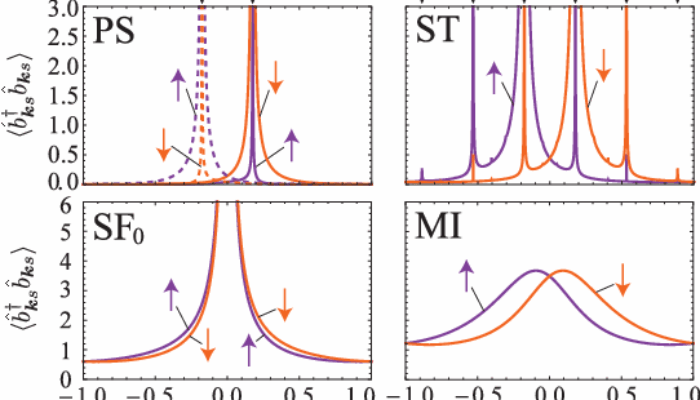
In materials with multiple fermion species or strong spin-orbit coupling, electron pairing and bosonic behavior become more intricate. These systems can exhibit exotic phases where intertwined orders emerge, and collective excitations display bosonic characteristics beyond simple pair formation. Such complexity challenges traditional condensed matter theories and opens new avenues for exploring quantum phases.
Experimental Advances: Ultracold Fermionic Gases and Bose-Einstein Condensation
Recent experimental breakthroughs using ultracold atomic gases have provided unprecedented insight into the fermion-to-boson transition. By cooling fermionic atoms to near absolute zero and tuning their interactions, researchers have observed Bose-Einstein condensation (BEC) of fermion pairs. These experiments serve as controllable platforms to study quantum phase transitions and the crossover between fermionic and bosonic regimes.
Mathematical Framework: BCS Theory and Cooper Pairing
The BCS theory mathematically describes the formation of Cooper pairs and the resulting superconducting state. The key elements include:
- Cooper Pair Wavefunction (Ψ):
Represents the quantum state of paired electrons. - Energy Gap (Δ):
The energy required to break a Cooper pair, signifying the superconducting gap. - Fermi Surface:
The set of momentum states occupied by electrons at zero temperature.
The BCS ground state is a coherent superposition of paired and unpaired electron states, leading to an energy gap and macroscopic quantum coherence.
Applications in Quantum Computing and Technology
The bosonic nature of electron pairs has significant implications for quantum technologies. Superconducting qubits, which rely on coherent electron pairs, offer promising routes to build scalable quantum computers. The robustness of these paired states against decoherence enhances qubit stability, potentially enabling more reliable quantum information processing.
Common Misconceptions About Electron Pair Behavior
Electrons always behave strictly as fermions.
While individual electrons are fermions, paired electrons can exhibit bosonic properties under certain conditions.
Superconductivity is solely due to electron movement without interactions.
Electron pairing mediated by phonons is essential for superconductivity, highlighting the role of interactions.
Significance in Modern Physics and Material Science
Understanding when and how electron pairs act like bosons is pivotal for advancing condensed matter physics and material science. It challenges classical particle classifications and enriches theoretical frameworks, enabling the discovery of new quantum phases and materials with extraordinary properties. These insights drive innovation in electronics, magnetism, and quantum information science.
Conclusion: The Quantum Duality of Electron Pairs
The transition of electron pairs from fermionic to bosonic behavior exemplifies the nuanced and often counterintuitive nature of quantum mechanics. This duality not only deepens our comprehension of fundamental particle behavior but also fuels ongoing research into novel quantum states and technologies. As experimental and theoretical tools evolve, the study of electron pair bosonic characteristics remains a vibrant and promising frontier in physics.
FAQ
What are electron pairs and how do they behave?
Electron pairs can behave as bosons under certain conditions, allowing them to occupy the same quantum state despite being made of fermions.
What is the significance of the Meissner effect?
The Meissner effect is a phenomenon where superconductors expel magnetic fields when cooled below a critical temperature, a result of the coherent state of electron pairs.






Leave a Reply