
Short Answer
Definition of the Cosmic Microwave Background and COBE Mission
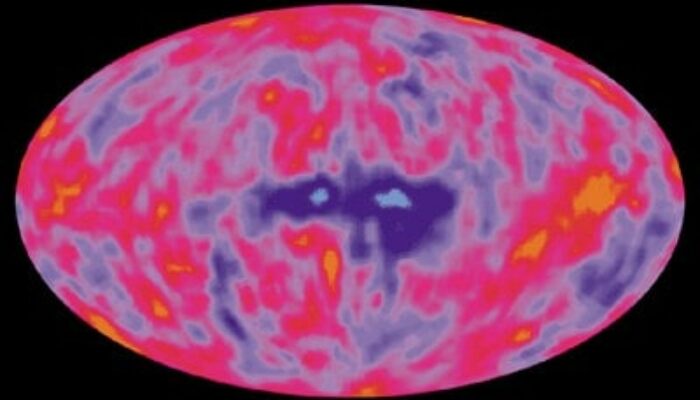
The cosmic microwave background (CMB) is a pervasive radiation field that fills the universe, serving as a relic from its earliest, hottest phase. It represents the cooled remnant of the intense radiation emitted shortly after the Big Bang, now observed as a nearly uniform microwave glow across the sky. The Cosmic Background Explorer (COBE) was a pioneering satellite launched in 1989 with the primary objective of measuring this faint afterglow with unprecedented precision. The mission’s findings have been instrumental in advancing our understanding of the universe’s origin and structure.
Historical Context and Significance of COBE
Before COBE’s launch, the cosmic microwave background was detected but poorly understood in terms of its detailed properties. COBE’s precise measurements provided the first definitive evidence supporting the Big Bang theory by confirming the CMB’s near-perfect blackbody spectrum. This breakthrough shifted the paradigm in cosmology, transforming speculative ideas into a robust scientific framework. The mission’s success also laid the groundwork for subsequent experiments, such as the Wilkinson Microwave Anisotropy Probe (WMAP) and the Planck satellite, which have further refined cosmological models.
Detection of Anisotropies in the Cosmic Microwave Background
One of COBE’s landmark achievements was identifying tiny temperature variations, or anisotropies, within the CMB. These minute fluctuations, invisible without sensitive instruments, are crucial because they represent the primordial density irregularities from which all cosmic structures-galaxies, clusters, and superclusters-eventually formed. The discovery of these anisotropies provided empirical support for inflationary cosmology, a theory describing the rapid expansion of the universe fractions of a second after the Big Bang.
Mechanism Behind the Cosmic Microwave Background
The CMB originates from the epoch of recombination, approximately 380,000 years after the Big Bang, when the universe cooled enough for protons and electrons to combine into neutral hydrogen atoms. This process allowed photons to travel freely through space, creating the radiation we detect today. Over billions of years, the expansion of the universe stretched these photons’ wavelengths into the microwave region of the electromagnetic spectrum, resulting in the CMB’s characteristic temperature of about 2.7 Kelvin.
Mathematical Description of CMB Anisotropies
The temperature fluctuations in the CMB are often analyzed using spherical harmonics, which decompose the sky’s temperature map into components at different angular scales. The power spectrum, denoted as Cℓ, quantifies the variance of temperature differences as a function of multipole moment ℓ, corresponding to angular size. Peaks in the power spectrum reveal information about the universe’s composition, geometry, and expansion history.
- Multipole moment (ℓ):
Represents angular scale on the sky; higher ℓ corresponds to smaller angular features. - Power spectrum (Cℓ):
Measures the intensity of temperature fluctuations at each scale.
Expansion of the Universe and the Hubble Constant
The study of the CMB has reinforced the concept that the universe is expanding, a phenomenon first observed through the redshift of distant galaxies. The rate of this expansion is quantified by the Hubble constant (H0), which expresses how quickly galaxies recede from each other per unit distance. Understanding this expansion is vital for predicting the universe’s ultimate fate, whether it will continue to expand indefinitely, slow down, or reverse in a contraction known as the “Big Crunch.”
Dark Matter and Dark Energy: Insights from COBE
COBE’s observations have also contributed indirectly to the study of dark matter and dark energy, two mysterious components that together constitute about 95% of the universe’s total mass-energy content. Dark matter exerts gravitational influence but does not emit or absorb light, making it invisible to conventional telescopes. Dark energy, on the other hand, is thought to drive the accelerated expansion of the universe. These phenomena challenge existing physics and motivate ongoing research into the fundamental nature of the cosmos.
Exploring the Multiverse Hypothesis
Building on COBE’s legacy, some cosmologists have ventured into the speculative realm of the multiverse theory. This hypothesis proposes that our universe might be one among many, each with distinct physical laws and constants. While still theoretical, the multiverse concept invites profound philosophical and scientific questions about the uniqueness of our cosmos and the limits of human understanding.
Collaborative Efforts in Cosmological Research
The achievements of the COBE team underscore the importance of interdisciplinary collaboration in scientific discovery. Physicists, astronomers, and engineers worked in concert to design, launch, and analyze data from the mission. This synergy between theoretical predictions and empirical evidence exemplifies the scientific method and sets a precedent for future cosmological investigations.
Why Understanding the Cosmic Microwave Background Matters
Studying the CMB is fundamental to cosmology because it provides a snapshot of the universe at a formative stage, offering clues about its origin, composition, and evolution. Insights gained from CMB research influence multiple scientific fields, from particle physics to astronomy, and deepen our philosophical appreciation of humanity’s place in the cosmos. The knowledge derived from missions like COBE continues to inspire new generations of scientists to explore the universe’s profound mysteries.
Summary and Future Directions
The COBE mission has revolutionized our understanding of the universe by delivering precise measurements of the cosmic microwave background and revealing its subtle anisotropies. These findings have validated key cosmological theories, informed the study of dark matter and dark energy, and opened pathways to exploring concepts like the multiverse. As cosmology advances, the foundational work of the COBE team remains a cornerstone, guiding ongoing efforts to unravel the universe’s deepest secrets.
FAQ
What is the Cosmic Microwave Background (CMB)?
The CMB is the faint microwave radiation left over from the hot, early universe shortly after the Big Bang, observed as a nearly uniform glow across the sky.
Why is the COBE mission important in cosmology?
COBE's precise measurements confirmed key predictions of the Big Bang theory and identified temperature fluctuations that explain the formation of cosmic structures.
How do anisotropies in the CMB help scientists?
They provide clues about the universe’s composition, geometry, and early density fluctuations that led to galaxy formation.
What role does the Hubble constant play in understanding the universe?
It quantifies the rate of expansion of the universe, helping to predict its ultimate fate.


Leave a Reply