
Short Answer
Overview of CERN
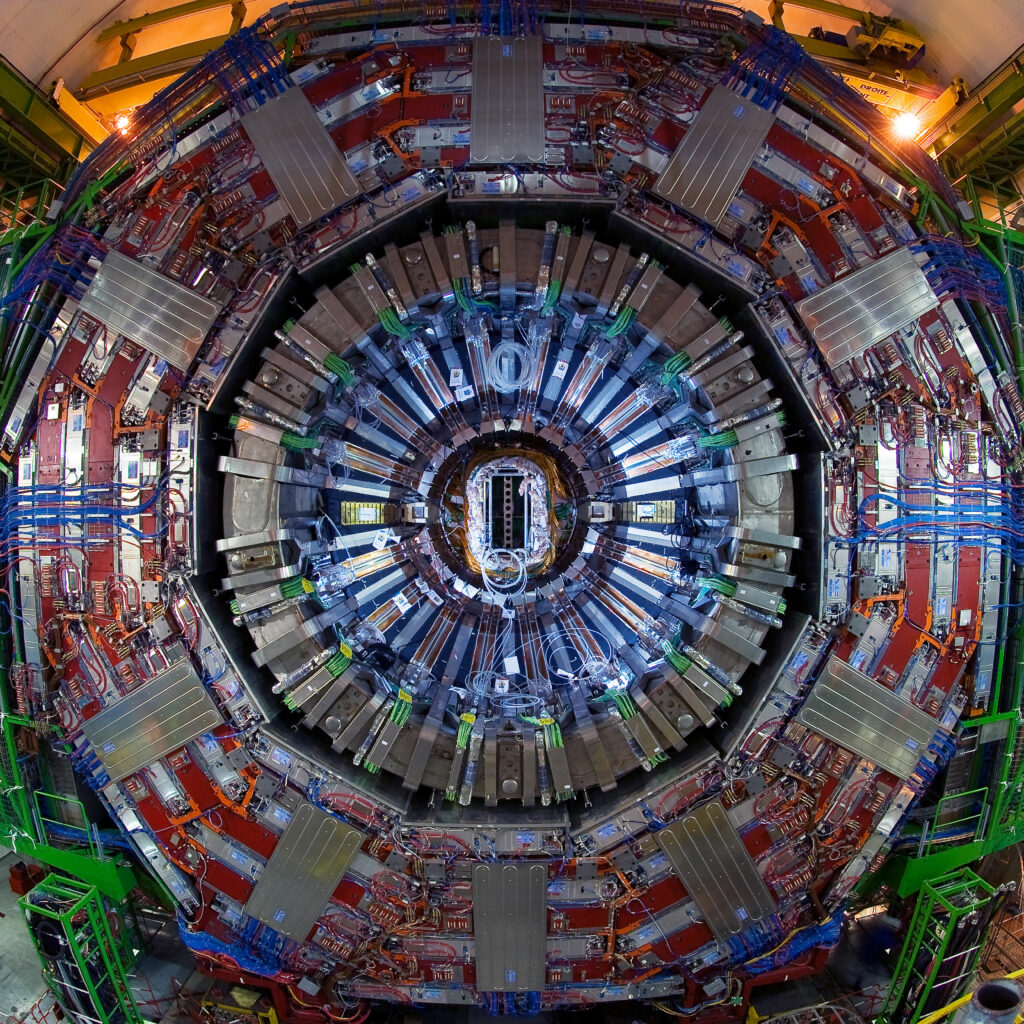
The European Organization for Nuclear Research, widely known as CERN, is a premier institution dedicated to advancing particle physics research. Founded in 1954, CERN has consistently expanded the frontiers of scientific knowledge about the universe. It is home to the Large Hadron Collider (LHC), the most powerful and complex particle accelerator ever constructed, which plays a pivotal role in probing the fundamental components of matter and the forces that shape the cosmos.
International Collaboration and Scientific Community
CERN exemplifies global scientific cooperation, bringing together researchers from over 100 nations. This diverse assembly of scientists fosters a rich environment of innovation and interdisciplinary exchange, transcending geopolitical boundaries in the shared quest for understanding. Such collaboration not only accelerates breakthroughs in particle physics but also enhances our broader comprehension of the universe’s underlying principles.
Particle Accelerators at CERN
Among CERN’s suite of particle accelerators, the Large Hadron Collider stands as the centerpiece. It accelerates particles, primarily protons, to velocities approaching the speed of light, recreating conditions similar to those moments after the Big Bang. These high-energy collisions allow physicists to investigate fundamental particles and their interactions, shedding light on the forces that govern matter.
Significant Discoveries: The Higgs Boson
One of CERN’s landmark achievements is the identification of the Higgs boson in July 2012. This particle, a cornerstone of the Standard Model, explains how other particles gain mass through the Higgs mechanism. Confirming its existence validated decades of theoretical work and underscored CERN’s vital role in expanding the framework of modern physics.
Exploring the Mysteries of Dark Matter
Dark matter, which constitutes about 27% of the universe’s mass-energy, remains one of the most elusive subjects in physics. It neither emits nor interacts with light, making it invisible to traditional detection methods. CERN’s experiments aim to generate potential dark matter particles in controlled collisions, offering a pathway to uncovering the nature of this invisible cosmic component.
Investigations into Antimatter
The study of antimatter is another critical focus at CERN. The symmetry between matter and antimatter poses profound questions, especially since their mutual annihilation suggests the universe should contain equal amounts of both, yet matter dominates. CERN’s Antimatter Factory produces antihydrogen atoms-composed of positrons and antiprotons-to analyze their properties and explore why matter prevails in the cosmos.
Quark-Gluon Plasma Research
In the earliest moments after the Big Bang, quarks and gluons existed in a free, unbound state known as quark-gluon plasma. CERN recreates this primordial condition by colliding heavy ions within the LHC, enabling scientists to study the behavior of these fundamental particles under extreme temperatures and densities. This research provides critical insights into the formation of matter and the evolution of the universe.
Interconnection Between Particle Physics and Cosmology
CERN’s work often intersects with cosmological phenomena. While it does not directly detect gravitational waves, the theoretical models and experimental data derived from its particle accelerators contribute significantly to understanding such cosmic events. This synergy highlights the complementary nature of particle physics and astrophysics in unraveling universal mysteries.
Technological Innovations Originating from CERN
The technological advancements emerging from CERN’s research extend well beyond fundamental physics. A notable example is the creation of the World Wide Web, initially developed to facilitate information sharing among scientists. CERN’s ongoing innovations continue to impact diverse fields, including medicine, computing, and telecommunications, demonstrating the broader societal benefits of fundamental research.
Public Engagement and Educational Initiatives
CERN actively promotes public understanding of particle physics through lectures, exhibitions, and interactive programs. These outreach efforts aim to demystify complex scientific concepts and inspire future generations to pursue careers in science and technology, emphasizing the importance of curiosity and exploration in an increasingly technological world.
Conclusion: CERN’s Enduring Legacy
As a hub of international cooperation, cutting-edge experimentation, and profound scientific inquiry, CERN stands at the forefront of exploring the universe’s fundamental nature. Its investigations into particles, forces, and cosmic phenomena not only answer critical scientific questions but also ignite a deeper curiosity about existence itself. Continuing to push the boundaries of knowledge, CERN remains a symbol of humanity’s relentless pursuit of understanding the unknown.
FAQ
What is CERN?
CERN is the European Organization for Nuclear Research, a premier scientific institution focused on particle physics research.
What is the Large Hadron Collider?
The LHC is CERN's main particle accelerator, designed to collide particles at near light speeds to study fundamental physics.
What major particle was discovered at CERN?
The Higgs boson, discovered in 2012, which explains how particles acquire mass.
How does CERN study antimatter?
CERN produces antihydrogen atoms at the Antimatter Factory to investigate the properties and asymmetry between matter and antimatter.
Why is CERN's research important beyond physics?
Research at CERN has led to technological innovations like the World Wide Web and advances in medical imaging and computing.






Leave a Reply