
Short Answer
Definition of Isotopes
Isotopes are distinct forms of a chemical element that share the same number of protons but differ in their neutron count within the atomic nucleus. This variation in neutron number results in atoms of the same element having different atomic masses while maintaining identical chemical properties. The concept of isotopes is fundamental to understanding atomic structure and the diversity of matter at the subatomic level.
- Atomic Number:
The number of protons in the nucleus, defining the element’s identity. - Neutron Number:
The count of neutrons, which varies among isotopes of the same element. - Mass Number:
The total number of protons and neutrons in the nucleus, unique to each isotope.
Atomic Structure and Isotopic Variation
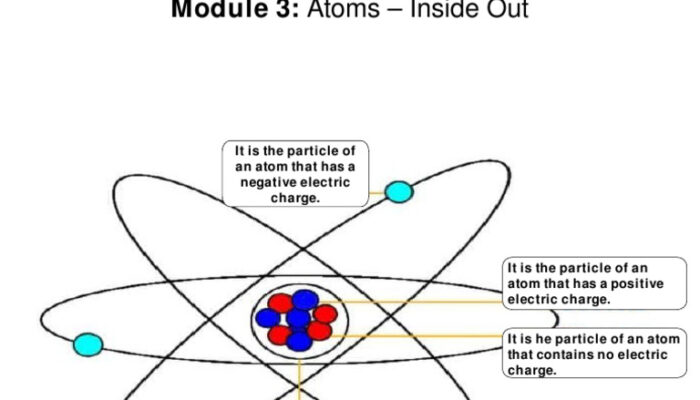
Atoms consist of a nucleus containing protons and neutrons, surrounded by electrons in energy levels. While the proton number determines the element’s chemical behavior, the neutron number can vary, giving rise to isotopes. These isotopic differences do not affect the electron configuration, which is why isotopes of an element exhibit similar chemical characteristics despite differences in mass.
Notation and Representation of Isotopes
Isotopes are commonly represented by the element’s chemical symbol accompanied by the mass number as a superscript. For example, carbon isotopes are denoted as ¹²C for carbon-12 and ¹⁴C for carbon-14. This notation highlights the sum of protons and neutrons, distinguishing isotopes by their nuclear composition. Alternatively, isotopes can be described by specifying the neutron-to-proton ratio, emphasizing their nuclear differences.
Formation and Stability of Isotopes
Isotopes arise naturally through nuclear processes and can be either stable or unstable. Stable isotopes maintain their nuclear configuration indefinitely, whereas unstable isotopes, known as radioisotopes, undergo radioactive decay to achieve stability. This decay process involves the emission of radiation and is characterized by the isotope’s half-life, the time required for half of a sample to decay.
Applications of Isotopes in Science and Technology
Isotopes have diverse and significant applications across multiple scientific disciplines:
- Radiocarbon Dating:
Utilizes carbon-14 to determine the age of archaeological and geological samples by measuring radioactive decay. - Medical Uses:
Radioisotopes are employed in diagnostic imaging and cancer treatments, exploiting their radioactive properties. - Geochemistry and Forensics:
Isotopic signatures help trace chemical pathways and origins of materials. - Ecophysiology:
Stable isotopes reveal biological processes such as diet, migration, and ecological interactions. - Nuclear Energy:
Radioisotopes serve as fuel in nuclear reactors, harnessing energy from nuclear decay.
Isotopes in Cosmic and Stellar Processes
Within stars, isotopes play a crucial role in nucleosynthesis-the formation of new elements through nuclear fusion. The fusion of isotopes under extreme temperatures and pressures leads to the creation of heavier elements, shaping the chemical evolution of the universe. Understanding isotopic production in stars provides insight into stellar lifecycles and the cosmic distribution of matter.
Physical and Chemical Implications of Isotopic Differences
Variations in neutron number affect the physical properties of isotopes, such as mass, diffusion rates, and boiling points. These differences can influence reaction kinetics and pathways, resulting in unique isotopic effects in chemical reactions. Such properties are exploited in advanced analytical techniques to study environmental processes and material origins.
Common Misconceptions About Isotopes
Isotopes of an element have different chemical properties.
Isotopes share the same chemical behavior because they have identical electron configurations.
All isotopes are radioactive.
Many isotopes are stable; only certain isotopes are radioactive and undergo decay.
Significance of Isotopes in Science and Everyday Life
The study of isotopes bridges multiple scientific fields, enhancing our understanding of matter from the atomic to the cosmic scale. Their applications in dating ancient artifacts, medical diagnostics, environmental tracing, and energy production underscore their vital role in advancing technology and knowledge. Isotopes provide a window into the fundamental processes that govern the natural world and human history.
Summary
Isotopes represent variations of elements distinguished by differing neutron numbers while maintaining the same proton count. This subtle difference leads to diverse nuclear properties and applications, spanning physics, chemistry, biology, and earth sciences. As research progresses, isotopes continue to illuminate the complexities of atomic interactions and the broader universe, highlighting the profound impact of these subatomic variations on science and society.
FAQ
What defines an isotope?
Isotopes are defined by having the same number of protons but different numbers of neutrons in the atomic nucleus.
How are isotopes represented in notation?
Isotopes are commonly written as the element's symbol with the atomic mass number as a superscript, e.g., ¹²C for carbon-12.
What is the role of isotopes in radiocarbon dating?
Radiocarbon dating uses the decay of carbon-14, a radioactive isotope, to estimate the age of organic materials.
Why do isotopes have different physical properties?
Differences in neutron number affect mass and nuclear stability, influencing physical properties like diffusion rates and boiling points.
Can isotopes be used to study ecological systems?
Yes, stable isotopes serve as tracers to understand metabolic pathways, dietary habits, and migration in ecological research.






Leave a Reply