Farewell to a Pioneer: Antiproton Co-Discoverer Passes Away

Definition of Antiproton and Its Significance The antiproton is a fundamental particle classified as the antiparticle counterpart of the proton. It carries a negative electric charge, in contrast to the proton’s positive charge, and belongs to the baryon family. The discovery of the antiproton marked a pivotal moment in particle physics, confirming theoretical predictions about […]

Read More →

What does the particle collider do?

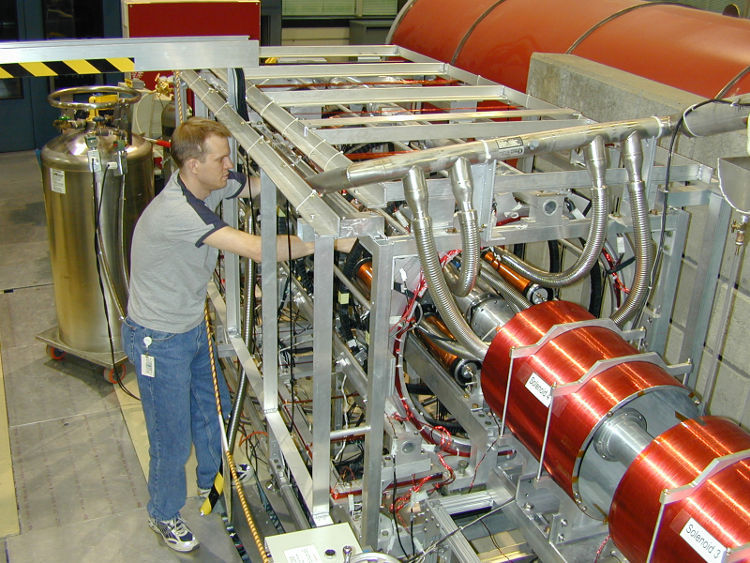
Definition of Particle Colliders Particle colliders are advanced scientific devices designed to accelerate subatomic particles to extremely high velocities, often approaching the speed of light. These accelerators enable particles to collide at tremendous energies, allowing researchers to investigate the fundamental components of matter and the forces that govern their interactions. By recreating conditions similar to […]

Read More →

Can a photon be created by the CERN collider?

Definition of Photons and the CERN Collider Photons are fundamental particles that constitute light, characterized by having no rest mass and traveling at the speed of light in a vacuum. They represent quantized excitations of the electromagnetic field and are central to the study of quantum electrodynamics. The energy of a photon is directly proportional […]

Read More →

Why are neutrinos so hard to detect?

Definition of Neutrinos Neutrinos are fundamental subatomic particles often referred to as the “ghost particles” due to their elusive nature. They belong to the family of leptons and are characterized by their extremely weak interactions with matter. Despite their abundance-trillions pass through every human body each second-neutrinos are notoriously difficult to detect because they rarely […]

Read More →

What is ionizing and non ionizing radiation?

Definition of Radiation Radiation refers to the emission and propagation of energy through space or a medium, typically in the form of particles or electromagnetic waves. This energy release originates from atomic or molecular transitions, where excited states return to lower energy levels. Radiation is broadly classified into two categories based on its energy and […]

Read More →

What are waves made of in quantum field theory?

Definition of Waves in Quantum Field Theory Quantum field theory (QFT) stands as a fundamental pillar in contemporary physics, offering a comprehensive framework to describe the interactions among particles and the fundamental forces governing the universe. Within this theoretical structure, waves are understood as oscillations of underlying quantum fields rather than classical disturbances traveling through […]

Read More →

Is particle physics related to string theory? If so

Definition and Overview The intricate connection between particle physics and string theory represents a pivotal area of study within modern theoretical physics. This relationship involves examining the foundational principles that govern the behavior of fundamental particles and the universe’s underlying structure. By delving into these domains, scientists aim to uncover deeper insights into the cosmos […]

Read More →

What is the composition of quarks?

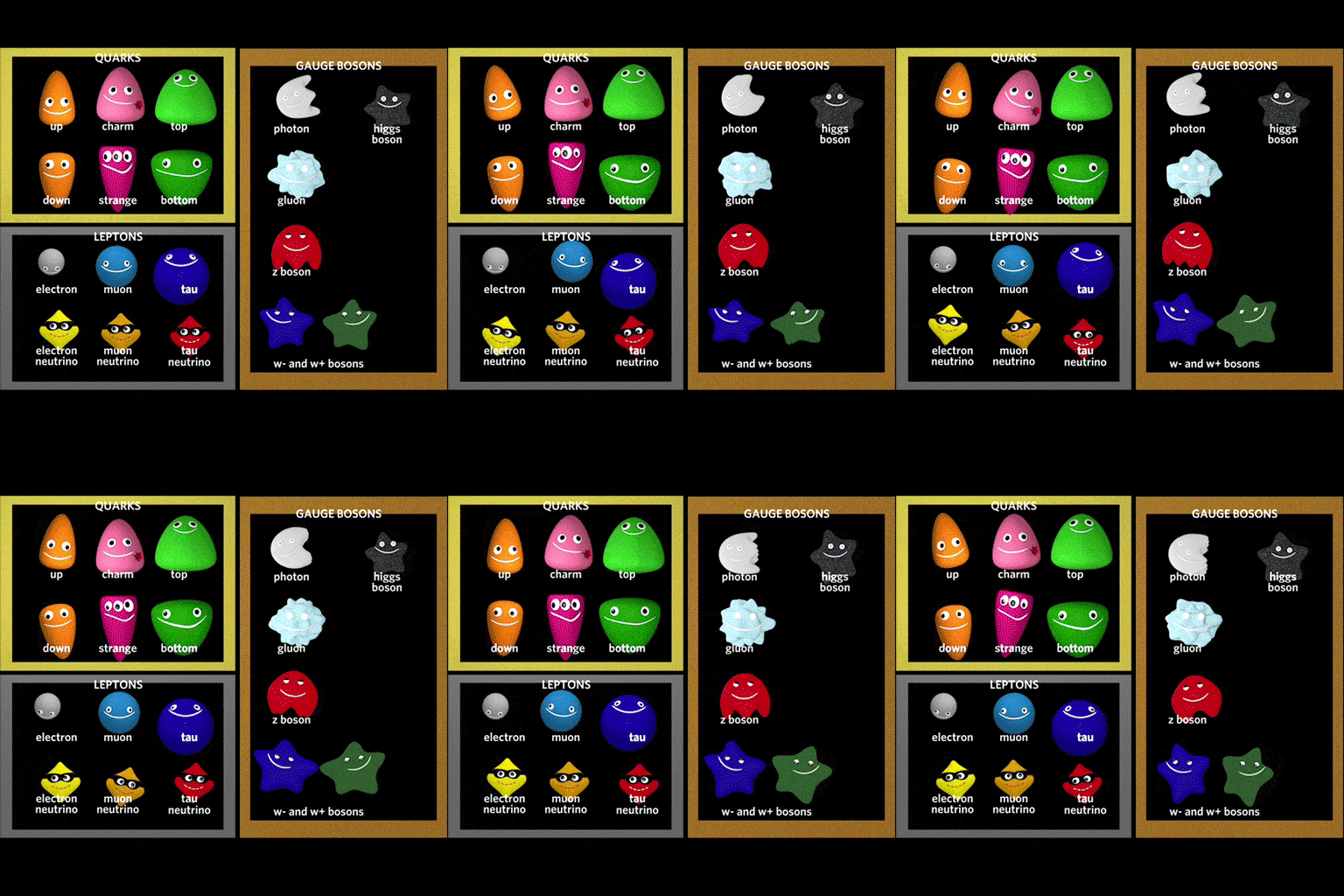
Definition of Quarks Quarks are fundamental particles that constitute the basic building blocks of matter. They combine to form protons and neutrons, which in turn make up the nuclei of atoms. As elementary fermions, quarks are unique in their fractional electric charges and intrinsic properties, playing a pivotal role in the structure and behavior of […]

Read More →