
Short Answer
Definition and Fundamental Properties of Positrons
Positrons, symbolized as e+, are the antiparticles corresponding to electrons within the framework of particle physics. They possess the same mass as electrons, approximately 0.511 MeV/c², but carry a positive electric charge, in contrast to the electron’s negative charge. This antiparticle relationship exemplifies the principle of charge conjugation, which asserts that every particle has a counterpart with identical mass and spin but opposite charge. When a positron encounters an electron, they annihilate each other, producing gamma-ray photons-a process central to various scientific and technological applications.
Historical Background and Discovery
The concept of the positron emerged from early 20th-century advances in quantum mechanics and the theoretical predictions of the Dirac Equation. In 1932, physicist Carl Anderson provided the first experimental confirmation of the positron by analyzing cosmic ray interactions using a cloud chamber. Anderson observed particle tracks indicative of a positively charged electron-like particle, marking a pivotal moment in confirming the existence of antimatter and expanding the understanding of particle physics.
Mechanisms of Positron Generation and Their Characteristics
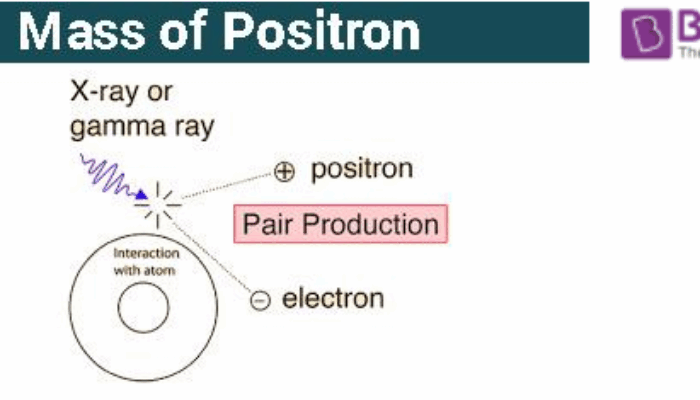
Positrons are produced through several natural and artificial processes. A primary natural source is beta-plus (β+) decay, where certain radioactive isotopes transform a proton into a neutron, emitting a positron and a neutrino. Additionally, high-energy particle accelerators can generate positrons by facilitating collisions that create particle-antiparticle pairs.
The lifespan of a free positron is typically very short, as it rapidly annihilates upon contact with an electron, releasing energy in the form of gamma rays. This annihilation process highlights the symmetry between matter and antimatter and provides critical insights into conservation laws governing particle interactions.
Applications of Positrons in Science and Technology
Beyond theoretical interest, positrons have significant practical uses, particularly in medical imaging. Positron Emission Tomography (PET) is a sophisticated diagnostic technique that exploits the gamma rays produced during positron-electron annihilation to generate detailed images of metabolic processes within the body. This technology has revolutionized the detection and treatment of diseases such as cancer.
In astrophysics, positron observations contribute to understanding high-energy cosmic phenomena, including supernova explosions and black hole dynamics. Moreover, studying positrons aids in exploring the nature of dark matter, as antimatter interactions may influence the composition and evolution of the universe.
Positronium and Advanced Research Directions
Current scientific investigations focus on positronium, a quasi-stable bound state formed by an electron and a positron orbiting each other. Research into positronium provides a testing ground for quantum electrodynamics (QED), allowing physicists to examine subtle effects such as vacuum polarization and refine atomic models.
Further exploration of antimatter asymmetry in the cosmos is a major research frontier. Scientists aim to understand why the observable universe contains far more matter than antimatter, despite theoretical expectations of symmetry. Advances in antimatter containment and production could lead to revolutionary technologies, including novel propulsion systems and energy sources.
Challenges in Positron and Antimatter Research
Despite progress, the field faces significant obstacles. Producing and storing positrons requires complex, resource-intensive methods. Their fleeting existence demands highly sensitive detection and measurement techniques to capture and analyze their behavior before annihilation occurs. Overcoming these challenges is essential for advancing both fundamental research and practical applications.
Philosophical and Cosmological Implications
The discovery and study of positrons have profound philosophical implications, prompting questions about the fundamental nature of reality and the universe’s origin. The predominance of matter over antimatter in the observable cosmos challenges existing theories and inspires ongoing inquiry into the mechanisms that shaped the universe’s evolution and ultimate destiny.
Significance of Positrons in Modern Science
Positrons serve as a crucial link between theoretical physics and applied science, embodying the intricate balance of forces and particles that constitute the universe. Their discovery validated key aspects of particle physics, while their properties and interactions continue to inform cutting-edge research and technological innovation. As investigations deepen, positrons will remain central to expanding our comprehension of the universe’s fundamental architecture and advancing practical technologies that impact everyday life.
FAQ
What is a positron?
A positron is the antiparticle of the electron, having the same mass but a positive electric charge.
How are positrons generated?
Positrons are generated naturally through beta-plus decay of certain radioactive isotopes and artificially in particle accelerators.
What are the main applications of positrons?
Positrons are mainly used in medical imaging techniques like Positron Emission Tomography (PET) and in astrophysics research.
What is positronium?
Positronium is a quasi-stable bound state formed by an electron and a positron orbiting each other, used in advanced quantum physics research.
Why is the study of positrons important in physics?
Studying positrons helps validate particle physics theories, understand antimatter, and explore cosmological phenomena such as matter-antimatter asymmetry.






Leave a Reply