
Short Answer
Definition and Historical Background of CERN
The European Organization for Nuclear Research, commonly known as CERN, is a premier scientific institution dedicated to exploring the fundamental particles and forces that constitute the universe. Situated on the border between France and Switzerland near Geneva, CERN has become a global hub for high-energy physics research. Its foundation represents a pivotal moment in the history of science, symbolizing international cooperation and the pursuit of knowledge beyond national boundaries.
Origins and Founding Principles
Established in 1954, CERN arose in the wake of World War II, a time when the world sought not only recovery but also unity through scientific collaboration. The devastation of the war underscored the need for countries to join forces in advancing human understanding rather than competing destructively. Visionaries such as physicist Isidor Rabi championed the idea of a pan-European research center where resources, expertise, and intellectual capital could be shared to investigate particle physics-a field seen as a unifying scientific frontier.
The initial blueprint for CERN was drafted during a 1952 conference at La Sapienza University in Rome, where representatives from various European nations agreed on the necessity of creating a laboratory dedicated to high-energy physics experiments. This collaborative spirit culminated in the signing of CERN’s founding convention on September 29, 1954, by twelve European countries, laying the groundwork for what would evolve into a 23-member state organization.
Scientific Mission and Early Achievements
CERN’s mission centers on probing the subatomic world to uncover the fundamental laws governing matter and energy. In its formative years, the organization made significant strides, notably with the construction of the Proton Synchrotron, which became operational in 1959. This particle accelerator was a technological marvel of its time, capable of propelling protons to unprecedented energies and enabling experiments that deepened understanding of particle interactions and quantum phenomena.
The early research at CERN also contributed to the broader acceptance of quantum mechanics, particularly the wave-particle duality concept, which revolutionized physics by describing particles as exhibiting both particle-like and wave-like properties.
Technological Innovations and Global Impact
Beyond its core scientific pursuits, CERN has been a cradle for groundbreaking technological advancements. The invention of the World Wide Web in 1989 by Tim Berners-Lee at CERN exemplifies the institution’s commitment to open knowledge and interdisciplinary collaboration. Originally designed to facilitate information sharing among scientists, the web has since transformed global communication, commerce, and culture, highlighting CERN’s influence far beyond particle physics.
The Large Hadron Collider and Modern Discoveries
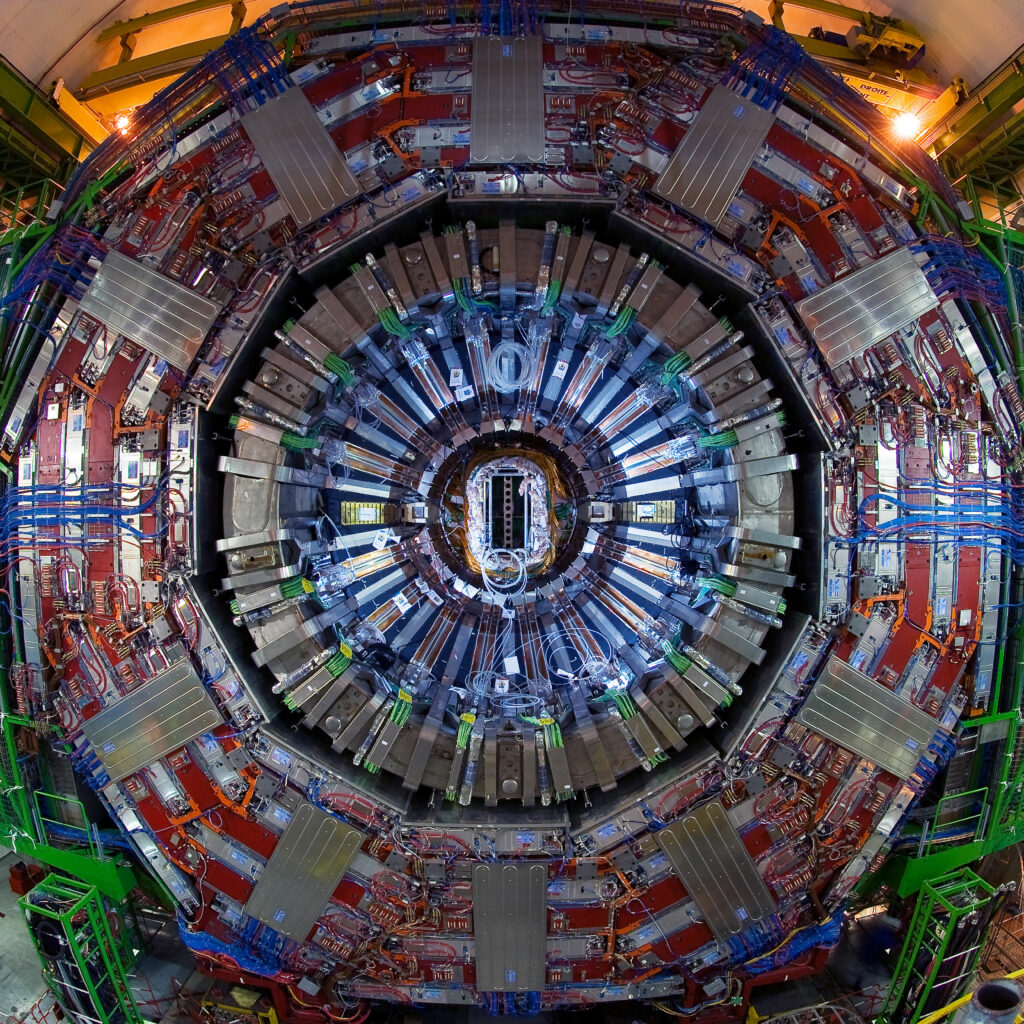
In the 21st century, CERN’s research capabilities reached new heights with the commissioning of the Large Hadron Collider (LHC) in 2008. This massive accelerator, housed in a 27-kilometer underground ring, enables physicists to recreate conditions similar to those moments after the Big Bang. The LHC’s experiments have led to landmark discoveries, most notably the detection of the Higgs boson in 2012. This particle’s discovery confirmed the mechanism by which particles acquire mass, a cornerstone of the Standard Model of particle physics.
Future Directions and Scientific Aspirations
Looking forward, CERN continues to push the boundaries of knowledge with ambitious projects aimed at unraveling the mysteries of dark matter, antimatter, and other fundamental questions about the universe’s composition and origins. The organization also explores novel technologies that could revolutionize scientific research and practical applications, maintaining its role as a beacon of innovation and international scientific cooperation.
Why CERN’s Establishment is Significant
The creation of CERN stands as a testament to the power of collaborative science in overcoming geopolitical divides and advancing human understanding. It embodies the ideal that shared intellectual pursuit can lead to profound discoveries with far-reaching implications for technology, philosophy, and society. As a cornerstone of modern physics research, CERN not only deepens our grasp of the universe’s fundamental workings but also inspires future generations to explore the unknown.
FAQ
When was CERN established?
CERN was established in 1954.
What is CERN's primary mission?
CERN's primary mission is to explore fundamental particles and forces through high-energy physics research.
What major scientific discovery was made at CERN?
The Higgs boson particle was discovered at CERN in 2012.
Who invented the World Wide Web and where?
Tim Berners-Lee invented the World Wide Web at CERN in 1989.
What is the Large Hadron Collider?
The LHC is the world's largest particle accelerator, used at CERN to study particle collisions.






Leave a Reply