Why was the Large Hadron Collider actually built?

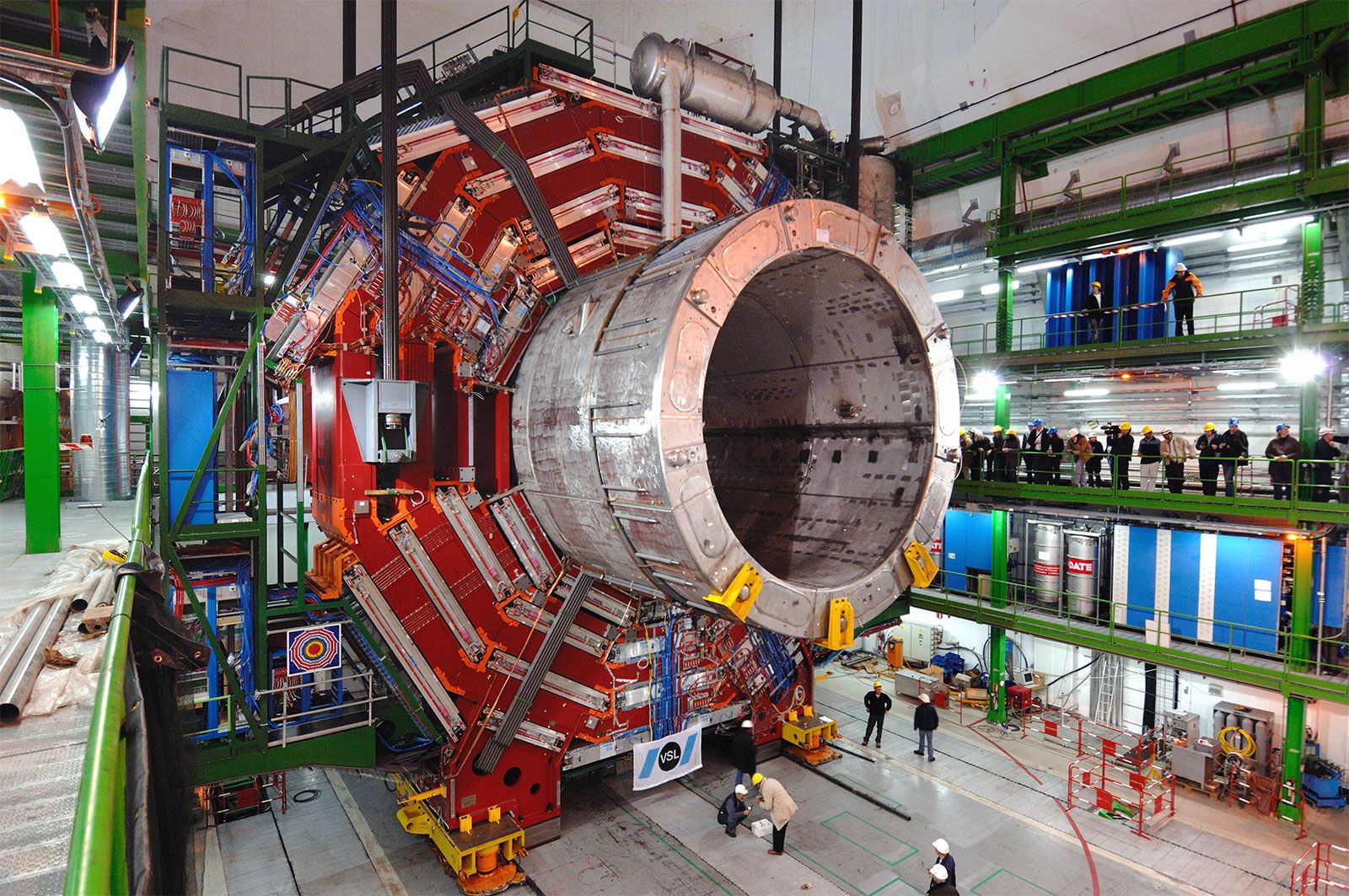
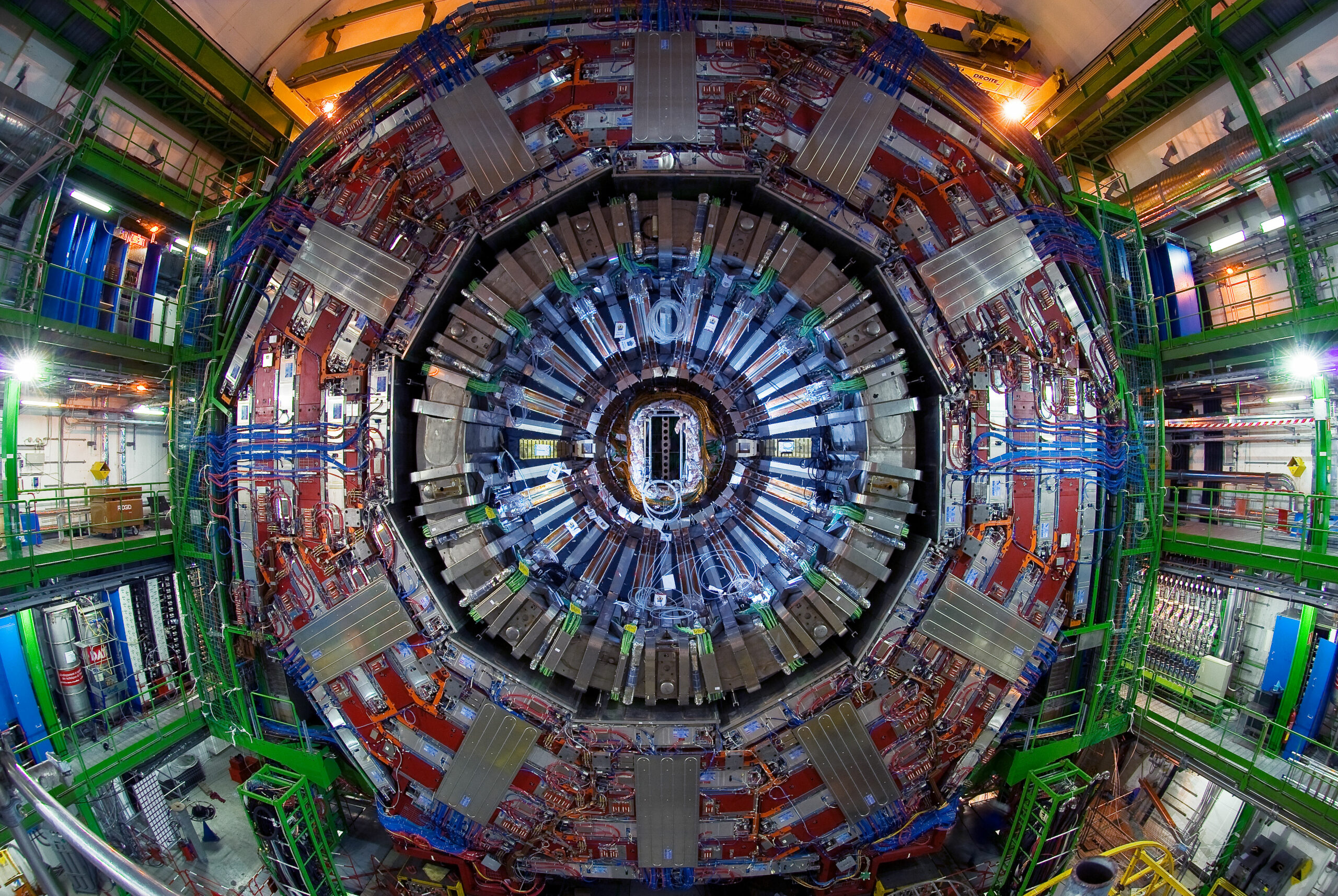
Definition and Purpose of the Large Hadron Collider The Large Hadron Collider (LHC) is a monumental scientific instrument located beneath the border between France and Switzerland. Far beyond being a mere particle accelerator, the LHC was engineered to investigate the fundamental laws that govern the universe. Its primary mission is to deepen human comprehension of […]

Read More →

Is the Standard Model broken?

Definition of the Standard Model The Standard Model of particle physics is a well-established theoretical framework that describes the fundamental particles constituting matter and the forces that govern their interactions, excluding gravity. Formulated during the latter half of the 20th century, it successfully integrates three of the four fundamental forces: electromagnetic, weak nuclear, and strong […]

Read More →

What are the elementary particles which form the photons?

Definition of Photons Photons are elementary particles that represent the quantum of electromagnetic radiation, commonly known as light. They are fundamental carriers of the electromagnetic force and are integral to the Standard Model of particle physics. Unlike composite particles, photons are massless and chargeless, existing as discrete excitations of the electromagnetic field. Quantum Gauge Bosons: […]

Read More →

What are elementary particles and why they are called so?

Definition of Elementary Particles Elementary particles are the most basic units of matter and energy in the universe, often described as the fundamental “letters” composing the cosmic language. Unlike composite particles, these entities are indivisible and lack any smaller internal structure. They form the essential foundation upon which all physical matter and forces are built, […]

Read More →

BaBar’s Big Bang: The First Matter–Antimatter Imbalance Confirmed

Understanding Matter-Antimatter Asymmetry The universe presents a vast and intricate array of cosmic phenomena, among which the imbalance between matter and antimatter stands as one of the most profound puzzles. This disparity challenges our comprehension of the universe’s origins and fundamental laws. The BaBar experiment, conducted at the SLAC National Accelerator Laboratory, has been instrumental […]

Read More →

And Then There Were Two: The Last Particles Standing

Understanding Fundamental Particles The phrase “And Then There Were Two: The Last Particles Standing” serves as a profound exploration into the core of particle physics, especially within the framework of the Standard Model. This inquiry delves into the nature of existence, reductionism, and the ultimate destiny of matter, all governed by the interactions of fundamental […]

Read More →

What’s a neutron accelerator?

Definition of Neutron Accelerators Neutron accelerators are sophisticated instruments designed to produce high-energy neutrons by accelerating charged particles and inducing nuclear reactions. These devices are crucial in various scientific and industrial fields, including nuclear physics, medical treatments, and materials research. By generating neutrons, they enable a wide range of applications that rely on the unique […]

Read More →

If string theory is proven

Definition of String Theory String theory is a sophisticated theoretical framework in physics that aims to unify the principles of quantum mechanics with those of general relativity. Unlike traditional models that consider fundamental particles as zero-dimensional points, string theory proposes that the most basic building blocks of the universe are one-dimensional “strings” that vibrate at […]

Read More →

How to Split an atom in a laboratory setting?

Definition of Nuclear Fission Nuclear fission, commonly referred to as splitting an atom, is a pivotal scientific achievement with far-reaching consequences in energy generation, medical applications, and fundamental physics research. This process involves breaking apart the nucleus of an atom, typically a heavy isotope, to release a substantial amount of energy along with additional neutrons, […]

Read More →

What is particle physics?

Definition of Particle Physics Particle physics is a specialized branch of physics focused on investigating the most fundamental building blocks of matter and the forces that dictate their behavior. Often termed high-energy physics, this scientific discipline aims to decode the universe’s underlying structure by studying the tiniest particles that constitute all known substances. The field […]

Read More →