Is ESA Falling Behind NASA? The Real Answer

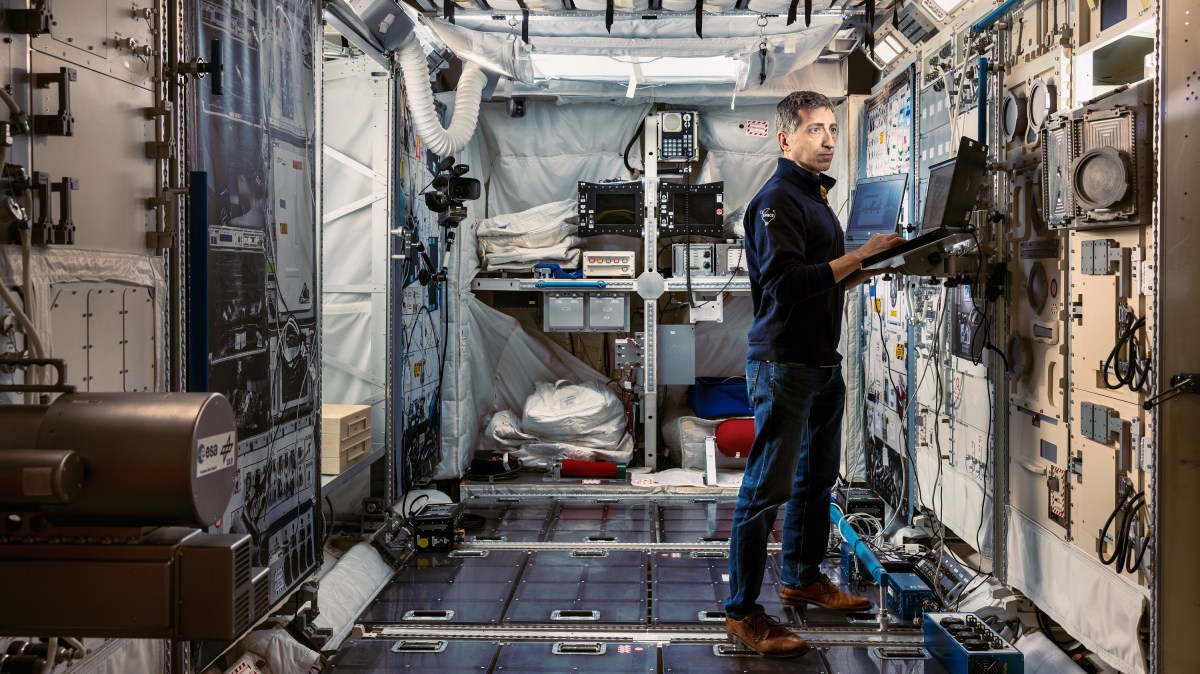
Overview of ESA and NASA in Space Exploration The European Space Agency (ESA) and the National Aeronautics and Space Administration (NASA) are two of the foremost organizations driving humanity’s exploration of space. While NASA often captures global attention with high-profile missions such as Mars rovers, Artemis lunar expeditions, and plans for crewed deep space travel, […]

Read More →

Why the Nancy Grace Roman Space Telescope Could Change Everything

Overview of the Nancy Grace Roman Space Telescope Gazing into the night sky reveals an immense and enigmatic universe filled with twinkling stars, glowing nebulae, and spiraling galaxies. Despite these breathtaking sights, humanity’s comprehension of the cosmos remains limited. The Nancy Grace Roman Space Telescope is poised to revolutionize our understanding by introducing groundbreaking observational […]

Read More →

How Robotic Assembly Could Build Giant Telescopes

Definition of Robotic Assembly in Telescope Construction Robotic assembly refers to the use of automated robotic systems to construct large-scale telescopes by autonomously handling, aligning, and securing their components. This approach leverages advanced robotics, sensor technologies, and artificial intelligence to build astronomical instruments with precision and efficiency beyond traditional human capabilities. Challenges in Building Giant […]

Read More →

Why Infrared Telescopes Must Stay Freezing Cold

Understanding Infrared Telescopes and Their Temperature Requirements Infrared telescopes play a vital role in astronomy by detecting heat energy emitted from celestial objects, revealing phenomena invisible to the naked eye. However, these instruments must operate at extremely low temperatures to function effectively. Contrary to what one might expect, warming an infrared telescope to room temperature […]

Read More →

Is There a Telescope on the ISS?

Definition and Overview of the International Space Station The International Space Station (ISS) represents a pinnacle of human innovation and international collaboration, serving as a multifaceted laboratory in low Earth orbit. Positioned roughly 250 miles above the planet, the ISS facilitates a wide spectrum of scientific research across disciplines such as biology, physics, meteorology, and […]

Read More →

Why Put Telescopes in Space? The Real Reason

Definition of Space Telescopes Space telescopes are advanced astronomical instruments positioned beyond Earth’s atmosphere to observe celestial objects and phenomena. Unlike traditional ground-based telescopes, these devices operate in the vacuum of space, enabling clearer and more comprehensive observations of the universe. Purpose: To overcome atmospheric limitations and capture a wider range of electromagnetic signals from […]

Read More →

Are Space Missions Just Hype or Real Science?

Understanding Space Missions Space missions represent humanity’s ambitious efforts to explore beyond our planet, combining awe-inspiring spectacle with rigorous scientific investigation. These endeavors extend far beyond mere public entertainment; they are complex scientific projects designed to expand our knowledge of the universe and our place within it. The Dual Nature of Space Exploration: Spectacle and […]

Read More →

How Space Telescopes Stay Clean in Orbit

Definition of Space Telescope Contamination Space telescope contamination refers to the accumulation of dust, debris, and microscopic particles on the optical surfaces of telescopes operating in orbit. Unlike ground-based observatories protected by Earth’s atmosphere and routine maintenance, space telescopes are exposed to a harsh environment where cosmic dust, micrometeoroids, and orbital debris can degrade their […]

Read More →

Is Building Telescopes at Earth’s Poles a Genius Idea?

Definition Constructing telescopes at Earth’s polar regions involves establishing advanced astronomical observatories in the extreme environments of the Arctic and Antarctic. These locations, known for their severe cold, persistent winds, and unique light cycles, offer distinctive atmospheric conditions that could enhance the clarity and quality of celestial observations. The concept explores whether these remote frontiers […]

Read More →

What Should Be Humanity’s Next Space Mission?

Definition of Humanity’s Next Space Mission The future of human space exploration poses a profound question: what should be the next grand venture beyond Earth? This inquiry encompasses not only the choice of destination but also the ambitions, challenges, and values that will shape our journey into the cosmos. The next mission must transcend incremental […]

Read More →