
Short Answer
Understanding Black Holes
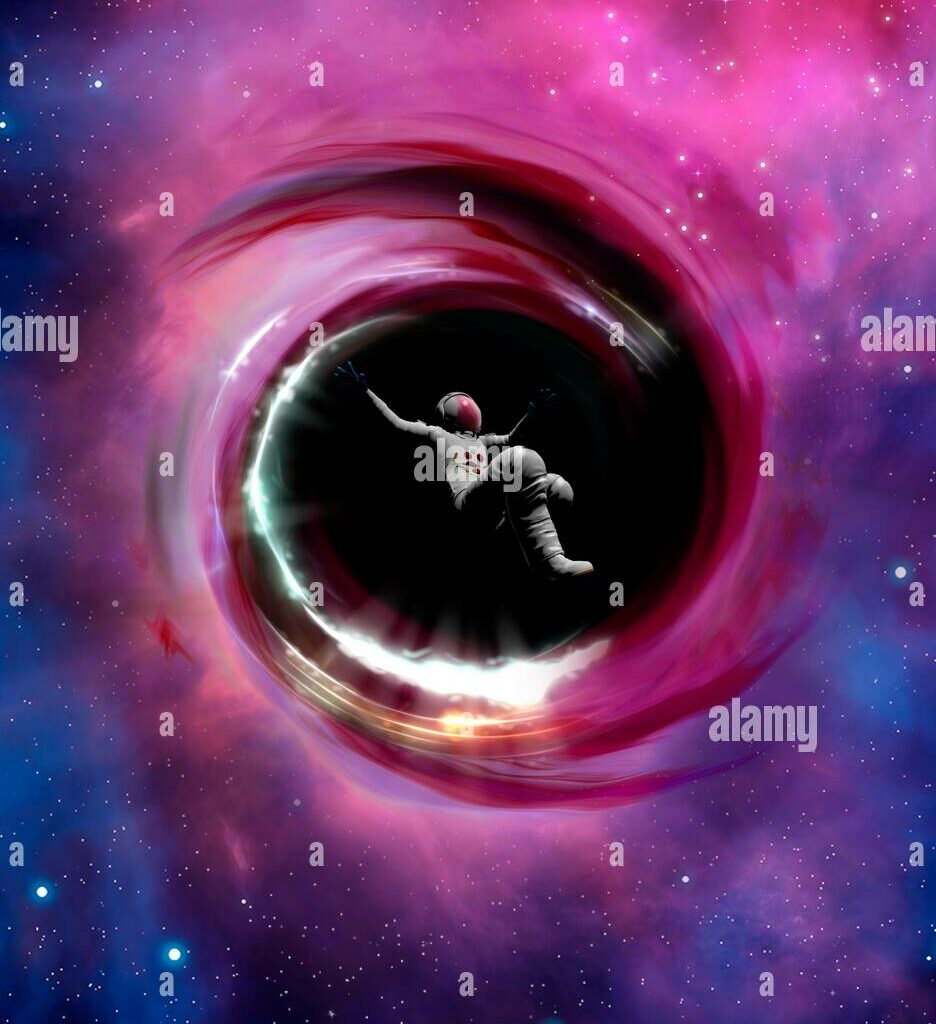
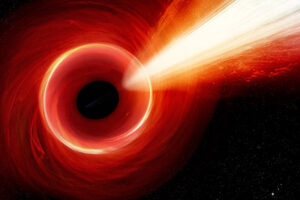
Black holes are among the most fascinating and mysterious objects in the universe. These cosmic entities evoke awe and fear due to their immense gravitational pull, which is so strong that not even light can escape once it crosses a certain boundary. This boundary, known as the event horizon, marks the point of no return. Black holes form when massive stars collapse under their own gravity, compressing their mass into an infinitely dense point called a singularity. The concept of black holes challenges our understanding of physics and raises profound questions about the nature of space, time, and matter.
Fundamental Characteristics of Black Holes
- Singularity:
The core of a black hole where mass is concentrated into a point of infinite density. - Event Horizon:
The invisible boundary surrounding a black hole beyond which escape is impossible because the escape velocity exceeds the speed of light. - Gravitational Pull:
The intense force exerted by the black hole that draws in nearby matter and radiation.
Orbital Dynamics Near Black Holes
Contrary to the popular notion of black holes as cosmic vacuum cleaners indiscriminately swallowing everything, their gravitational influence behaves similarly to other massive celestial bodies. Just as planets orbit stars due to a balance between gravitational attraction and their tangential velocity, spacecraft or stars can maintain stable orbits around black holes if they remain outside the event horizon. For example, stars orbit the supermassive black hole Sagittarius A* at the center of the Milky Way in predictable elliptical paths, demonstrating that stable orbits near black holes are not only possible but observable.
Gravitational Forces and Their Effects
As an object approaches the event horizon, gravitational forces intensify dramatically. One significant effect is tidal forces, which arise from the difference in gravitational pull on different parts of the object. These forces can stretch and distort objects in a process poetically termed “spaghettification.” For spacecraft, avoiding these destructive forces means maintaining a safe distance where structural integrity is preserved and escape velocity remains achievable.
Utilizing Black Hole Gravity for Space Travel
Black holes’ gravitational fields can be harnessed strategically rather than feared. Spacecraft can perform gravity assists or slingshot maneuvers by carefully navigating near massive bodies, including black holes, to gain speed and alter trajectories without expending additional fuel. This technique, already used in planetary missions, could theoretically be extended to black holes, allowing spacecraft to accelerate to higher velocities and reach distant regions of space more efficiently.
Exploring Theoretical Pathways: Wormholes and Spacetime Shortcuts
Beyond conventional navigation, black holes are central to speculative concepts such as wormholes-hypothetical tunnels through spacetime that might connect distant points in the universe. Rooted in solutions to Einstein’s general relativity equations, wormholes could offer shortcuts that bypass the vast distances between galaxies. While purely theoretical at present, these ideas open possibilities for avoiding the fatal descent into a black hole by traveling through these cosmic bridges.
Challenges in Navigating Near Black Holes
Despite the intriguing possibilities, numerous obstacles complicate safe navigation near black holes. The intense radiation emitted by accretion disks-hot, swirling matter spiraling into the black hole-exposes nearby regions to high-energy particles and photons, necessitating advanced shielding for spacecraft. Additionally, the irreversible nature of crossing the event horizon means that once a spacecraft passes this boundary, escape is impossible. Time dilation effects near the event horizon further complicate communication and control, as time slows dramatically relative to distant observers.
Technological and Scientific Advances
Ongoing progress in propulsion technology and theoretical physics continues to reshape our understanding of black hole navigation. Concepts such as antimatter propulsion and controlled wormhole stabilization suggest future methods for not only avoiding black holes but potentially exploiting their unique properties for interstellar travel. These advancements encourage viewing black holes not just as threats but as potential gateways or landmarks in the cosmic landscape.
Significance of Black Hole Navigation
Black holes represent both formidable challenges and opportunities in the quest to explore the universe. The question of whether spacecraft can avoid being drawn into these gravitational giants pushes the boundaries of astrophysics, engineering, and human ingenuity. Navigating near black holes demands a deep understanding of gravitational physics, relativistic effects, and advanced spacecraft design, making it a critical frontier in space exploration.
Conclusion: Redefining Our Cosmic Journey
Ultimately, the ability to steer clear of black holes is more than a matter of spatial maneuvering; it is an invitation to delve into the profound mysteries of gravity, spacetime, and the universe itself. Black holes, once seen solely as destructive voids, may become navigable waypoints or even tools for cosmic travel. This evolving perspective transforms them from enigmatic predators into gateways that could expand humanity’s reach to the farthest edges of the cosmos, reshaping the narrative of exploration and discovery.
FAQ
Can spacecraft really navigate near black holes?
Yes, spacecraft can navigate near black holes by maintaining a safe distance from the event horizon, allowing for stable orbits.
What are the risks of approaching a black hole?
The risks include extreme tidal forces, high radiation levels, and the irreversible nature of crossing the event horizon.

Leave a Reply