
Short Answer
Definition of Next-Generation Space Telescopes
Next-generation space telescopes are advanced astronomical instruments designed to observe the universe with unprecedented clarity and depth. These sophisticated devices extend humanity’s vision beyond current capabilities, capturing light from distant cosmic events that occurred billions of years ago. By integrating cutting-edge technology, they serve as powerful tools for exploring the origins, structure, and evolution of the cosmos.
- Purpose:
To observe celestial phenomena across multiple wavelengths, including ultraviolet, visible, and infrared spectra, enabling comprehensive studies of galaxies, stars, planets, and cosmic phenomena. - Scope:
Equipped with large segmented mirrors and sensitive detectors, these telescopes can detect faint signals from the early universe, dark matter, dark energy, and exoplanet atmospheres.
Technological Innovations Driving Space Telescope Evolution
The development of future space telescopes represents a renaissance in astronomical instrumentation, combining visionary science with state-of-the-art engineering. Key technological advancements include:
- Segmented Mirrors:
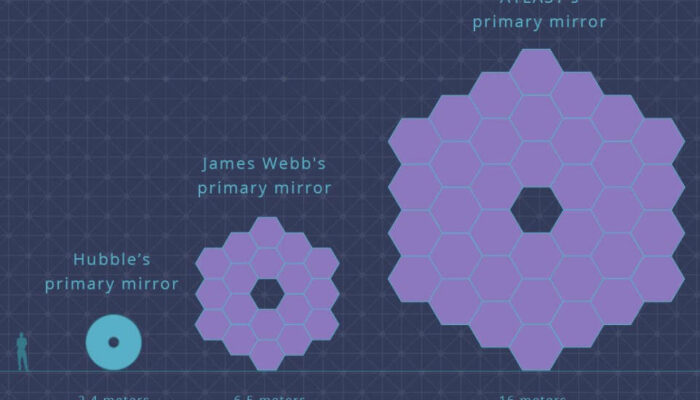
Mirrors composed of multiple segments that unfold or adjust in space, achieving diameters comparable to a tennis court, vastly increasing light-gathering power. - Infrared Sensors:
Ultra-cold detectors capable of capturing the faintest heat emissions from distant objects, essential for studying the early universe and exoplanet atmospheres. - Adaptive Optics:
Systems that correct distortions caused by cosmic dust and other interferences, delivering sharper and more detailed images. - Modularity and Multi-Spectral Capability:
Designs that allow simultaneous observation across ultraviolet, visible, and infrared wavelengths, providing a holistic view of cosmic phenomena.
How Next-Generation Space Telescopes Operate
These telescopes function by collecting and analyzing photons-particles of light-that have traveled across vast cosmic distances. Their large mirrors gather light from faint and distant sources, while advanced instruments dissect this light into various wavelengths to reveal detailed information about the composition, temperature, motion, and other properties of celestial objects. Specialized components such as coronagraphs and starshades block out the overwhelming glare of stars, enabling the detection of dim exoplanets orbiting nearby suns.
Key Missions and Their Scientific Goals
Several upcoming space telescope missions exemplify the ambitions and capabilities of this new era:
- James Webb Space Telescope Successors:
Designed to explore uncharted astronomical territories with enhanced modularity and multi-wavelength observation, these instruments aim to deepen our understanding of the universe’s formation and evolution. - Nancy Grace Roman Space Telescope:
Featuring a wide-field instrument that captures expansive cosmic panoramas, it will investigate dark energy and dark matter, two of the most profound mysteries in cosmology. - Large Ultraviolet Optical Infrared Surveyor (LUVOIR):
Envisioned with deployable mirrors that unfold in space, LUVOIR will provide unprecedented resolution and sensitivity across ultraviolet to infrared wavelengths.
Real-World Applications and Discoveries
Next-generation space telescopes will revolutionize our understanding of the cosmos through practical applications such as:
- Cosmic Dawn Exploration:
Observing the formation of the first stars and galaxies, these telescopes act as time machines, capturing light emitted billions of years ago. - Exoplanet Detection and Characterization:
Using coronagraphs and starshades, they will identify and analyze the atmospheres of distant worlds, searching for biosignatures that may indicate life. - Mapping Dark Matter and Dark Energy:
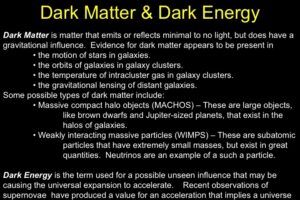
By surveying vast regions of space with high precision, they will help unravel the nature of these elusive components that govern the universe’s expansion.
Engineering Challenges and Solutions
Building and deploying these sophisticated telescopes involves overcoming significant technical hurdles:
- Material Durability:
Components must withstand extreme temperature variations, intense radiation, and mechanical stresses encountered during launch and operation in space. - Deployable Structures:
Mirrors and instruments often need to be compact during launch and then unfold or expand in orbit, requiring precise and reliable mechanisms akin to cosmic origami. - Data Management:
The enormous volume of data generated demands advanced computational techniques, including artificial intelligence and machine learning, to process and interpret cosmic signals effectively.
Integration with Ground-Based Observatories and Computational Advances
Future space telescopes will operate in synergy with terrestrial observatories and cutting-edge data analysis methods. This interconnected network will enhance the depth and breadth of astronomical research by combining diverse observational data and leveraging sophisticated algorithms to extract meaningful insights from complex datasets.
Common Misconceptions About Space Telescopes
Larger telescopes are simply scaled-up versions of smaller ones.
Next-generation telescopes incorporate modular designs, multi-spectral capabilities, and advanced adaptive optics, making them fundamentally different and more versatile than their predecessors.
Space telescopes only observe visible light.
These instruments are designed to capture a broad range of wavelengths, including ultraviolet and infrared, providing a more comprehensive understanding of celestial phenomena.
Significance of Next-Generation Space Telescopes
The importance of these advanced telescopes extends beyond scientific discovery. They inspire innovation in engineering, foster international collaboration, and ignite public imagination by revealing the universe’s wonders. Their ability to decode the cosmos enriches our knowledge of fundamental physics, the origins of life, and our place in the vast expanse of space and time.
Conclusion: The Future of Cosmic Exploration
Standing at the threshold of a new era, next-generation space telescopes promise to transform our cosmic perspective. By converting faint signals into vivid stories, they will illuminate phenomena such as star formation, black hole dynamics, and the subtle signatures of alien atmospheres. More than mere instruments, they are storytellers of the universe, inviting humanity to embark on an endless journey of discovery and wonder.


Leave a Reply