

Short Answer
Definition of a “Dead” Galaxy in the Early Universe
A “dead” galaxy refers to a galactic system that has ceased forming new stars, exhibiting little to no ongoing stellar birth activity. In the context of the early universe, such a galaxy is particularly intriguing because it appears fully developed yet shows signs of star formation having abruptly stopped at a time when most galaxies were expected to be actively producing stars.
- Dead Galaxy:
A galaxy that has quenched star formation and is no longer generating new stars. - Early Universe Context:
The period shortly after the Big Bang, characterized by rapid star formation and galactic growth.
Discovery and Significance of the Anomalous Galaxy
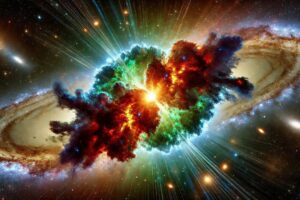
The James Webb Space Telescope (JWST), equipped with advanced infrared observational capabilities, has identified a galaxy from the early cosmos that defies established astrophysical expectations. This galaxy appears to be mature yet dormant, having halted star formation far earlier than predicted by current cosmological models. Such a finding challenges the conventional timeline of galactic evolution and suggests the presence of unknown processes influencing galactic life cycles.
Galactic Evolution: Typical Processes and the Anomaly
Under normal circumstances, galaxies evolve through the gravitational collapse of gas and dust clouds, igniting star formation within turbulent interstellar environments. Feedback mechanisms from young stars-such as stellar winds, supernova explosions, and radiation-play a dual role by either stimulating further star birth or suppressing it over time. However, the newly discovered galaxy appears to have undergone an accelerated evolutionary path, rapidly transitioning from active star formation to a quiescent state while the universe was still in its infancy.
Mechanisms Behind Star Formation Quenching
Several hypotheses have been proposed to explain this premature cessation of star formation:
- Supermassive Black Hole Feedback:
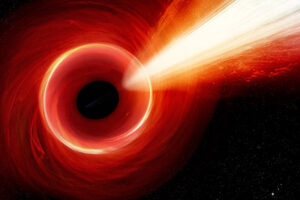
Intense radiation and energetic outflows from a central black hole may have expelled the galaxy’s gas, depriving it of the raw material needed for new stars. - Environmental Interactions:
Gravitational interactions with nearby galaxies or the influence of dark matter structures could have disrupted the galaxy’s gas supply or stability.
Technological Advances Enabling the Discovery
Prior to JWST, the faint light from distant, early-universe galaxies remained largely inaccessible due to technological limitations. JWST’s enhanced infrared sensitivity allows astronomers to peer deeper into cosmic history, revealing objects previously hidden from view. This breakthrough underscores the critical role of cutting-edge instrumentation in expanding our understanding of the universe’s formative epochs.
Implications for Cosmology and Astrophysics
The existence of a “dead” galaxy so early in cosmic history prompts a reevaluation of several key concepts:
- Galactic Life Cycles:
The discovery suggests that galaxies can undergo rapid evolutionary changes, including early quenching of star formation, challenging the notion that such processes unfold over billions of years. - Cosmic Timeline Complexity:
It indicates that the universe’s development is more heterogeneous and intricate than previously thought, with diverse evolutionary pathways for galaxies. - Physical Laws and Models:
This anomaly raises questions about the completeness of current astrophysical models and the universality of physical laws governing galaxy formation and evolution.
Philosophical and Scientific Reflections
Beyond the scientific ramifications, this discovery invites deeper contemplation about the nature of cosmic time and the diversity of galactic phenomena. It challenges researchers to embrace complexity and uncertainty, recognizing that the universe may harbor many more unexpected phenomena that defy existing paradigms.
Future Prospects and Continuing Exploration
As JWST continues its mission, it is poised to uncover further extraordinary objects that will refine or revolutionize our understanding of the cosmos. The identification of this early “dead” galaxy serves as a catalyst for developing new theoretical frameworks that incorporate rapid quenching mechanisms and environmental extremes, ultimately enriching our comprehension of the universe’s grand narrative.
Real-World Examples of Galactic Quenching
While the newly discovered galaxy is exceptional due to its early quiescence, galactic quenching is observed in various forms throughout the universe:
- Local Universe:
Many elliptical galaxies in the nearby universe are “red and dead,” having ceased star formation long ago. - Galaxy Clusters:
Environmental effects such as ram-pressure stripping in dense clusters can remove gas from galaxies, halting star formation.
Common Misconceptions About Dead Galaxies
Dead galaxies are rare and only found in the local universe.
Dead galaxies can exist at various cosmic epochs, including the early universe, as revealed by JWST.
Star formation stops only due to the exhaustion of gas.
Star formation can be quenched by energetic feedback processes or environmental interactions, not solely by gas depletion.
Why Understanding Dead Galaxies Matters
Studying galaxies that have ceased star formation, especially in the early universe, is crucial for piecing together the history of cosmic structure formation. These insights inform models of galaxy growth, the role of black holes, and the interplay between matter and dark matter. Ultimately, they help elucidate the origins of galaxies like our own Milky Way and the broader evolution of the cosmos.
FAQ
What is a 'dead' galaxy?
A 'dead' galaxy is one that has stopped forming new stars and shows no ongoing stellar birth activity.
How does the JWST contribute to understanding early galaxies?
The JWST's advanced infrared capabilities allow it to detect faint light from distant galaxies, revealing insights into their formation and evolution.
Why is this discovery important?
It challenges existing astrophysical models and suggests diverse evolutionary pathways for galaxies.
Leave a Reply