
Short Answer
Understanding Black Holes and Their Observability
Black holes represent some of the most mysterious and extreme objects in the universe, where gravity dominates to such an extent that not even light can escape their grasp. Despite their invisibility, astronomers have developed ingenious methods to study the regions surrounding black holes by observing the energetic phenomena occurring nearby. This article explores how telescopes detect and analyze objects close to black holes, revealing the cosmic dance at the edge of these gravitational abysses.
Definition and Nature of Black Holes
A black hole is a region in space where gravitational forces are so intense that nothing, including light, can escape once it crosses a boundary known as the event horizon. Black holes themselves do not emit light, making them inherently invisible to traditional optical telescopes. Instead, their existence is inferred through the effects they have on nearby matter and light.
- Event Horizon:
The critical boundary around a black hole beyond which escape is impossible, marking the point of no return for matter and radiation. - Accretion Disk:
A swirling disk of gas, dust, and other matter heated to extreme temperatures as it spirals inward, emitting intense radiation detectable by telescopes.
Challenges in Observing Black Holes
Observing objects near black holes presents significant difficulties due to their vast distances from Earth and the compact, faint nature of the regions involved. Black holes are often millions or billions of light-years away, making their immediate surroundings incredibly small and dim from our vantage point. Additionally, dense clouds of gas and dust frequently obscure these areas, absorbing or scattering light and complicating direct observation.
How Telescopes Detect the Vicinity of Black Holes
While black holes themselves cannot be seen directly in visible light, telescopes detect various forms of electromagnetic radiation emitted by matter influenced by the black hole’s gravity. These include radio waves, X-rays, and infrared light, which originate from the heated accretion disk and energetic jets expelled from the black hole’s vicinity.
- Radio Telescopes:
Capture radio emissions from jets and accretion disks, often using arrays like the Event Horizon Telescope (EHT) to achieve high resolution. - X-ray Observatories:
Detect high-energy radiation from hot gas spiraling into black holes, with instruments such as the Chandra X-ray Observatory operating above Earth’s atmosphere. - Infrared Telescopes:
Observe heat signatures from dust and gas near black holes, penetrating obscuring material that blocks visible light.
The Event Horizon Telescope and Imaging Black Holes
The groundbreaking achievement of imaging a black hole’s shadow was made possible by the Event Horizon Telescope, a global network of radio telescopes linked through very long baseline interferometry (VLBI). This technique synthesizes a virtual telescope the size of Earth, providing the angular resolution necessary to resolve the silhouette of a supermassive black hole’s event horizon against the glowing accretion disk.
It is important to note that the resulting image is not a direct photograph but a reconstruction derived from radio wave data processed through sophisticated algorithms. This approach highlights the indirect nature of black hole observation, relying on interpreting signals rather than capturing visible light images.
Observing Phenomena Near Black Holes
Several dynamic features near black holes provide valuable observational targets:
- Accretion Disks:
These luminous structures emit across multiple wavelengths, revealing the intense gravitational and frictional heating processes at play. - Relativistic Jets:
Powerful streams of charged particles ejected at nearly the speed of light, extending thousands of light-years and visible in radio and X-ray bands. - Orbiting Stars and Gas Clouds:
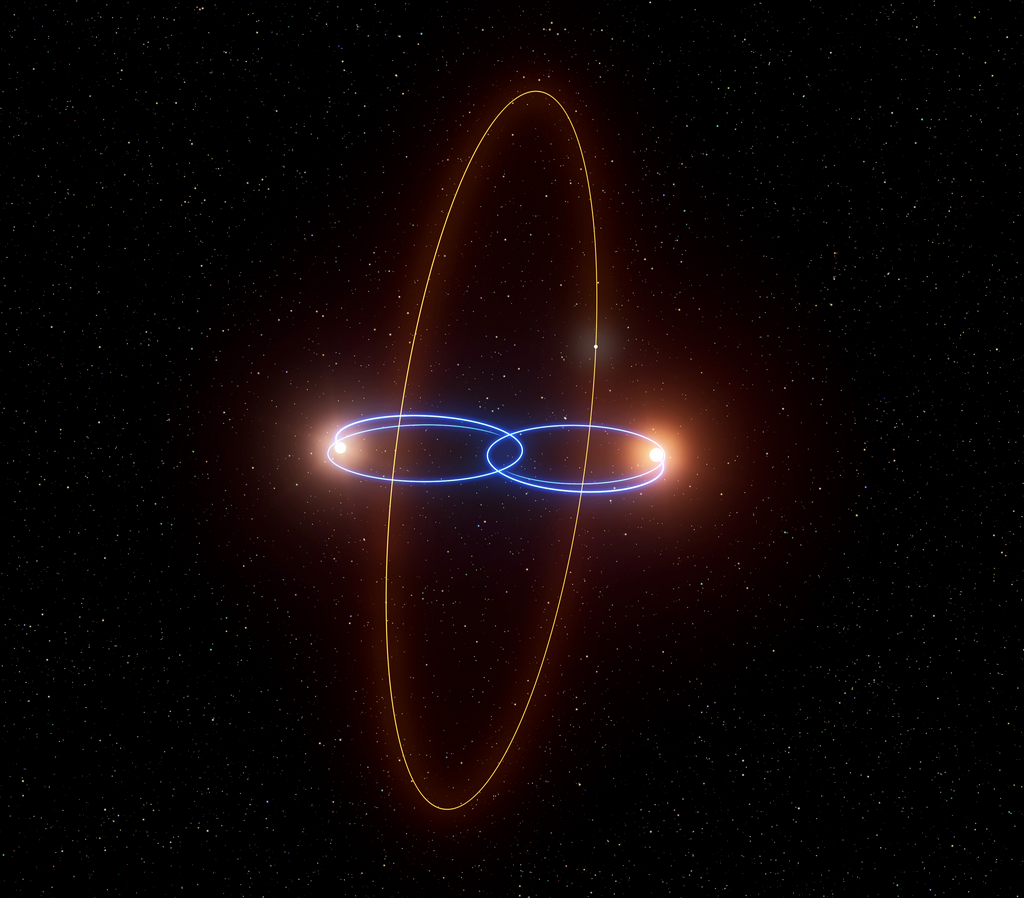
In some cases, stars and gas clouds orbit close to black holes, their motions tracked over time to study gravitational effects and test general relativity.
Gravitational Effects on Light and Observation
The extreme gravity near black holes warps spacetime, bending and distorting the paths of photons. This gravitational lensing can create complex visual phenomena such as multiple light rings, halos, and ghostly images, complicating the interpretation of observational data. Telescopes must therefore rely on advanced modeling and computational techniques to reconstruct accurate representations of these regions.
Multi-Wavelength Observations and Their Importance
Combining data from different types of telescopes operating across the electromagnetic spectrum allows astronomers to build a comprehensive picture of black hole environments. Ground-based radio arrays, space-based X-ray observatories, and infrared instruments each reveal unique aspects of the energetic processes occurring near black holes, overcoming limitations imposed by Earth’s atmosphere and intervening matter.
Scientific Significance of Studying Black Hole Vicinities
Investigating the surroundings of black holes is crucial for advancing our understanding of fundamental physics, including gravity, high-energy astrophysics, and the behavior of matter under extreme conditions. Observations of stars orbiting supermassive black holes, such as Sagittarius A* at the center of the Milky Way, provide empirical tests of Einstein’s theory of general relativity. Moreover, studying jets and accretion processes informs models of galaxy evolution and cosmic feedback mechanisms.
Common Misconceptions About Black Hole Observations
Telescopes can directly see black holes.
Black holes themselves emit no light; telescopes observe the radiation from matter around them or effects on nearby objects.
Images of black holes are simple photographs.
These images are complex reconstructions from indirect signals, requiring advanced data processing and modeling.
Conclusion: The Ongoing Quest to Illuminate the Dark
Although black holes remain invisible in the traditional sense, modern telescopes and observational techniques have unlocked the ability to study their immediate environments with remarkable detail. By capturing and interpreting the light emitted by matter caught in their gravitational grip, astronomers continue to unveil the secrets of these cosmic enigmas. As technology advances, future observations promise even sharper insights into the darkest corners of the universe, fulfilling humanity’s enduring desire to explore the unseen and comprehend the profound mysteries of space.
FAQ
Can telescopes directly see black holes?
No, telescopes cannot directly see black holes; they observe the radiation emitted by nearby matter affected by the black hole's gravity.
What is the Event Horizon Telescope?
The Event Horizon Telescope is a network of radio telescopes that work together to image black holes by capturing radio wave data.
Why are black holes difficult to observe?
Black holes are difficult to observe due to their immense distances from Earth and the faint light from their surroundings.
What is gravitational lensing?
Gravitational lensing is the bending of light around massive objects like black holes, creating visual phenomena that can complicate observations.

Leave a Reply