
Short Answer
Definition of Galaxies
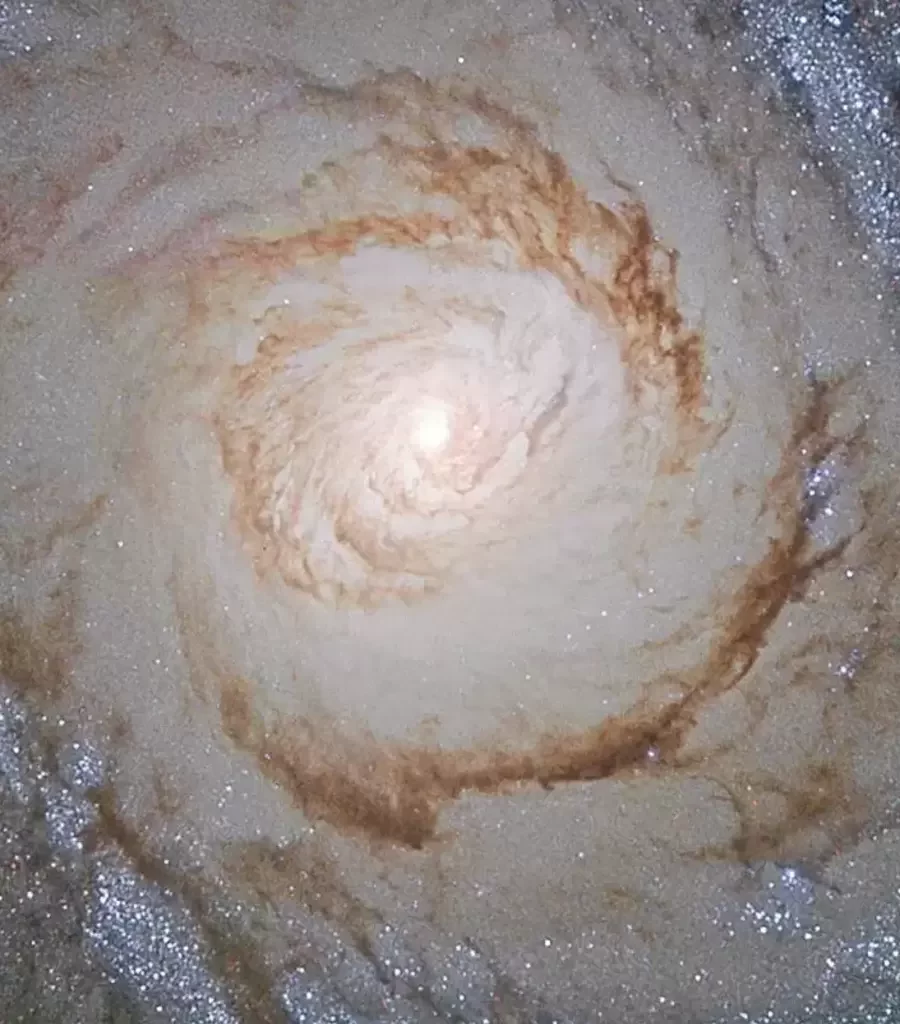
Galaxies are immense cosmic systems composed of stars, gas, dust, and dark matter, bound together by gravity. They appear as luminous formations scattered across the night sky, captivating observers with their vastness and intricate structures. These celestial entities serve as fundamental building blocks of the universe, each containing billions to trillions of stars and spanning thousands to hundreds of thousands of light-years.
- Composition:
Galaxies consist primarily of stars, interstellar gas, dust, and dark matter, all gravitationally linked. - Scale:
They range enormously in size, from dwarf galaxies with a few billion stars to giants hosting trillions. - Visibility:
Many galaxies are visible as faint, glowing patches in the night sky, while others require powerful telescopes to observe.
Classification and Morphology of Galaxies
Galaxies exhibit a remarkable variety of shapes and structures, each revealing clues about their formation and evolutionary history. The primary morphological categories include spiral, elliptical, and irregular galaxies, each with distinct characteristics and astrophysical significance.
Spiral Galaxies
Spiral galaxies are characterized by their flat, rotating disks with winding arms extending outward from a central bulge. These arms are often sites of active star formation, glowing with young, hot stars and nebulae. The Milky Way, our home galaxy, is a barred spiral, featuring a central bar-shaped structure of stars.
Elliptical Galaxies
Elliptical galaxies possess smooth, ellipsoidal shapes lacking the prominent arms seen in spirals. They typically contain older, redder stars and have little interstellar gas, indicating minimal ongoing star formation. These galaxies can be enormous, such as M87, which harbors a supermassive black hole at its core.
Irregular Galaxies
Irregular galaxies defy conventional shapes, often appearing chaotic and asymmetrical. Their irregularity usually results from gravitational interactions or past collisions with other galaxies. Examples include the Large and Small Magellanic Clouds, which are rich in star-forming regions despite their disordered appearance.
Astrophysical Processes in Galaxies
The diverse forms of galaxies reflect dynamic processes such as star formation, gravitational interactions, and galactic mergers. Spiral arms are vibrant nurseries where gas clouds collapse to birth new stars, while elliptical galaxies represent more mature systems with aging stellar populations. Irregular galaxies often bear the marks of cosmic turbulence, showcasing the ongoing evolution of galactic structures.
Technological Advances in Galactic Observation
Our understanding of galaxies has been profoundly enhanced by advancements in observational technology. Space-based telescopes, free from atmospheric distortion, have revolutionized astronomy by capturing high-resolution images across multiple wavelengths. The Hubble Space Telescope, in particular, has provided breathtaking views of galaxies, revealing intricate details invisible from Earth.
Deep Field Imaging
Deep field observations, such as the Hubble Ultra Deep Field, have unveiled galaxies billions of light-years away, offering a window into the early universe. These images reveal galaxies at various stages of formation, bridging the gap between the primordial cosmos and the present-day universe, and deepening our understanding of cosmic evolution.
Cultural and Psychological Significance of Galaxies
Beyond their scientific importance, galaxies resonate deeply within human culture and psychology. Their diverse shapes evoke archetypal patterns and metaphors related to infinity, cycles, and interconnectedness. This symbolic dimension enriches our engagement with the cosmos, transforming astronomical phenomena into sources of philosophical reflection and artistic inspiration.
Why Galaxies Matter
Galaxies are not only fundamental to the structure of the universe but also serve as cosmic laboratories for studying the forces shaping matter and energy. They help us comprehend the origins of stars, planets, and ultimately life itself. Observing galaxies expands our perspective on scale and time, encouraging a profound appreciation for the universe’s complexity and the mysteries that remain to be explored.
Summary
Galaxies, with their breathtaking diversity and immense scale, captivate both the scientific mind and the human spirit. From the elegant spirals to the stately ellipticals and the chaotic irregulars, each galaxy tells a story of cosmic evolution and transformation. Enabled by cutting-edge technology, our exploration of these celestial wonders continues to inspire awe and deepen our understanding of the universe we inhabit.
FAQ
What are the main types of galaxies?
The main types of galaxies are spiral, elliptical, and irregular.
Why are galaxies important?
Galaxies help us understand the universe's structure, the origins of stars and planets, and the fundamental forces of nature.


Leave a Reply