
Short Answer
Understanding the Universe’s Enigmatic Nature
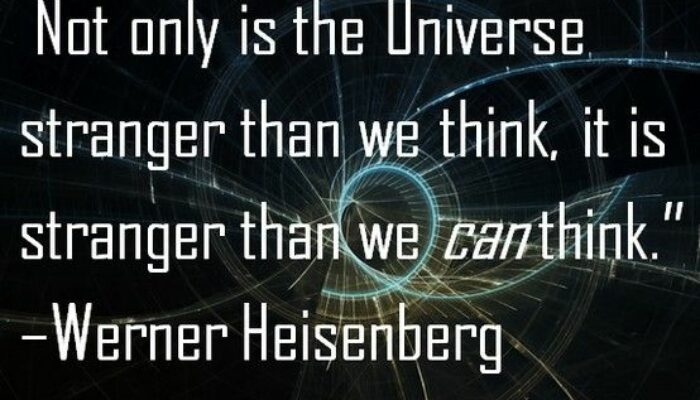
Occasionally, humanity encounters groundbreaking insights that shatter previous understandings, compelling us to explore realms far more mysterious than once imagined. The universe, traditionally viewed as a vast expanse governed by celestial bodies and fixed laws, now challenges our fundamental perceptions of reality. Is the cosmos truly stranger than we have believed? Emerging scientific evidence and philosophical reflections strongly affirm this notion.
Historical Perspective: From Order to Mystery
Initially, the universe seemed to operate like a well-ordered mechanism-a grand design of planets, stars, and galaxies moving predictably through space. Classical Newtonian physics explained this cosmic choreography with gravity as the central force, guiding planets in their orbits and light along defined trajectories. Early thinkers likened the cosmos to a clockwork machine, functioning with precise and comprehensible regularity. Yet, as scientific inquiry advanced, this reassuring predictability gave way to a far more complex and puzzling reality.
Quantum Mechanics: The Microcosm of Uncertainty
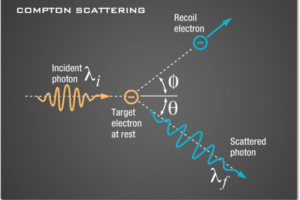
At the smallest scales, quantum mechanics reveals a universe governed by probabilities rather than certainties. Subatomic particles do not behave as solid, deterministic objects but as waves of potentiality. For example, electrons can exist in multiple locations simultaneously until measured, and particles can instantaneously influence each other across vast distances, defying classical concepts of space and time. This quantum behavior implies a reality where uncertainty is fundamental, causality is not absolute, and the observer plays an active role in shaping outcomes. Such phenomena disrupt the classical worldview and suggest that reality is far more fluid and interconnected than previously thought.
The Cosmic Scale: Dark Matter, Dark Energy, and the Structure of the Universe
Beyond the quantum domain lies the vast cosmological scale, where mysteries multiply exponentially. Dark matter and dark energy together constitute about 95% of the universe’s total mass-energy, yet their true nature remains elusive. These invisible components exert gravitational effects that influence galaxy formation and accelerate the universe’s expansion, but they evade direct detection and comprehensive understanding. This reveals a profound truth: the majority of the cosmos is composed of unknown entities, extending the realm of cosmic strangeness well beyond human sensory perception.
The Cosmic Web and Black Holes
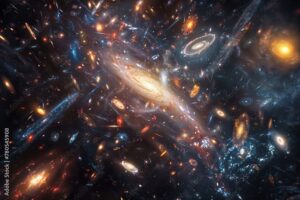
The large-scale structure of the universe resembles a cosmic web-an intricate network of filaments and voids spanning billions of light-years. Galaxies cluster and interact within this framework, evolving over cosmic time. The fabric of spacetime itself is dynamic, warped by gravity and energy, leading to phenomena such as gravitational lensing and time dilation. Among the most enigmatic features are black holes, regions where gravity is so intense that not even light can escape. At their cores lie singularities, points where known physical laws break down, representing frontiers of scientific knowledge and profound philosophical inquiry.
The Multiverse Hypothesis: Expanding the Cosmic Horizon
Adding another layer of complexity is the multiverse theory, which proposes that our universe may be just one of countless others, each with distinct physical constants, dimensions, or laws. If validated, this concept would place our universe as a single element within an infinite cosmic ensemble, challenging the uniqueness of our cosmic environment. The multiverse idea radically expands the scope of existence, suggesting a mosaic of realities that may defy all conventional understanding.
Philosophical Implications: Humanity’s Place in a Strange Cosmos
The recognition of a stranger-than-expected universe prompts profound philosophical reflection on humanity’s role within the cosmos. The Copernican revolution displaced Earth from the center of the universe, fostering humility about our cosmic significance. The emerging picture of a complex, mysterious universe deepens this humility, inspiring awe and existential wonder. Questions arise about whether consciousness, life, and the laws of nature are mere accidents in a vast multiverse or indicators of deeper, perhaps unfathomable, meanings embedded in the cosmic fabric.
The Nature of Time
Time, once viewed as a linear progression from past to future, is now understood as a flexible dimension intertwined with space. Modern physics reveals that time can stretch, contract, and blur distinctions between moments, challenging traditional notions of causality, free will, and the sequential flow of events. This redefinition of time adds another layer of complexity to our understanding of reality.
Scientific Exploration: Unveiling Cosmic Mysteries
Despite the universe’s enigmatic nature, it invites human curiosity and investigation. Advances in technology and theory enable scientists to probe deeper into cosmic origins and structures. Instruments such as space telescopes capture ancient light from the early universe, while particle accelerators recreate conditions moments after the Big Bang. Each discovery enriches our understanding of the universe’s strangeness and complexity.
Embracing Cosmic Strangeness: A New Perspective
Accepting the universe’s profound strangeness fosters a transformative outlook-one that moves beyond confusion to inspire reverence and intellectual humility. This perspective encourages a synthesis of rigorous scientific inquiry and philosophical contemplation, urging humanity to confront the unknown with openness. The cosmos emerges not as a static entity but as a dynamic, unfolding enigma that continuously challenges and reshapes our understanding.
Significance of Recognizing the Universe’s Complexity
Understanding that the universe is far stranger and more intricate than once believed is crucial for advancing science, technology, and philosophy. This awareness drives innovation, fuels the quest for knowledge, and deepens our appreciation of existence. The universe’s mysteries are not obstacles but invitations to expand our cognitive horizons, question assumptions, and engage with the profound enigma of reality itself.
FAQ
What is the multiverse hypothesis?
The multiverse hypothesis suggests that our universe may be one of many universes, each with different physical laws and constants.
How does quantum mechanics challenge traditional views of reality?
Quantum mechanics introduces uncertainty and suggests that particles exist in multiple states until measured, challenging classical deterministic views.
What role does dark matter play in the universe?
Dark matter constitutes a significant portion of the universe's mass and influences the formation and movement of galaxies through its gravitational effects.

Leave a Reply