
Short Answer
Definition of Gamma Radiation
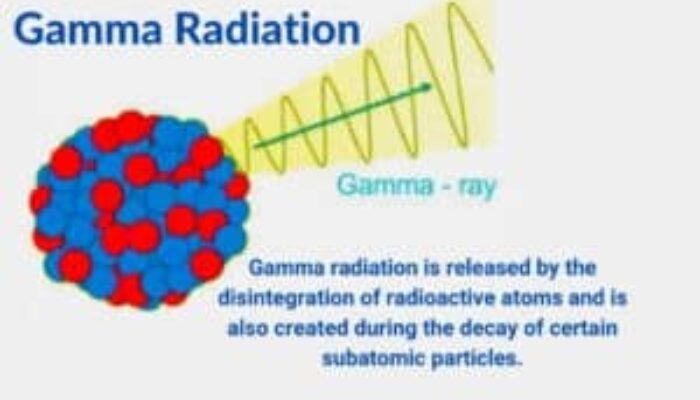
Gamma radiation is a type of electromagnetic radiation characterized by extremely high energy photons emitted from the atomic nucleus. Unlike other forms of radiation, gamma rays possess neither mass nor electric charge, allowing them to penetrate materials that typically block lower-energy radiation. This penetrating ability makes gamma radiation valuable in various fields such as medicine, industry, and scientific research.
- Origin:
Gamma rays are produced during nuclear transitions when an unstable atomic nucleus releases excess energy. - Properties:
They have very short wavelengths and high frequencies, contributing to their deep penetration and ionizing capabilities.
Mechanisms for Producing Gamma Radiation in Laboratories
Generating gamma radiation within controlled laboratory environments primarily involves two fundamental processes: radioactive decay and nuclear reactions induced by particle acceleration. Both methods enable the emission of gamma photons, albeit through different physical phenomena.
Radioactive Decay as a Source
Radioactive decay is the most common laboratory method for producing gamma rays. Certain isotopes, such as cobalt-60 and cesium-137, undergo spontaneous nuclear transformations-beta or alpha decay-that often leave the nucleus in an excited state. The nucleus then releases this excess energy by emitting gamma photons, transitioning to a more stable configuration. This natural process is harnessed in labs equipped with adequate shielding and safety protocols to safely utilize gamma radiation for various applications.
Nuclear Reactions via Particle Acceleration
Another approach involves inducing nuclear reactions by bombarding target nuclei with accelerated charged particles like protons or alpha particles. Particle accelerators, sophisticated devices designed to propel particles to high velocities, facilitate these collisions. The interactions excite the nuclei, which subsequently emit gamma rays as they return to lower energy states. This method allows for controlled gamma ray production and is instrumental in experimental nuclear physics.
Scientific Principles Behind Gamma Ray Emission
Gamma radiation emission is fundamentally linked to changes in the energy states of atomic nuclei. When a nucleus transitions from a higher to a lower energy level, the energy difference is released as a gamma photon.
The energy of the emitted gamma photon can be expressed as:
E = hν
- E: Energy of the gamma photon
- h: Planck’s constant (6.626 × 10⁻³⁴ Js)
- ν (nu): Frequency of the gamma radiation
This relationship highlights the direct proportionality between photon energy and frequency, explaining the high energy associated with gamma rays due to their extremely high frequencies.
Applications of Laboratory-Generated Gamma Radiation
Medical Uses
Gamma radiation plays a crucial role in modern medicine, particularly in diagnostics and treatment. Gamma cameras detect gamma photons emitted from radionuclides within the body, enabling detailed imaging for disease diagnosis. Additionally, targeted gamma radiation therapy is employed to destroy cancerous cells with precision, minimizing damage to surrounding healthy tissue and improving patient outcomes.
Industrial Applications
In industry, gamma rays are utilized for non-destructive testing to inspect the integrity of materials and welds. This technique allows for the detection of internal flaws without damaging the object, ensuring safety and quality control in manufacturing and construction.
Scientific Research
Gamma spectroscopy, which analyzes the energy and intensity of gamma rays emitted by nuclei, provides valuable insights into nuclear structure and reactions. This research advances fundamental physics knowledge and supports developments in various scientific disciplines.
Safety and Ethical Considerations
The production and use of gamma radiation in laboratories come with significant safety challenges. Handling radioactive materials requires stringent protocols to protect personnel from harmful exposure. Proper shielding, training, and regulatory compliance are essential to mitigate risks. Furthermore, the disposal of radioactive waste demands careful environmental management to prevent contamination. Ethical responsibility is paramount to ensure that gamma radiation is used safely and sustainably.
Common Misconceptions About Gamma Radiation
Gamma rays are always harmful and should be avoided.
While gamma radiation can be dangerous in high doses, controlled use in medicine and industry provides significant benefits that outweigh risks when proper safety measures are followed.
Gamma radiation can be easily generated without specialized equipment.
Producing gamma rays requires sophisticated technology such as radioactive isotopes or particle accelerators, along with strict safety protocols.
Significance of Gamma Radiation in Modern Science and Technology
Gamma radiation holds a vital place in advancing scientific knowledge, improving healthcare, and enhancing industrial processes. Its unique properties enable applications that are otherwise impossible with other radiation types. By understanding and harnessing gamma rays responsibly, researchers and practitioners contribute to innovations that improve quality of life and expand the frontiers of technology.
FAQ
What is gamma radiation?
Gamma radiation is a form of electromagnetic radiation with very high energy photons emitted from atomic nuclei during nuclear transitions.
How is gamma radiation produced in laboratories?
It is produced mainly through radioactive decay of isotopes or by nuclear reactions induced by particle accelerators.
What are the risks of working with gamma radiation?
Exposure to high doses can be harmful, so strict safety protocols and shielding are essential to protect personnel.
Are there any misconceptions about gamma radiation?
Yes, some believe gamma rays are always harmful or easy to produce, but controlled use with specialized equipment is safe and effective.



Leave a Reply