
Short Answer
Definition of Ancient Gas Clouds
Ancient gas clouds are vast accumulations of primordial gases, primarily hydrogen and helium, that existed during the earliest stages of the universe. These clouds serve as crucial relics from the universe’s infancy, offering astronomers a glimpse into the conditions prevailing within the first billion years after the Big Bang. Often referred to as components of the “cosmic web,” these gas reservoirs are fundamental to understanding the formation and evolution of the earliest cosmic structures.
- Composition:
Predominantly hydrogen and helium, the simplest and most abundant elements formed shortly after the Big Bang. - Role:
Act as the raw material for the birth of the first stars and galaxies. - Significance:
Provide insights into cosmic chemistry, star formation, and the reionization epoch.
Cosmological Context and Formation
The origin of ancient gas clouds is deeply rooted in the universe’s birth approximately 13.8 billion years ago during the Big Bang. This event initiated a rapid expansion and cooling phase, allowing matter to coalesce into primordial elements. As the universe expanded, these elements aggregated under gravity, forming extensive clouds of gas that would later serve as the building blocks for stars and galaxies.
These gas clouds are integral to the large-scale structure of the cosmos, often arranged in filamentary networks known as the cosmic web. Gravity causes denser regions within these clouds to collapse, triggering the formation of the first stars, known as Population III stars, which played a pivotal role in shaping the early universe.
Mechanisms of Star and Galaxy Formation
The gravitational collapse of dense pockets within ancient gas clouds initiates nuclear fusion, marking the birth of the first stars. These Population III stars are unique in that they formed from pristine gas, devoid of heavier elements. Through stellar nucleosynthesis, these stars generated heavier elements, enriching the surrounding medium and enabling the formation of subsequent generations of stars and planetary systems.
The interaction between gravity and thermodynamics within these clouds governs the complex processes leading to star formation. As stars ignite, their radiation influences the surrounding gas, contributing to the evolution of early galaxies and the interstellar environment.
Cosmic Reionization and Its Significance
Following the emergence of the first stars, their intense ultraviolet radiation ionized the surrounding hydrogen gas, a process known as cosmic reionization. This phase effectively cleared the universe of the opaque “cosmic fog” that dominated the so-called dark ages, allowing light to travel freely and making the universe transparent to observation.
Understanding the timing and dynamics of reionization is essential for reconstructing the universe’s evolutionary timeline and the development of large-scale cosmic structures.
Techniques for Studying Ancient Gas Clouds
Modern astrophysics employs sophisticated methods to analyze the properties of ancient gas clouds, revealing their composition, temperature, and density.
- Absorption Spectroscopy:
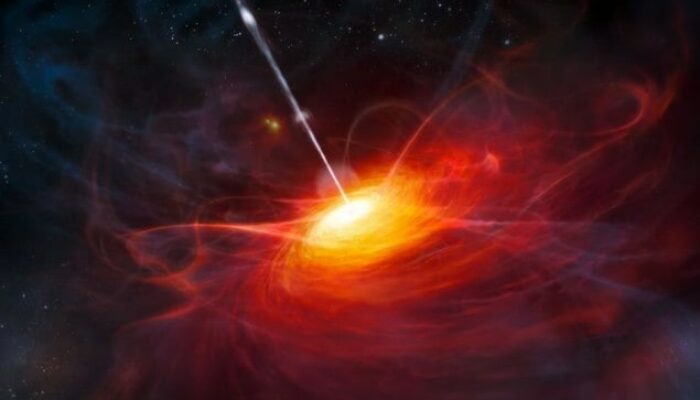
By examining the absorption lines in the light from distant quasars as it passes through gas clouds, astronomers can deduce the chemical makeup and physical conditions of these clouds. This technique is particularly effective in detecting neutral hydrogen and heavier elements indicative of prior stellar activity. - Millimeter and Submillimeter Observations:
Instruments like the Atacama Large Millimeter/submillimeter Array (ALMA) observe emissions at these wavelengths, providing detailed data on temperature variations and density structures within the gas clouds.
Notable Discoveries and Observational Insights
Research into ancient gas clouds has led to significant findings that deepen our understanding of early cosmic history. One such discovery is the identification of “Lyman-alpha blobs,” enormous regions emitting Lyman-alpha radiation, signaling the presence of hydrogen and hinting at the early stages of galaxy formation.
Additionally, the detection of highly redshifted quasars has enabled astronomers to probe gas clouds from epochs when the universe was less than a billion years old. These observations reveal unique chemical signatures and metallicity levels, shedding light on the rapid accumulation of matter and star formation rates during this formative period.
Implications for Cosmology and Astrophysics
Studying ancient gas clouds extends beyond understanding the universe’s origins; it informs fundamental cosmological models by elucidating the interactions between dark matter, baryonic matter, and radiation in the early universe. These insights are vital for refining theoretical frameworks that describe cosmic evolution.
Moreover, the elemental abundances and molecular complexities uncovered within these clouds contribute to broader astrophysical inquiries, including the conditions necessary for habitable environments and the potential emergence of life-supporting planetary systems.
Future Prospects and Continuing Research
Advancements in observational technology and theoretical modeling promise to further unravel the mysteries of ancient gas clouds. The synergy between cutting-edge telescopes and sophisticated simulations is expected to illuminate previously hidden aspects of the universe’s first billion years, enhancing our comprehension of cosmic history and our place within it.
FAQ
What are ancient gas clouds?
Ancient gas clouds are massive collections of primordial hydrogen and helium gas that existed shortly after the Big Bang, serving as the building blocks for the first stars and galaxies.
How do astronomers detect ancient gas clouds?
They analyze absorption lines in the spectra of distant quasars and observe emissions at millimeter and submillimeter wavelengths using telescope arrays such as ALMA.
What role do ancient gas clouds play in cosmic reionization?
Ultraviolet radiation from the first stars ionized the hydrogen in these gas clouds, clearing the cosmic fog and allowing light to travel freely, marking the end of the universe's dark ages.
Why are Population III stars important?
They are the first generation of stars formed from primordial gas clouds, initiating the synthesis of heavier elements essential for later star and planet formation.

Leave a Reply