

Short Answer
Understanding the Master of Science (M.Sc) in Physics
The Master of Science in Physics is a postgraduate degree that delves deeply into the fundamental laws governing the natural world. This advanced academic program equips students with a comprehensive grasp of physical principles, ranging from the intricacies of quantum mechanics to the vast expanse of cosmology. Beyond theoretical knowledge, the curriculum emphasizes analytical thinking, quantitative problem-solving, and experimental techniques, preparing graduates for diverse scientific and technological challenges.
Career Opportunities for M.Sc Physics Graduates
Graduates holding an M.Sc in Physics have access to a broad array of professional avenues. These opportunities span academia, industry, healthcare, government research, entrepreneurship, and international scientific collaboration.
Academic and Research Careers
One traditional path for physics graduates is academia, where they engage in pioneering research and contribute to the expansion of scientific knowledge. However, securing a stable academic role often requires further study, such as pursuing a Ph.D., and involves navigating a competitive environment marked by the need for continuous publication and grant acquisition. The academic route offers intellectual fulfillment and the chance to mentor emerging scientists but demands resilience and dedication.
Industry and Technology Sectors
The private sector increasingly values physicists for their expertise in data interpretation, computational modeling, and problem-solving. Industries such as technology, engineering, finance, and healthcare actively recruit M.Sc graduates for roles like data scientists, computational physicists, and technical analysts. Success in these roles often depends on the ability to integrate scientific knowledge with business insight, highlighting the importance of interdisciplinary skills.
Medical Physics and Healthcare Applications
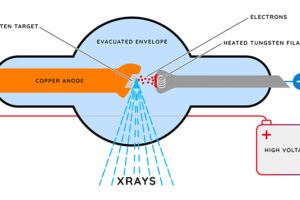
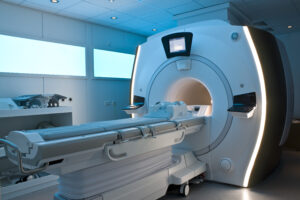
Medical physics represents a specialized field where physics principles are applied to healthcare, particularly in diagnostic imaging and radiation therapy. This sector offers promising career prospects but typically requires additional certifications and training. Professionals in this domain contribute to the advancement of medical technologies and patient care, balancing scientific rigor with clinical applications.
Government and National Laboratory Positions
Government agencies and national laboratories, such as NASA and the Department of Energy, employ physicists to conduct research in applied sciences, materials development, and environmental studies. These roles often involve working on high-impact projects with strict deadlines and significant responsibilities, demanding precision and the ability to perform under pressure.
Entrepreneurship and Innovation
Some physics graduates venture into entrepreneurship, leveraging their scientific expertise to develop innovative technologies and solutions addressing societal challenges like sustainable energy and advanced materials. Transitioning from research to business requires acquiring skills in management, marketing, and finance, presenting unique challenges for scientists entering the commercial arena.
International Collaboration and Global Opportunities
Physics is a globally interconnected discipline, with many professionals participating in multinational research teams. Working across borders fosters cultural exchange and diverse scientific perspectives but also requires adaptability to different regulatory frameworks and communication styles. Success in this environment depends on strong interpersonal skills and cultural competence.
The Importance of Lifelong Learning in Physics
The rapid evolution of fields such as artificial intelligence, quantum computing, and nanotechnology necessitates continuous education for physics professionals. Staying current with emerging technologies and methodologies is essential to maintain relevance and competitiveness in the job market. Lifelong learning ensures that physicists can adapt to new challenges and contribute meaningfully to their disciplines.
Common Misconceptions About an M.Sc in Physics
An M.Sc in Physics only leads to academic careers.
Graduates have diverse options including industry roles, healthcare, government research, and entrepreneurship.
Physics graduates lack business skills.
Many physicists develop interdisciplinary competencies that enable them to succeed in commercial and managerial positions.
Additional certifications are unnecessary.
Certain fields like medical physics require further qualifications beyond the M.Sc degree.
Why Pursuing an M.Sc in Physics Matters
Physics serves as a foundational science that underpins numerous technological advancements and scientific discoveries. An M.Sc in Physics not only fosters critical thinking and analytical skills but also opens doors to careers that drive innovation and societal progress. In an era where technology and science are integral to addressing global challenges, physics graduates play a vital role in shaping the future across multiple sectors.
FAQ
What careers can I pursue with an M.Sc in Physics?
Graduates can work in academia, industry, healthcare, government, and entrepreneurship.
Is further education required after an M.Sc in Physics?
Many academic roles require a Ph.D., and certain fields may need additional certifications.
Are business skills important for physics graduates?
Yes, interdisciplinary skills are valuable in industry roles.




Leave a Reply