

Short Answer
Definition of Medical Physics
Medical physics is a specialized branch of science that merges the principles of physics with medical practice to improve healthcare outcomes. It involves the application of physical concepts and techniques to diagnose, treat, and manage diseases, particularly through the use of radiation and imaging technologies. This interdisciplinary field plays a crucial role in enhancing patient safety, optimizing therapeutic procedures, and advancing diagnostic accuracy.
Fundamental Principles of Medical Physics
At its core, medical physics applies the laws and theories of physics to solve complex medical problems. Key areas include the use of ionizing and non-ionizing radiation, particle interactions with biological tissues, and electromagnetic theory. These principles guide the development and refinement of medical technologies such as imaging systems and radiation therapies, ensuring treatments are both effective and safe for patients.
- Radiation Physics:
Understanding how different types of radiation interact with human tissue to maximize therapeutic benefits while minimizing harm. - Imaging Physics:
Applying physics to improve the quality and safety of diagnostic imaging techniques like MRI, CT, and PET scans. - Dosimetry:
Measuring and calculating the appropriate radiation doses for treatment to ensure precision and patient protection.
Applications of Medical Physics
Medical physics encompasses a broad spectrum of clinical applications, each contributing uniquely to patient care:
- Radiation Oncology:
Utilizes high-energy radiation to target and destroy cancer cells. Techniques such as Intensity Modulated Radiation Therapy (IMRT) and Stereotactic Body Radiation Therapy (SBRT) require precise dose calculations to protect healthy tissues. - Medical Imaging:
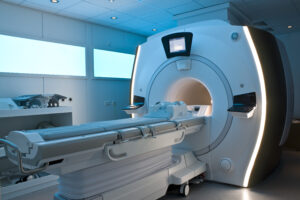
Involves the use of advanced imaging modalities like Magnetic Resonance Imaging (MRI), Computed Tomography (CT), and Positron Emission Tomography (PET) to visualize internal body structures for accurate diagnosis. - Nuclear Medicine:
Employs radioactive substances (radiopharmaceuticals) for both diagnostic imaging and therapeutic purposes, demanding expertise in radionuclide behavior and imaging system calibration.
Educational Pathways and Career Development
Entering the field of medical physics requires a strong foundation in physics, typically starting with an undergraduate degree in physics or a related discipline. Advanced education, such as a Master’s or Ph.D. in medical physics, is often essential for clinical roles. Additionally, clinical residency programs provide practical experience, enabling candidates to apply theoretical knowledge in healthcare settings effectively.
Interdisciplinary Collaboration and Skill Set
Medical physicists operate within multidisciplinary teams, collaborating closely with radiation oncologists, radiologists, technologists, and other healthcare professionals. Effective communication skills are vital to translate complex scientific concepts into understandable information for colleagues and patients. Furthermore, staying current with emerging technologies like computational modeling and artificial intelligence enhances a physicist’s ability to innovate and improve treatment protocols.
Ethical Responsibilities and Patient Safety
Ensuring patient safety is paramount in medical physics, especially given the risks associated with radiation exposure. Professionals must rigorously adhere to safety standards and regulations, focusing on dose optimization to balance treatment benefits against potential risks. Ethical challenges, such as respecting patient autonomy while providing expert recommendations, require sound judgment and integrity.
Challenges and Innovations in Medical Physics
The rapid evolution of technology presents both obstacles and opportunities within medical physics. Regulatory frameworks may lag behind technological advancements, necessitating ongoing research and adaptation to maintain safety and efficacy. Innovations such as personalized medicine, which tailors treatments based on individual patient data, exemplify the field’s potential to revolutionize healthcare.
Future Directions and Emerging Trends
The future of medical physics is poised for transformative growth, driven by advancements in machine learning, predictive analytics, and data-driven decision-making. These technologies promise to enhance diagnostic precision and optimize therapeutic strategies. As the integration of physics and medicine deepens, medical physicists will play an increasingly vital role in shaping patient-centered care and medical innovation.
Significance of Medical Physics in Healthcare
Medical physics is indispensable in modern medicine, bridging the gap between scientific research and clinical application. Its contributions improve diagnostic accuracy, treatment effectiveness, and patient safety, ultimately elevating the standard of care. By combining rigorous scientific methodology with compassionate healthcare delivery, medical physics stands at the forefront of medical progress.
FAQ
What is medical physics?
Medical physics is a branch of science that applies physics principles to medicine, improving diagnostics and treatment through technologies like radiation and imaging.
What qualifications are needed to become a medical physicist?
A strong foundation in physics with an undergraduate degree is essential, along with a Master’s or Ph.D. in medical physics and clinical residency experience.
What are the main applications of medical physics?
Key applications include radiation oncology, medical imaging, and nuclear medicine, each enhancing different aspects of patient care.



Leave a Reply