
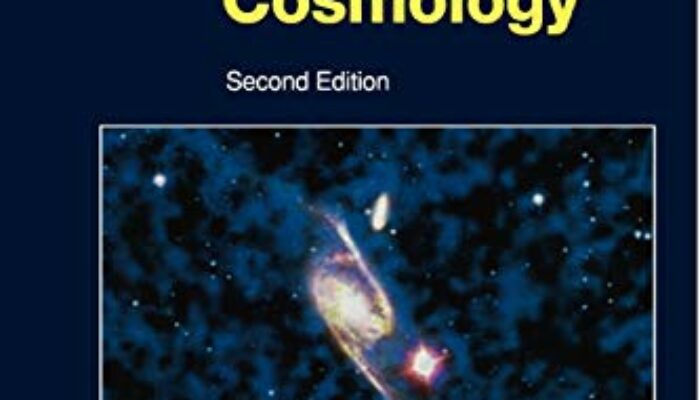
Short Answer
Understanding the Universe: An Overview
The universe has perpetually fascinated humanity, representing an immense and enigmatic realm filled with profound mysteries. Across different civilizations and eras, the human impulse to comprehend the cosmos has been expressed through mythology, philosophy, and scientific exploration. In contemporary times, this fascination is most vividly captured in cosmology and physics literature, which endeavors to decode the complex fabric of reality. The attraction to these subjects stems not only from the solutions they offer but also from the profound existential questions they raise about the nature of existence.
The Intellectual Journey Through Cosmology and Physics
Delving into this enduring curiosity involves engaging with the insights of pioneering thinkers who have translated the universe’s cryptic language into accessible and compelling narratives. These works balance clear, engaging prose with scientific rigor, inviting readers to marvel at phenomena such as black holes, quantum mechanics, and the cosmic microwave background. They reveal a universal truth: beneath the apparent randomness of cosmic events lies an elegant and intricate order woven through space and time.
Key Influential Works in Cosmology and Physics
Stephen Hawking’s “A Brief History of Time”
One of the most influential books that sparked widespread interest in cosmology is Stephen Hawking’s A Brief History of Time. This eloquent work guides readers through complex subjects like the Big Bang, black holes, and the concept of time, blending theoretical physics with philosophical reflection. Hawking’s talent for simplifying the complexities of quantum mechanics and general relativity for a general audience set a new standard for popular science writing, inspiring a deep sense of cosmic humility and awe.
Carl Sagan’s “Cosmos”
Carl Sagan’s Cosmos masterfully combines scientific accuracy with poetic expression. Sagan takes readers on a vast journey through space and history, connecting the universe’s evolution with the development of human consciousness. His narrative richly explores astrophysics alongside the cultural and historical contexts of scientific discovery, rekindling a primal sense of wonder and emphasizing that our quest to understand the universe is intertwined with our identity.
Sean Carroll’s “The Particle at the End of the Universe”
For readers interested in the mathematical foundations of modern cosmology, Sean Carroll’s The Particle at the End of the Universe offers an illuminating account of the discovery of the Higgs boson. This book intricately details particle physics, highlighting the delicate balance between theory and experiment that drives scientific progress. Carroll explains how fundamental particles serve as keys to unlocking the universe’s grand design.
Brian Greene’s “The Elegant Universe”
Brian Greene’s The Elegant Universe explores string theory and the quest for a unified field theory, addressing efforts to reconcile quantum mechanics with gravity. Greene’s clear explanations of multi-dimensional space and the nature of spacetime stimulate intellectual curiosity and provide a glimpse into the cutting edge of theoretical physics. His work evokes a dual fascination: understanding the universe’s fundamental building blocks and seeking an elegant, comprehensive framework.
Roger Penrose’s “The Road to Reality”
On a more philosophical level, Roger Penrose’s The Road to Reality traces the development of mathematical physics with exceptional depth. This comprehensive volume challenges readers to rethink the epistemological foundations of physics and the essence of reality itself, offering speculative insights into whether the universe is fundamentally mathematical in nature.
Steven Weinberg’s “The First Three Minutes”
Steven Weinberg’s The First Three Minutes provides a concise yet detailed account of the universe’s earliest moments, from the Big Bang through the quark-gluon plasma phase to nucleosynthesis. Weinberg’s precise reconstruction of these initial cosmological epochs brings immediacy and clarity to the otherwise abstract expanse of cosmic history.
Exploring Complex Concepts in Cosmology and Physics
Cosmology and physics literature often challenges readers to rethink intuitive notions of reality by presenting paradoxes and counterintuitive phenomena. Topics such as quantum entanglement, dark matter, dark energy, and the multiverse hypothesis push the boundaries of human understanding, inviting contemplation of causality, determinism, and the limits of knowledge.
The Human Element in Scientific Discovery
Biographical and historical accounts of scientific pioneers enrich the narrative of cosmological and physical exploration. Stories about figures like Richard Feynman and Albert Einstein not only demystify groundbreaking theories but also humanize the scientific process. Their struggles, moments of insight, and philosophical challenges highlight that curiosity and perseverance are central to humanity’s quest for knowledge.
The Dual Role of Cosmology and Physics Books
The finest books in cosmology and physics serve as both repositories of knowledge and sources of inspiration. They encourage readers to engage actively with the universe, fostering a profound awareness of our place within the vast cosmic expanse. This engagement is simultaneously humbling and exhilarating, inviting an ongoing intellectual dialogue with the cosmos.
The Enduring Appeal of Cosmology and Physics
The lasting fascination with cosmology and physics stems from a fundamental human drive: the search for meaning. While empirical science provides models and mechanisms, these fields evoke a deep wonder about origins and destiny. The interplay between scientific rigor and metaphysical inquiry creates a rich tapestry that these timeless works weave, reminding us that although the universe may be indifferent to human existence, humans possess a remarkable capacity to seek understanding and illuminate the unknown with knowledge and imagination.
Conclusion: The Cosmic Narrative
The most celebrated cosmology and physics books unfold the universe’s grand story in all its complexity, beauty, and mystery. They offer an intellectual adventure that is open-ended and ever-evolving, inviting readers to become participants in the cosmic saga. For those willing to look beyond everyday experience, these works provide a guiding light-illuminating the intricate symphony of the cosmos and igniting an insatiable desire to explore its depths.
FAQ
What are the best books for understanding cosmology?
Some of the best books include ‘A Brief History of Time’ by Stephen Hawking and ‘Cosmos’ by Carl Sagan.
Why are cosmology and physics important?
They help us understand the fundamental nature of the universe and our place within it.

Leave a Reply