
Short Answer
Definition of Measurement Instruments
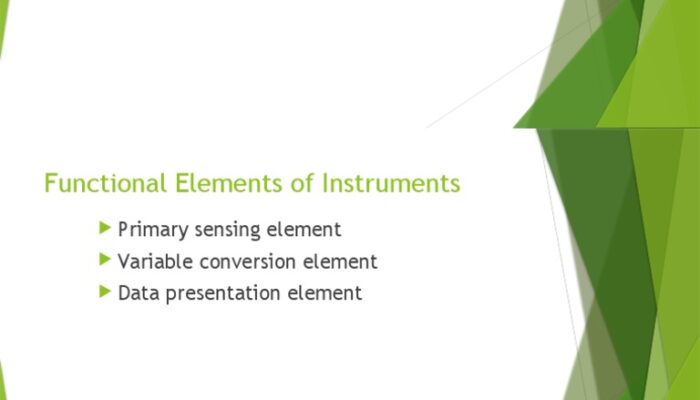
Measurement instruments are essential tools that enable the quantification of physical phenomena, forming the backbone of scientific research and technological progress. These devices translate various physical quantities into interpretable data, allowing us to analyze and comprehend the complexities of the natural world. Their operation involves a sophisticated integration of physics, engineering principles, and material science.
Fundamental Principles Behind Measurement Devices
At the heart of every measurement instrument lies the principle of converting a physical property into a measurable output. This transformation can be achieved through two primary approaches:
- Direct Measurement:
Instruments like rulers and thermometers measure quantities by directly comparing them to a known standard. - Indirect Measurement:
Devices such as voltmeters infer the desired quantity by analyzing related measurable effects, requiring more complex interpretation.
Calibration: Ensuring Accuracy and Reliability
Calibration is a critical process that aligns an instrument’s output with recognized standards to guarantee measurement accuracy. This procedure involves adjusting the device to minimize errors by referencing known values, which is indispensable in disciplines ranging from engineering to medical diagnostics. The precision achieved through calibration forms the foundation of trustworthy empirical data.
Technological Foundations of Measurement Instruments
Measurement devices can be broadly classified based on their underlying technology:
- Analog Instruments:
These rely on mechanical or electromechanical components such as springs, levers, and gears. They provide continuous readings displayed on dials or scales. - Digital Instruments:
Utilizing electronic sensors and microcontrollers, these devices convert physical inputs into numerical data, facilitating complex analysis and easier interpretation.
The choice between analog and digital often involves balancing simplicity against advanced data processing capabilities.
Material Science and Its Role in Instrument Performance
The materials used in constructing measurement instruments significantly influence their sensitivity and durability. For example, thermocouples exploit the thermoelectric effect at metal junctions, where selecting specific alloys enhances temperature measurement accuracy across diverse ranges. Material selection is not only a functional consideration but also reflects deep scientific understanding that informs practical applications.
Environmental Influences on Measurement Accuracy
External conditions such as temperature changes, electromagnetic interference, and atmospheric pressure can affect the precision of measurement instruments. To counteract these influences, modern devices often incorporate shielding and compensation mechanisms. This highlights the dynamic interaction between instruments and their surroundings, emphasizing that measurement is an adaptive process rather than a fixed one.
Advancements in Measurement Technology
Recent progress in microfabrication and nanotechnology has revolutionized measurement instruments by enabling sensor miniaturization. This has led to the creation of portable, highly efficient devices that broaden access to precise measurement tools beyond traditional laboratory settings. Such innovations empower not only professionals but also the general public to participate in scientific data collection and exploration.
Integration of Digital Technology and Artificial Intelligence
The digital era has transformed measurement instruments into sophisticated systems capable of handling large volumes of data. The incorporation of Artificial Intelligence (AI) facilitates real-time analysis and interpretation of complex datasets, uncovering patterns that might be missed by human observers. This synergy enhances the utility of measurement tools and fosters deeper scientific inquiry.
Reliability and Theoretical Foundations
Despite technological advancements, the reliability of measurement instruments depends on a delicate balance between theoretical principles and practical application. Instruments gain significance through their contextual use, where experimental validation and technological innovation converge to produce dependable tools for both scientific research and everyday use.
Significance of Measurement Instruments in Science and Society
Measurement instruments epitomize human creativity and the quest for knowledge. They serve as vital links between abstract concepts and tangible reality, enabling us to quantify and understand the environment around us. As these tools continue to evolve, they will profoundly influence our scientific capabilities and our interaction with the world.
FAQ
What are measurement instruments?
Measurement instruments are tools that convert physical quantities into interpretable data, essential for scientific research and technological progress.
How are measurement instruments calibrated?
Calibration aligns an instrument’s output with recognized standards, ensuring accuracy by minimizing errors through referencing known values.
What is the difference between analog and digital measurement instruments?
Analog instruments provide continuous readings through mechanical components, while digital instruments utilize electronic sensors to convert inputs into numerical data.


Leave a Reply