
Short Answer
Understanding the James Webb Space Telescope
The James Webb Space Telescope (JWST) is a groundbreaking astronomical observatory designed to revolutionize our comprehension of the universe. Positioned as the successor to the Hubble Space Telescope, JWST aims to explore the earliest stages of cosmic history, investigating the formation of stars, galaxies, and potentially the origins of life itself. Far from being a mere scientific instrument, it symbolizes human curiosity, innovation, and the enduring quest to understand our place in the cosmos.
Definition and Purpose
The JWST is a large, space-based telescope equipped with advanced infrared technology, enabling it to observe celestial phenomena that are invisible to optical telescopes. Its primary mission is to look back in time by capturing light emitted billions of years ago, thereby unveiling the universe’s infancy and the processes that shaped its evolution.
- Infrared Observation:
Unlike visible light telescopes, JWST detects infrared radiation, allowing it to see through cosmic dust clouds and observe objects obscured from traditional telescopes. - Cosmic Time Travel:
By observing distant galaxies, JWST effectively looks back billions of years, providing a window into the universe’s earliest epochs.
How the James Webb Space Telescope Operates
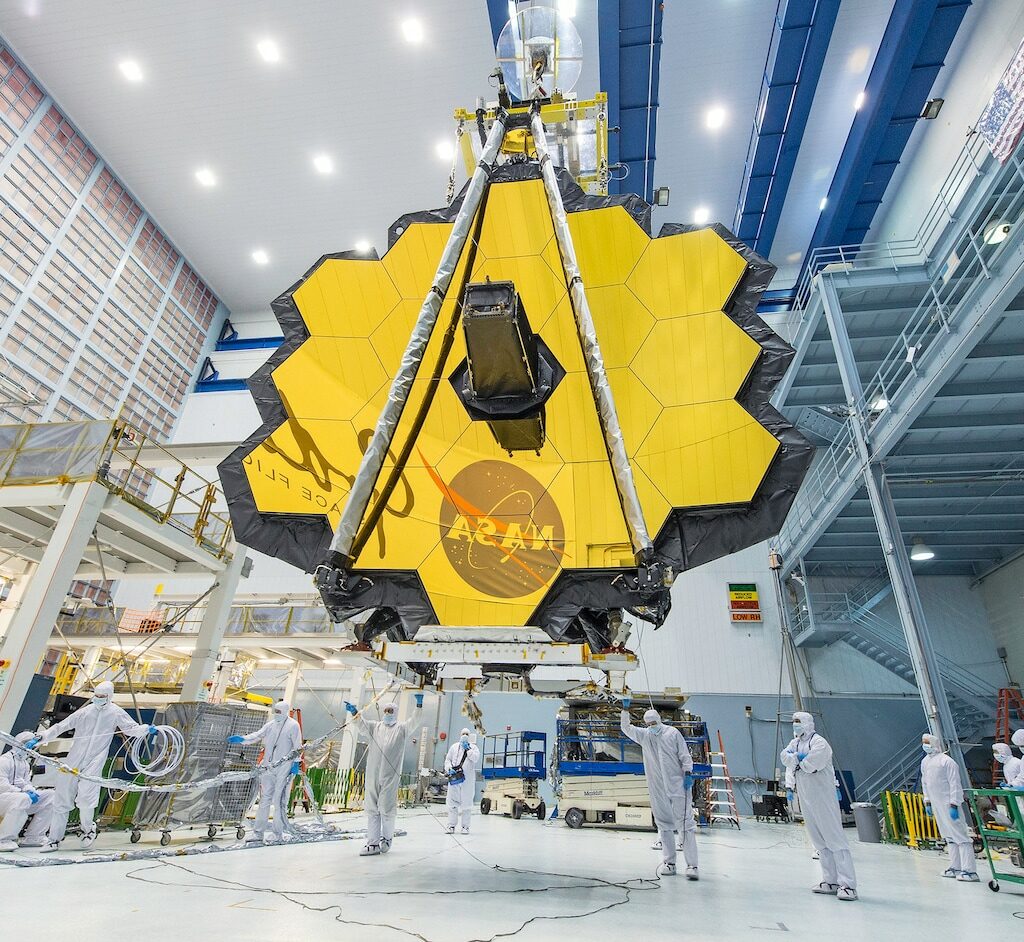
JWST functions by capturing infrared light with its large, segmented primary mirror, which spans over 6 meters in diameter. This mirror collects faint light from distant objects and focuses it onto highly sensitive instruments capable of analyzing the data. The telescope’s location at the second Lagrange point (L2), approximately 1.5 million kilometers from Earth, offers a stable, cold environment essential for infrared observations.
Scientific and Technological Innovations
The development of JWST has driven significant advancements across multiple scientific and engineering disciplines. Its construction required breakthroughs in materials science, cryogenics, optics, and software engineering. These innovations have practical applications beyond astronomy, influencing fields such as medical imaging, telecommunications, and environmental monitoring.
- Materials Science:
Development of lightweight, durable mirror segments capable of withstanding the harsh conditions of space. - Cryogenic Technology:
Systems designed to keep instruments at extremely low temperatures to detect faint infrared signals. - Software Engineering:
Advanced algorithms for data processing and telescope control.
Exploring the Universe’s Origins
One of JWST’s most profound contributions is its ability to observe the formation of the first galaxies and stars. By studying these ancient structures, scientists can test and refine cosmological theories, enhancing our understanding of the universe’s birth and evolution. This research also informs philosophical inquiries about existence and the nature of reality.
Revealing Stellar Nurseries and Planet Formation
JWST’s infrared capabilities allow it to penetrate dense clouds of cosmic dust, revealing star-forming regions previously hidden from view. These stellar nurseries are critical to understanding how stars and planetary systems develop. Insights gained here may shed light on the conditions necessary for life and the potential prevalence of habitable worlds beyond Earth.
Broader Impacts and Societal Benefits
While the JWST’s mission is fundamentally scientific, its ripple effects extend into everyday life. The technologies developed for the telescope have led to improvements in various industries, including healthcare and communication. Moreover, the project exemplifies international cooperation, uniting experts worldwide in pursuit of a shared goal.
Addressing Cost and Value Concerns
Criticism regarding the JWST’s substantial financial investment is common. However, this expenditure represents more than just a monetary cost; it is an investment in human knowledge and progress. The telescope embodies the spirit of exploration that has driven humanity’s advancement for centuries, emphasizing long-term vision over immediate returns.
Cultural and Philosophical Significance
Beyond its scientific achievements, JWST serves as a symbol of hope and collaboration. It demonstrates what humanity can accomplish when united by curiosity and determination. In a world often marked by division, the telescope encourages a collective perspective focused on stewardship, perseverance, and the pursuit of knowledge.
Inspiring Future Generations
The awe-inspiring images and discoveries from JWST have the power to ignite passion for science, technology, engineering, and mathematics (STEM) fields. This inspiration is vital for cultivating the next generation of innovators and explorers, ensuring continued progress and discovery.
The Cosmic Connection to Human Existence
The elements that compose our planet and ourselves were forged in ancient stars. By studying these celestial processes, JWST deepens our understanding of Earth’s origins and the conditions that made life possible. This cosmic perspective fosters humility and a greater appreciation for our place in the universe.
Challenges in Science Communication
Despite its significance, the complex nature of JWST’s work can make it difficult to engage the general public. Effective communication is essential to bridge this gap, ensuring that the telescope’s discoveries are accessible and appreciated beyond academic circles. Enhancing public understanding maximizes the societal impact of this monumental mission.
Conclusion: Embracing the Quest for Knowledge
Supporting the James Webb Space Telescope transcends endorsing a single project; it reflects a commitment to exploration, innovation, and the enduring human desire to understand the cosmos. As JWST unfolds its golden mirrors and peers into the depths of space and time, it invites us all to participate in a timeless journey of discovery, reminding us that curiosity is fundamental to our identity and future.
FAQ
What is the purpose of the James Webb Space Telescope?
The JWST aims to explore the earliest stages of cosmic history, including the formation of stars and galaxies, and potentially the origins of life.
How does the James Webb Space Telescope differ from the Hubble Space Telescope?
Unlike Hubble, which observes in visible light, JWST uses infrared technology to see through cosmic dust clouds and capture light from the universe’s infancy.
What are some technological innovations driven by the JWST?
The development of JWST has led to advancements in materials science, cryogenics, and software engineering, with applications beyond astronomy.





Leave a Reply