
Short Answer
Understanding the Leading Space Agencies
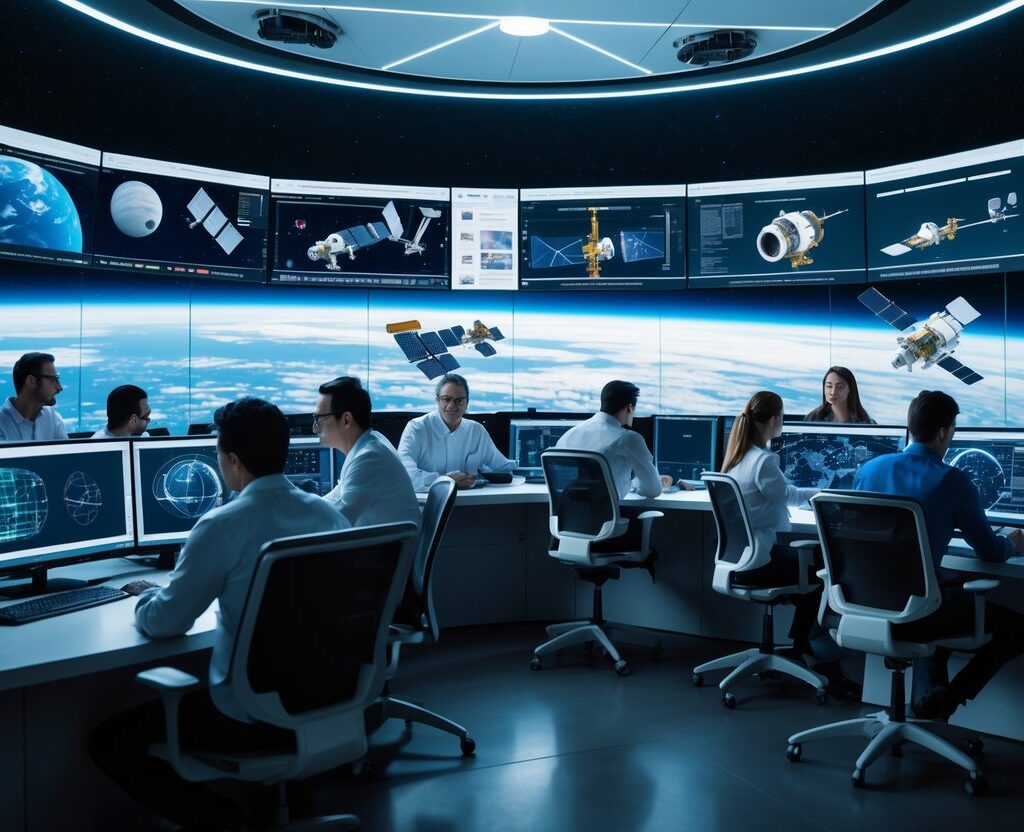
Determining which space agency holds the title of the most advanced in today’s era of cosmic exploration is a complex and multifaceted inquiry. This evaluation extends beyond mere technological achievements to include mission sophistication, scientific contributions, international partnerships, and visionary planning. Modern space agencies represent not only centers of rocket launches and satellite deployments but also symbols of geopolitical influence, scientific progress, and technological innovation. Exploring these dimensions reveals a dynamic interplay of competition and collaboration, prompting a reevaluation of what truly constitutes “advancement” in space exploration.
Profiles of Prominent Space Agencies
NASA: The United States’ Space Pioneer
The National Aeronautics and Space Administration (NASA) stands as a monumental figure in space history, renowned for its role in humanity’s first lunar landing. Today, NASA continues to push boundaries with ambitious projects such as the Artemis program, which aims to establish a sustainable human presence on the Moon by the end of this decade. Achieving this goal requires breakthroughs in propulsion technology, life-support systems, and extensive collaboration with private sector innovators. NASA’s evolving partnerships with commercial companies highlight a strategic shift towards integrating governmental expertise with entrepreneurial innovation, fostering a new era of space exploration.
Space Development Agency: Innovating Defense in Space
The Space Development Agency (SDA) is a relatively new player focused on rapidly deploying space-based assets to enhance national security and tactical capabilities. Unlike traditional agencies centered on exploration or scientific research, the SDA prioritizes operational immediacy, developing resilient satellite constellations and ensuring real-time data sovereignty to support defense objectives. Its emphasis on rapid prototyping and unconventional approaches introduces a fresh dimension to space advancement, one defined by practical application and responsiveness rather than distant exploratory missions.
China National Space Administration: Ambitious Expansion
The China National Space Administration (CNSA) has garnered international attention through its groundbreaking lunar missions and the construction of the modular Tiangong space station. CNSA’s robotic explorations, including the Chang’e lunar landers, demonstrate a sophisticated industrial base and strategic foresight. The agency’s focus on autonomy, infrastructure development, and scientific discovery reflects a long-term vision to establish a foothold on the Moon and Mars, challenging existing space power dynamics and asserting China’s growing influence in extraterrestrial endeavors.
European Space Agency: Multinational Collaboration
The European Space Agency (ESA) exemplifies the power of multinational cooperation, combining the expertise and resources of multiple countries to achieve ambitious scientific and exploratory goals. Notable missions such as the Rosetta comet probe and the Gaia space observatory underscore ESA’s dedication to scientific precision and innovation. By leveraging collective talent and funding, ESA fosters a sustainable and technologically advanced space ecosystem, positioning itself as a key contributor to global space exploration efforts.
Roscosmos: Russia’s Enduring Space Legacy
Roscosmos, the Russian Federal Space Agency, carries a rich heritage as the pioneer that launched the first human into orbit. Despite facing contemporary challenges, Roscosmos remains integral to maintaining critical orbital infrastructure, including crew and cargo missions to the International Space Station (ISS). The agency’s strength lies in its ability to sustain and evolve essential space assets, reflecting a pragmatic approach to advancement grounded in operational reliability and resilience.
Technological Innovations Driving Space Advancement
Technological progress in space exploration is diverse and multifaceted. It includes innovations such as ion propulsion systems, reusable rocket technology, and autonomous spacecraft capable of interplanetary navigation. The rise of reusable rockets, largely driven by private companies but increasingly integrated with agencies like NASA, marks a paradigm shift from expendable missions to cost-effective, repeatable space ventures. Modern technological advancement demands agility, sustainability, and adaptability to thrive in the rapidly evolving space environment.
Strategic Vision and Collaborative Frameworks
Beyond hardware and mission complexity, the concept of advancement encompasses strategic foresight, multidisciplinary expertise, and forward-looking policies. Agencies that promote openness, international cooperation, and the inclusion of emerging space actors-whether nations or private enterprises-demonstrate a sophisticated understanding of progress. Key areas such as space traffic management, orbital debris mitigation, and planetary protection are increasingly recognized as vital components of leadership in space exploration, ensuring sustainable and responsible use of extraterrestrial environments.
The Role of Commercial Space Enterprises
The rapid innovation driven by commercial companies like SpaceX and Blue Origin is reshaping the space landscape. These private entities, operating independently or in partnership with traditional agencies, blur the lines between public and private space endeavors. This fusion compels governmental agencies to adopt more flexible and visionary approaches, embracing new business models and entrepreneurial energy. Consequently, the question of which agency is most advanced now includes the ability to integrate effectively within a growing space economy.
Challenges in Defining the “Most Advanced” Space Agency
Identifying a single “most advanced” space agency is inherently challenging due to the diverse priorities and strengths each agency brings. NASA’s visionary exploration, SDA’s operational innovation, CNSA’s assertive expansion, ESA’s collaborative precision, and Roscosmos’ enduring infrastructure each represent unique facets of advancement. The current multipolar space environment suggests that progress is best viewed as a mosaic of technological, scientific, strategic, and economic achievements rather than a singular hierarchy.
The Future of Space Exploration: Cooperation and Competition
The trajectory of human spaceflight depends equally on collaboration and competition. The collective ability of humanity to overcome terrestrial limitations and harness the vast potential of space will define the next chapters of exploration. Rather than focusing solely on which agency leads in technology or missions, the emphasis should be on which organizations will create the most lasting and transformative impacts in the ongoing story of space discovery.
FAQ
What defines a space agency as 'advanced'?
An advanced space agency is characterized by its technological achievements, mission sophistication, and collaborative efforts in space exploration.
How does international cooperation influence space exploration?
International cooperation enables resource sharing, knowledge exchange, and collaborative missions, enhancing the capabilities and reach of space agencies.






Leave a Reply