
Short Answer
Overview of Space Telescopes and Their Evolution
Space telescopes have long symbolized humanity’s relentless quest to unravel the mysteries of the cosmos. Over the past several decades, pioneering instruments such as the Hubble Space Telescope and the Spitzer Space Telescope have dramatically expanded our cosmic horizons. These observatories have provided unparalleled views of galaxies, nebulae, and the intricate structure of space-time itself. However, as scientific ambitions grew, the limitations of these earlier telescopes became apparent, prompting the development of a more advanced observatory: the James Webb Space Telescope (Webb). This next-generation telescope is engineered to exceed the capabilities of its predecessors in both precision and observational range.
Definition and Purpose of the James Webb Space Telescope
The James Webb Space Telescope is a cutting-edge astronomical observatory designed to explore the universe primarily in the near- and mid-infrared wavelengths. Its mission is to investigate the earliest epochs of cosmic history, including the formation of the first galaxies, stars, and planetary systems. Webb’s advanced technology enables it to peer deeper into space and time than previous telescopes, offering transformative insights into the universe’s origins and evolution.
Historical Context: Hubble and Spitzer Telescopes
Hubble Space Telescope
Launched in 1990, the Hubble Space Telescope revolutionized astronomy by capturing high-resolution images in visible and ultraviolet light. Its sharp imaging capabilities unveiled phenomena such as star formation, black holes, and distant galaxies billions of light-years away. The famous Hubble Deep Field images revealed some of the faintest and most distant galaxies ever observed, significantly advancing cosmological research. Despite its groundbreaking achievements, Hubble’s spectral range is limited, and its aging instruments restrict its ability to explore certain cosmic phenomena.
Spitzer Space Telescope
Operational since 2003, the Spitzer Space Telescope specialized in infrared astronomy, allowing scientists to observe cooler and dust-obscured regions of space invisible to optical telescopes. Spitzer’s observations shed light on star formation within dense molecular clouds and the atmospheric composition of exoplanets. However, its relatively small mirror and sensitivity constraints limited its reach to relatively nearby cosmic structures.
Technological Advancements of the James Webb Space Telescope
Enhanced Mirror and Light Collection
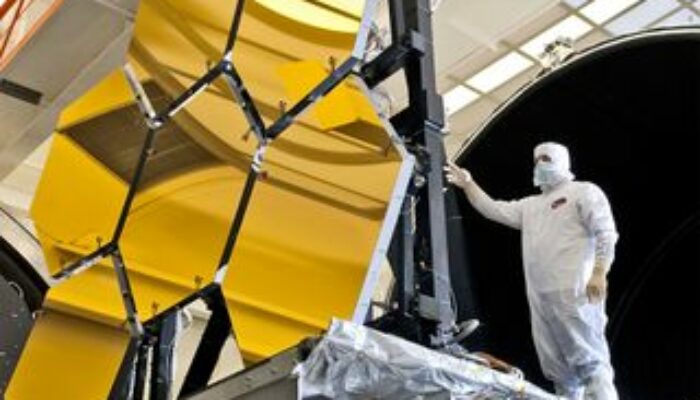
Webb’s primary mirror measures 6.5 meters in diameter, nearly three times larger than Hubble’s 2.4-meter mirror. This substantial increase in aperture allows Webb to gather over six times more light, enabling it to detect extremely faint and distant objects. The mirror is segmented and coated with gold to optimize infrared reflectivity and reduce thermal interference, crucial for capturing subtle details from billions of light-years away.
Advanced Instrumentation and Spectral Range
Equipped with a sophisticated array of instruments, Webb supports diverse observational techniques including photometry and spectroscopy across a broad infrared spectrum. This versatility facilitates detailed chemical analyses of exoplanet atmospheres, studies of the interstellar medium, and investigations into galaxy formation processes. Webb’s spectral sensitivity allows astronomers to identify molecular signatures and physical conditions in planetary systems and star-forming regions with unprecedented accuracy.
Optimal Operational Environment
Positioned approximately one million miles from Earth at the second Lagrange point (L2), Webb benefits from a stable and cold environment ideal for infrared observations. Unlike Hubble, which orbits relatively close to Earth and contends with thermal and magnetic interference, Webb’s location minimizes cosmic background noise. Additionally, its large sunshield-comparable in size to a tennis court-maintains the telescope’s instruments at extremely low temperatures, essential for detecting faint infrared signals.
Scientific Contributions and Discoveries
Exploring the Cosmic Dawn
Webb’s high-resolution imaging capabilities reveal the universe’s earliest galaxies and stars, providing insights into cosmic structures during their formative stages. These images surpass the depth and detail of Hubble’s deepest fields, offering spectral data that elucidate the composition and evolution of primordial celestial bodies.
Exoplanet Atmosphere Analysis
Through detailed spectroscopic observations, Webb enables the identification of key atmospheric components such as water vapor, methane, and carbon dioxide on distant exoplanets. This capability advances the search for potential biosignatures and enhances our understanding of planetary environments beyond the solar system.
Insights into Star and Planet Formation
Webb’s sensitivity to cold, dust-enshrouded regions allows astronomers to study stellar nurseries and circumstellar disks with remarkable clarity. These observations illuminate the earliest phases of star and planet formation, linking cosmic evolution to the origins of our own solar system.
Contributions to Dark Matter and Dark Energy Research
By mapping galaxy distributions and analyzing gravitational lensing effects in the infrared spectrum, Webb provides critical data that complements previous missions. These findings refine models of cosmic expansion and deepen our understanding of the universe’s dominant yet mysterious components: dark matter and dark energy.
Common Misconceptions About Space Telescopes
The James Webb Space Telescope is simply a more powerful version of Hubble.
Webb represents a fundamental shift in observational capability, focusing on infrared wavelengths and exploring cosmic phenomena inaccessible to Hubble.
Infrared telescopes like Spitzer and Webb only observe heat.
While infrared detects heat, these telescopes reveal critical information about cold and dust-obscured regions, enabling studies of star formation and planetary atmospheres.
Significance of the James Webb Space Telescope
The James Webb Space Telescope marks a monumental advancement in astronomical research, opening new windows into the universe’s infancy, the birthplaces of stars and planets, and the atmospheres of distant worlds. Its innovative design, expansive mirror, and strategic positioning empower scientists to explore cosmic phenomena with unprecedented depth and clarity. Webb’s discoveries not only enhance our scientific knowledge but also inspire profound reflections on our place in the cosmos, heralding a new era of exploration and understanding.
FAQ
What are the main capabilities of the James Webb Space Telescope?
Webb can conduct high-resolution imaging, analyze exoplanet atmospheres, and study cosmic structures with unprecedented clarity due to its advanced instruments and large mirror.
Why is the James Webb Space Telescope important for astronomy?
It allows astronomers to explore the universe's early history, understand the formation of stars and planets, and investigate dark matter and dark energy.

Leave a Reply