

Short Answer
Definition of Light Speed and Gravity
Light is widely recognized as the fastest phenomenon in the universe, traveling at an approximate speed of 299,792 kilometers per second in a vacuum. This constant speed is a cornerstone of modern physics, particularly underpinning Einstein’s theory of relativity. Gravity, on the other hand, is the invisible force responsible for shaping the cosmos by influencing the motion of matter and energy. A fundamental question arises: does gravity have the capacity to alter the speed of light as it moves through the vast expanses of space?
Fundamental Concepts: Light, Gravity, and Spacetime
To address this question, it is essential to explore the classical and contemporary perspectives on light and gravity, and how they interact. Unlike objects with mass, photons-the particles of light-are massless and always travel at a fixed speed in a vacuum. Therefore, gravity does not slow light in the conventional sense. Instead, the interaction between gravity and light is better understood through the lens of spacetime curvature, a concept introduced by Einstein’s General Theory of Relativity.
Spacetime Curvature and Geodesics
Einstein’s theory redefines gravity not as a force acting at a distance but as the bending or warping of spacetime caused by massive objects. Light follows these curves, traveling along geodesics, which are the shortest possible paths in curved spacetime. This means that while light’s intrinsic speed remains constant locally, its trajectory is influenced by the geometry of spacetime shaped by gravity.
How Gravity Influences the Path of Light
One of the most striking manifestations of gravity’s effect on light is gravitational lensing. When light from distant celestial bodies passes near massive objects such as black holes or galaxy clusters, its path bends. This bending can produce multiple images, magnify, or distort the appearance of the source. However, this phenomenon does not imply that gravity slows light; rather, the light’s path lengthens due to curvature, while its local speed remains unchanged.
Coordinate Speed vs. Local Speed of Light
It is crucial to distinguish between the coordinate speed of light, as measured by a distant observer using a global frame of reference, and the local speed measured by an observer in the immediate vicinity of the light. In strong gravitational fields, the coordinate speed may appear reduced because the curvature of spacetime and gravitational time dilation cause light to take longer to traverse a given distance. Yet, any local observer will always measure the speed of light as constant.
Gravitational Time Dilation and Its Effects
Gravitational time dilation is a phenomenon where time itself runs slower near massive bodies compared to regions farther away. This effect influences how the speed of light is perceived by different observers. For example, a photon emitted near a neutron star may seem to accelerate when observed from a distant vantage point, but locally, its speed remains constant. Thus, gravity modifies the framework of time and space through which light’s speed is measured, without altering the fundamental speed of light.
Shapiro Time Delay: A Practical Illustration
Predicted by physicist Irwin Shapiro in 1964, the Shapiro time delay quantifies the additional time taken by light to travel near a massive object due to spacetime curvature. When radar signals are sent to planets or spacecraft and pass close to the Sun, they return slightly later than expected if space were flat. This delay is not caused by a reduction in light’s speed but by the increased path length and the effects of gravitational time dilation on coordinate time.
Gravitational Redshift and Energy Loss of Photons
Another important effect related to gravity’s influence on light is gravitational redshift. As photons climb out of gravitational wells, they lose energy, which manifests as a shift toward longer wavelengths or lower frequencies. This phenomenon demonstrates how gravity affects the properties of light without changing its local speed. Observers situated farther from the gravitational source detect photons with diminished energy, highlighting the complex interplay between gravity and electromagnetic radiation.
Light Near Black Holes: Extreme Gravitational Effects
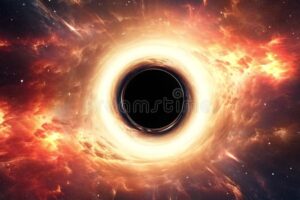
The environment around black holes provides a profound example of gravity’s impact on light. The event horizon marks a boundary beyond which light cannot escape. To a distant observer, photons attempting to flee the black hole appear increasingly redshifted and delayed, eventually fading from view. Inside this region, spacetime curvature becomes so intense that traditional concepts of space and time lose their usual meaning, requiring advanced theoretical frameworks to describe light’s behavior.
Cosmological Implications of Gravity’s Influence on Light
On a grand scale, gravity shapes the journey of light across the universe. The cosmic microwave background radiation and light from distant galaxies are continuously deflected and distorted by the gravitational fields of massive galaxy clusters. These gravitational imprints enable astronomers to map the distribution of dark matter and understand the large-scale structure of the cosmos, illustrating gravity’s pivotal role in the universe’s luminous architecture.
Theoretical Perspectives: Gravity and Quantum Mechanics
In theoretical physics, efforts to reconcile gravity with quantum mechanics open new avenues for understanding the relationship between light and gravity. Frameworks such as quantum gravity, string theory, and loop quantum gravity suggest that under extreme conditions, the nature of spacetime-and consequently the behavior of light-might exhibit subtle deviations. Although these ideas remain speculative, they represent active areas of research that could transform our comprehension of fundamental physics.
Common Misconceptions About Gravity and Light Speed
Gravity slows down light as it passes near massive objects.
Gravity does not reduce the local speed of light; instead, it bends the path of light and affects the measurement of its speed from different reference frames due to spacetime curvature and time dilation.
The delay in light’s travel time near massive bodies means light is moving slower.
The increased travel time results from longer paths and gravitational time dilation, not a decrease in the intrinsic speed of light.
Why Understanding Gravity’s Effect on Light Is Important
Comprehending how gravity influences light is vital for multiple scientific disciplines, including astrophysics, cosmology, and fundamental physics. It enables precise measurements of cosmic distances, the mapping of dark matter, and the testing of general relativity. Moreover, it deepens our understanding of the universe’s structure and the fundamental laws governing space, time, and energy.
Summary: The Intricate Dance Between Light and Gravity
In essence, gravity does not slow light in the traditional sense but profoundly shapes the routes light takes and the way it is observed. Through bending trajectories, dilating time, causing measurable delays, and shifting frequencies, gravity influences light without violating its immutable local speed. This elegant interplay between light and the warped fabric of spacetime exemplifies the harmony of the cosmos and continues to inspire scientific exploration into the nature of reality.
FAQ
Does gravity slow down light?
No, gravity bends the path of light but does not change its local speed.
What is gravitational lensing?
Gravitational lensing is the bending of light from distant objects due to the gravitational field of massive objects.
What is gravitational time dilation?
Gravitational time dilation is the phenomenon where time runs slower in stronger gravitational fields.


Leave a Reply