

Short Answer
Understanding Gamma Rays and Their Cosmic Significance
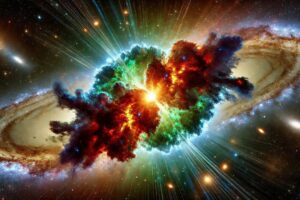
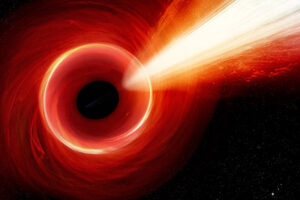
Gamma rays represent the most energetic form of electromagnetic radiation, characterized by their extremely high-frequency photons. These rays emerge from some of the universe’s most violent and energetic events, such as the explosive deaths of massive stars, collisions involving neutron stars or black holes, and the powerful jets emitted by active galactic nuclei. Their energy levels far exceed those of visible light, X-rays, and ultraviolet radiation, often surpassing hundreds of thousands of electron volts. The environments that produce gamma rays push the boundaries of known physics, involving complex interactions governed by quantum electrodynamics and relativistic particle dynamics.
Exploring the Energy Spectrum Beyond Gamma Rays
While gamma rays mark the upper limit of the electromagnetic spectrum in terms of photon energy, the cosmos hosts phenomena that transcend this boundary in other forms. The question arises: are there cosmic messengers or particles with energies exceeding those of gamma rays, and what might they reveal about the universe’s most extreme conditions?
Ultra-High-Energy Cosmic Rays (UHECRs)
One of the most compelling candidates for surpassing gamma-ray energies are ultra-high-energy cosmic rays. These are charged particles, primarily protons and atomic nuclei, traveling through space with energies exceeding 1018 electron volts, sometimes reaching up to 1020 electron volts. Unlike photons, their charged nature causes them to be deflected by galactic magnetic fields, complicating efforts to trace their origins. Despite this, UHECRs challenge the notion that gamma rays represent the highest energy quanta, suggesting a realm of energetic particles that remain enigmatic and under active investigation.
Neutrinos: Cosmic Ghost Particles
Neutrinos offer another window into ultra-high-energy astrophysical processes. These nearly massless, electrically neutral particles can traverse vast cosmic distances without being absorbed or deflected by matter or electromagnetic fields. Recent advances in neutrino astronomy have detected neutrinos with energies comparable to or exceeding those of gamma rays from stellar explosions. Their ability to escape dense, obscured regions of space provides unique insights into phenomena hidden from electromagnetic observation, such as the interiors of stars and violent cosmic collisions.
Theoretical Frontiers: Exotic Particles and Phenomena
Beyond known particles, theoretical physics proposes the existence of exotic entities that could operate at energy scales beyond gamma rays. Hypothetical particles like axions, dark photons, or those arising from extra-dimensional theories may interact weakly or not at all with electromagnetic radiation, making them elusive to current detection methods. These particles could influence cosmic processes indirectly, for example, by altering photon propagation or affecting cosmic particle fluxes, hinting at hidden layers of the universe’s energy landscape.
Gravitational Waves: A New Cosmic Messenger
Gravitational waves, ripples in the fabric of spacetime generated by massive accelerating bodies such as merging black holes or neutron stars, represent a fundamentally different form of cosmic information carrier. Although not electromagnetic radiation, their discovery has expanded our understanding of high-energy astrophysical events. Gravitational waves complement gamma-ray observations by providing insights into phenomena that may be invisible or obscured in the electromagnetic spectrum, thus broadening the scope of what lies beyond gamma rays.
Limits of the Electromagnetic Spectrum and Quantum Gravity
The electromagnetic spectrum theoretically culminates at gamma rays, but at energy scales approaching the Planck energy (~1019 GeV), new physics may emerge. At these extreme energies, quantum gravitational effects could dominate, potentially altering the nature of space and time themselves. Theories such as string theory and loop quantum gravity attempt to describe these regimes, but direct detection remains beyond current technological capabilities. Additionally, cosmic attenuation processes, like interactions with the cosmic microwave background, limit the propagation of ultra-high-energy photons across intergalactic distances.
Challenges and Philosophical Implications
The apparent energy ceiling for electromagnetic radiation raises profound questions. How do we reconcile the existence of particles and waves with energies beyond gamma rays? Could the interstellar medium act as a natural filter, transforming the universe’s highest energy photons into other forms? Might undiscovered dimensions or exotic physics harbor phenomena that evade current detection techniques? These inquiries challenge both our scientific understanding and philosophical perspectives on the universe’s fundamental limits.
The Role of Multi-Messenger Astronomy
Modern astrophysics increasingly relies on multi-messenger astronomy, which integrates data from electromagnetic radiation, neutrinos, cosmic rays, and gravitational waves. This holistic approach enables a more comprehensive understanding of high-energy cosmic events by combining diverse signals that each reveal unique aspects of astrophysical processes. Through this synergy, scientists aim to unravel the complex hierarchy of energy scales and physical mechanisms operating beyond the gamma-ray domain.
Significance and Future Directions
Investigating what lies beyond gamma rays is not solely about identifying higher energy photons but about expanding the horizons of human knowledge and technological innovation. This quest drives the development of advanced detectors, novel observational strategies, and refined theoretical models. Whether through elusive particles, gravitational signals, or exotic quantum phenomena, the universe continues to invite exploration beyond the gamma-ray frontier, promising profound discoveries about its most secretive and energetic realms.
FAQ
What are gamma rays?
Gamma rays are the most energetic form of electromagnetic radiation, produced by the universe’s most violent events.
What are ultra-high-energy cosmic rays?
Ultra-high-energy cosmic rays are charged particles with energies exceeding 10^18 electron volts, challenging the notion that gamma rays are the highest energy quanta.
How do neutrinos contribute to our understanding of the universe?
Neutrinos are nearly massless particles that can provide insights into astrophysical processes, especially from hidden regions of space.



Leave a Reply