
Short Answer
Definition
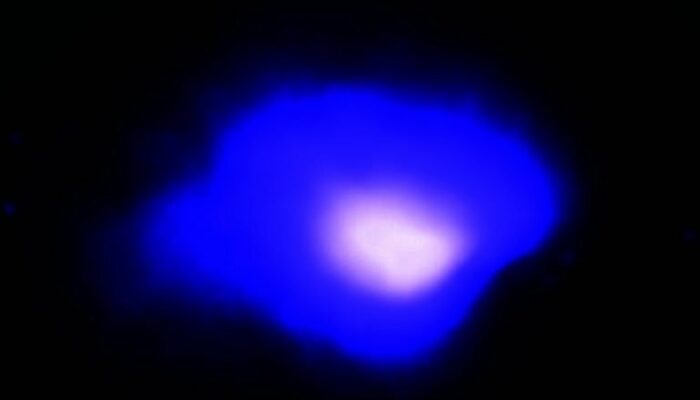
Dark matter and dark energy are two fundamental yet mysterious constituents of the universe that profoundly influence its structure and evolution. Despite sharing the prefix “dark,” they differ significantly in nature, behavior, and cosmic roles.
- Dark Matter:
A type of matter that neither emits nor absorbs light, making it invisible to conventional telescopes. Its presence is inferred from gravitational effects on visible celestial bodies, such as stars and galaxies. - Dark Energy:
An enigmatic form of energy that permeates all space, responsible for the accelerated expansion of the universe by exerting a repulsive force that counteracts gravity.
Characteristics and Properties
Dark matter and dark energy differ not only in their physical properties but also in their contributions to the universe’s total mass-energy composition and their influence on cosmic dynamics.
- Dark Matter:
Constitutes roughly 27% of the universe’s total mass-energy. It interacts primarily through gravity, forming a vast cosmic web that holds galaxies and galaxy clusters together, preventing them from flying apart. - Dark Energy:
Makes up about 68% of the universe’s energy content. It is thought to be a uniform, pervasive force that drives the accelerated expansion of the cosmos, possibly manifesting as vacuum energy or a dynamic field evolving over time.
Role in Cosmic Evolution
Both dark matter and dark energy have played pivotal roles at different stages of the universe’s history, shaping its past, present, and future.
- Dark Matter’s Role:
Shortly after the Big Bang, dark matter particles formed and began to cluster under gravity, acting as the scaffolding for galaxy formation. Its gravitational pull helped seed the large-scale structure of the universe. - Dark Energy’s Role:
Discovered through observations in the late 20th century, dark energy is responsible for the universe’s accelerating expansion. It influences the ultimate fate of cosmic structures, potentially leading to a future where galaxies drift apart indefinitely, a scenario often referred to as the “big freeze.”
Mechanism of Influence
Understanding how dark matter and dark energy operate provides insight into their distinct cosmic functions.
- Dark Matter:
Exerts gravitational attraction, binding galaxies and clusters together. It does not interact electromagnetically, which is why it remains invisible but detectable through its gravitational effects. - Dark Energy:
Acts as a repulsive force on cosmological scales, counterbalancing gravity and causing the expansion rate of the universe to increase over time.
Mathematical and Theoretical Framework
The study of dark matter and dark energy involves complex mathematical models and cosmological parameters.
- Dark Matter:
Its gravitational effects are incorporated into models of galaxy rotation curves and gravitational lensing, often described by Newtonian gravity and general relativity. - Dark Energy:
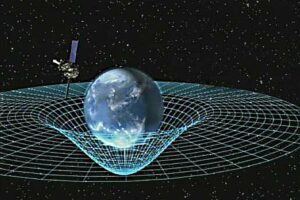
Frequently modeled as the cosmological constant (Λ) in Einstein’s field equations of general relativity, representing a constant energy density filling space homogeneously. The Friedmann equations describe how Λ influences the expansion rate of the universe.
Contemporary Research and Detection Efforts
Ongoing scientific investigations aim to uncover the true nature of dark matter and dark energy through various experimental and observational approaches.
- Dark Matter Detection:
Experiments utilize particle detectors deep underground and astronomical surveys to identify candidate particles such as WIMPs (Weakly Interacting Massive Particles) and axions. - Dark Energy Studies:
Researchers analyze distant supernovae, cosmic microwave background radiation, and baryon acoustic oscillations to measure the expansion history of the universe and constrain dark energy’s properties.
Common Misconceptions
Dark matter and dark energy are the same because they both have “dark” in their names.
Despite the similar terminology, dark matter and dark energy are fundamentally different; one is matter that exerts gravitational pull, the other is an energy causing cosmic acceleration.
Dark matter can be seen with telescopes.
Dark matter does not emit or absorb light, making it invisible to all forms of electromagnetic observation; its presence is detected only through gravitational effects.
Importance in Cosmology and Beyond
Understanding dark matter and dark energy is crucial for a comprehensive picture of the universe’s composition, structure, and destiny. They challenge existing physics and inspire new theories, impacting fields from particle physics to cosmology and influencing our grasp of fundamental forces and the universe’s ultimate fate.
Summary
In essence, dark matter acts as the invisible framework that shapes galaxies and cosmic structures through gravity, while dark energy drives the universe’s accelerated expansion, reshaping our understanding of cosmic evolution. Together, they constitute the majority of the universe’s content, making their study essential for unraveling the mysteries of the cosmos.
FAQ
What is the main difference between dark matter and dark energy?
Dark matter is a form of matter that exerts gravitational pull and helps hold galaxies together, while dark energy is a form of energy that causes the accelerated expansion of the universe.
Can dark matter be seen with telescopes?
No, dark matter does not emit, absorb, or reflect light, making it invisible to all forms of electromagnetic observation. It is detected only through its gravitational effects.
How much of the universe is composed of dark matter and dark energy?
Dark matter makes up about 27% of the universe’s total mass-energy content, while dark energy accounts for about 68%.
What are current methods used to detect dark matter?
Scientists use underground particle detectors and astronomical observations to search for candidate particles such as WIMPs and axions.
How does dark energy affect the future of the universe?
Dark energy drives the accelerated expansion of the universe, potentially leading to scenarios like the ‘big freeze’ where galaxies drift apart indefinitely.



Leave a Reply