
Short Answer
Definition of the Milky Way and Galactic Diversity
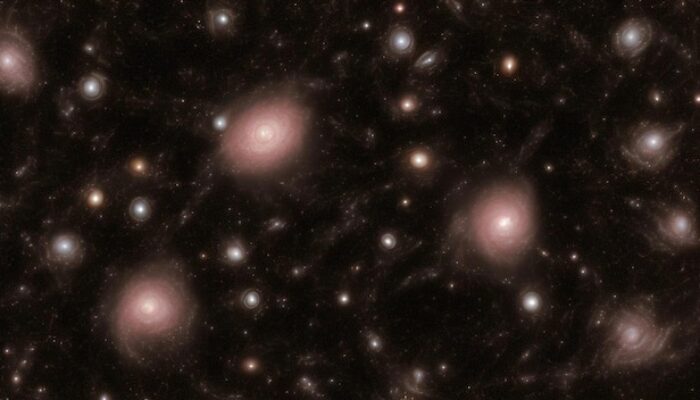
The Milky Way is a vast spiral galaxy that serves as the home to our solar system, composed of billions of stars, nebulae, and other celestial bodies. It is one among an estimated two trillion galaxies populating the observable universe. Galaxies exhibit a wide range of forms, compositions, and evolutionary histories, making the Milky Way one example within a diverse cosmic population.
Classification and Morphology of Galaxies
Galaxies are primarily categorized based on their shapes and structural features. The main types include spiral, elliptical, and irregular galaxies, each with distinct characteristics:
- Spiral Galaxies:
These galaxies, including the Milky Way, have a flattened disk with spiral arms winding around a central bulge. The arms are rich in gas and dust, fostering active star formation. - Elliptical Galaxies:
Characterized by a spheroidal shape, these galaxies contain mostly older stars and have little interstellar material, resulting in minimal new star formation. - Irregular Galaxies:
Lacking a defined shape, these galaxies often appear chaotic due to gravitational interactions or recent mergers.
The Milky Way is specifically classified as a barred spiral galaxy, featuring a central bar-shaped stellar structure. While this bar is a notable morphological trait, many other galaxies share this feature, indicating a common evolutionary phase.
Stellar Composition and Chemical Makeup
The Milky Way contains several hundred billion stars, enriched with heavier elements produced through successive generations of stellar evolution. This abundance of metals (elements heavier than helium) is crucial for planet formation and potentially for the emergence of life. Other galaxies may vary in their metallicity, with some being metal-poor due to fewer cycles of star formation, while others are metal-rich from extensive stellar activity.
Star Formation Rates Across Galaxies
Galaxies differ significantly in their star formation activity. The Milky Way maintains a moderate star formation rate, producing a few solar masses of new stars each year. In contrast, starburst galaxies experience intense, short-lived bursts of star creation, often triggered by galactic collisions or environmental factors that concentrate gas in their cores. This places the Milky Way in an intermediate position regarding stellar birth rates.
Galactic Environment and Interactions
The Milky Way is part of the Local Group, a collection of about 54 galaxies including Andromeda and the Triangulum Galaxy. Its gravitational interactions with neighboring galaxies and numerous orbiting dwarf galaxies contribute to ongoing evolutionary processes. These interactions can induce structural changes, contrasting with isolated galaxies that evolve differently. The Milky Way’s environment thus plays a significant role in shaping its development.
Central Black Hole and Galactic Activity
At the core of the Milky Way lies Sagittarius A*, a supermassive black hole with a mass approximately four million times that of the Sun. While many massive galaxies host central black holes, their masses and activity levels vary widely. Some galaxies exhibit active galactic nuclei (AGN), where the black hole actively accretes matter and emits vast energy, a phenomenon not currently observed in the Milky Way. This highlights subtle but important differences in galactic evolution.
Galactic Evolution Over Cosmic Time
Galaxies evolve over billions of years, undergoing phases of calm and disruption. The Milky Way’s history includes mergers with smaller galaxies, contributing to its current structure and stellar populations. Such hierarchical assembly is common among galaxies, suggesting that the Milky Way’s evolutionary path is typical rather than exceptional.
Role of Dark Matter in Galactic Structure
Dark matter, an invisible but dominant component of galactic mass, envelops the Milky Way in a halo that influences its rotation and stability. Variations in dark matter halos among galaxies affect their dynamics and evolution. The Milky Way’s dark matter halo is considered average in mass and shape, aligning with standard cosmological models.
Cultural and Observational Significance
From a human perspective, the Milky Way holds a unique place due to its striking appearance as a luminous band across the night sky. This visual prominence, combined with its cultural and psychological impact, enhances its perceived uniqueness despite its typical galactic properties.
Summary: The Milky Way’s Place in the Universe
The Milky Way exemplifies a balanced and complex barred spiral galaxy, featuring diverse stellar populations, moderate star formation, and dynamic interactions within its local group. Its characteristics are representative of many galaxies observed throughout the cosmos. Rather than being an outlier, the Milky Way offers insight into the universal processes that govern galactic formation and evolution, inviting ongoing exploration into the vast narrative of the universe.
FAQ
What is the Milky Way?
The Milky Way is a barred spiral galaxy that contains our solar system and billions of stars.
Are all galaxies like the Milky Way?
No, galaxies vary widely in shape, size, composition, and star formation activity.
What makes the Milky Way's central black hole special?
Sagittarius A* is a supermassive black hole with about four million times the Sun's mass, but it is currently inactive compared to active galactic nuclei in other galaxies.
How does dark matter affect galaxies?
Dark matter forms halos around galaxies, influencing their rotation curves and overall structural stability.
Why is the Milky Way important culturally?
Its bright band across the night sky has significant cultural and psychological impact on humans, enhancing its perceived uniqueness.



Leave a Reply