
Short Answer
Definition of Electromagnetic Fields
An electromagnetic field (EMF) is a physical field generated by electrically charged particles. It exerts forces on other charged entities within its range, embodying the unified nature of electricity and magnetism. This concept emerged from the understanding that electric and magnetic forces are interconnected aspects of a single phenomenon, a breakthrough formalized by James Clerk Maxwell in the 19th century through his renowned Maxwell’s Equations.
- Electric Field:
Originates from stationary electric charges and influences other charges through an invisible force extending around them. - Magnetic Field:
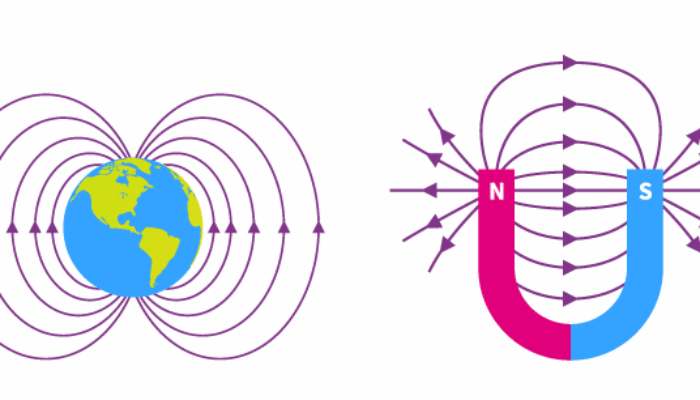
Produced by moving electric charges, such as electric currents, and characterized by directional field lines looping between magnetic poles.
Components and Characteristics of Electromagnetic Fields
Electromagnetic fields consist of two interdependent parts: the electric field and the magnetic field. The electric field is defined by its magnitude and vector direction, enabling it to attract or repel other charged particles depending on their polarity. Its intensity decreases with distance, following an inverse square relationship, which is fundamental in fields like electrostatics and electrical engineering.
Magnetic fields are often visualized through magnetic field lines that emerge from one pole and curve back to the opposite pole. The density of these lines indicates the field’s strength, while their orientation shows the direction of magnetic forces. The behavior of magnetic fields adheres to the right-hand rule, a convention used to determine the direction of magnetic forces relative to current flow.
How Electromagnetic Fields Operate
The dynamic interaction between electric and magnetic fields forms the basis of electromagnetic phenomena. A stationary electric charge produces an electric field, while a moving charge or current generates a magnetic field. These fields influence each other, creating oscillations that propagate as electromagnetic waves. This interplay is fundamental to the operation of numerous devices, including electric motors, transformers, and wireless communication systems.
Electromagnetic Radiation and Its Spectrum
Oscillating electromagnetic fields give rise to electromagnetic radiation, which spans a broad spectrum from radio waves to gamma rays. This spectrum includes:
- Radio Waves: Used in broadcasting and wireless communication.
- Microwaves: Employed in cooking and radar technology.
- Visible Light: The portion detectable by the human eye.
- X-rays and Gamma Rays: Utilized in medical imaging and cancer treatment.
The versatility of electromagnetic radiation underscores the critical role of EMFs in both natural phenomena and technological applications.
Health and Safety Considerations
Despite their omnipresence, electromagnetic fields raise important questions regarding human health. Most everyday EMFs are non-ionizing, meaning they lack the energy to ionize atoms or molecules. However, prolonged exposure to strong electromagnetic fields has prompted scientific investigation into potential biological effects, including electromagnetic hypersensitivity and cellular impacts.
Measuring and interpreting the influence of EMFs on living organisms is complex. The proliferation of wireless devices and power infrastructure has intensified scrutiny over safety standards and regulatory frameworks. Balancing technological progress with public health necessitates ongoing research and cautious policy development.
Quantum Perspective: Quantum Electrodynamics
At the quantum level, electromagnetic fields are described by quantum electrodynamics (QED), a theory that integrates classical electromagnetism with quantum mechanics. QED provides a detailed mathematical framework explaining how light and matter interact at the subatomic scale, revealing the behavior of photons and the fundamental structure of matter. This theory has profound implications for both theoretical physics and practical technologies.
Applications and Importance in Modern Society
Electromagnetic fields are foundational to numerous scientific and technological fields, including electrical engineering, telecommunications, and environmental science. Their study drives innovation in energy transmission, wireless communication, medical diagnostics, and beyond. Understanding EMFs is essential for developing new technologies while addressing environmental and health concerns.
Common Misconceptions About Electromagnetic Fields
All electromagnetic fields are harmful to human health.
Most everyday EMFs are non-ionizing and do not carry enough energy to damage biological tissues. Health risks are primarily associated with high-intensity or prolonged exposures.
Electromagnetic fields are visible or tangible.
EMFs are invisible forces that can only be detected through their effects on charged particles or specialized instruments.
Conclusion: The Significance of Electromagnetic Fields
Electromagnetic fields represent a fundamental aspect of the universe, embodying the intricate relationship between electricity and magnetism. Their study not only enhances our comprehension of natural laws but also fuels technological advancements that shape modern life. As society continues to harness EMFs, it is imperative to balance innovation with responsible stewardship of health and environmental safety, ensuring that progress aligns with ethical considerations and scientific understanding.
FAQ
What is an electromagnetic field?
An electromagnetic field (EMF) is a physical field produced by electrically charged particles that combines electric and magnetic forces.
How do electric and magnetic fields interact?
Electric and magnetic fields are interdependent; a changing electric field induces a magnetic field and vice versa, enabling electromagnetic wave propagation.
What types of electromagnetic radiation exist?
Electromagnetic radiation spans from radio waves, microwaves, visible light, to X-rays and gamma rays.
Are electromagnetic fields visible?
No, electromagnetic fields are invisible and can only be detected through their effects or specialized instruments.
What is the quantum perspective on electromagnetic fields?
Quantum electrodynamics (QED) describes electromagnetic fields at the quantum level, explaining interactions of photons and matter.






Leave a Reply