

Short Answer
Definition of Light
Light is an omnipresent phenomenon that influences numerous facets of everyday life. Fundamentally, it is defined as electromagnetic radiation that is detectable by the human eye. However, this basic explanation only scratches the surface of light’s true nature. To fully comprehend light, one must explore its origins, intrinsic properties, and the scientific principles that govern its behavior, spanning fields such as quantum mechanics and electromagnetism.
Mechanisms Behind Light Production
Light can be generated through various processes, each highlighting different segments of the electromagnetic spectrum. These mechanisms reveal the diverse ways energy transforms into visible radiation.
- Incandescence:
This process involves the emission of light due to high temperatures. A classic example is the incandescent bulb, where an electric current heats a tungsten filament until it glows, producing both heat and visible light. - Fluorescence:
In this phenomenon, materials absorb photons and almost immediately re-emit them at longer wavelengths. Fluorescent lamps utilize this effect by exciting gas atoms with electricity, which emit ultraviolet light that then causes a phosphor coating to glow in the visible spectrum. - Chemiluminescence:
Light is produced as a result of chemical reactions without the need for heat. Glow sticks are a familiar example, where chemical energy is directly converted into light, showcasing the fascinating interaction between molecular processes and energy release.
Quantum Perspective: Photons and Wave-Particle Duality
To understand light at a deeper level, quantum mechanics introduces the concept of photons-discrete packets of energy that embody light. These photons exhibit a dual nature, behaving both as particles and waves, a principle known as wave-particle duality.
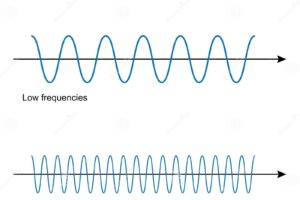
The wave aspect of light is represented by the electromagnetic spectrum, which includes a wide range of wavelengths from gamma rays to radio waves. The visible portion, which humans can perceive, ranges approximately from 380 to 750 nanometers. Different wavelengths correspond to different colors, forming the basis of color perception.
On the other hand, the particle nature of light is evident in effects such as the photoelectric effect, where photons striking a metal surface can eject electrons. This phenomenon was pivotal in the development of quantum theory and earned Albert Einstein the Nobel Prize, highlighting light’s complex and dualistic character.
Propagation and Interaction of Light
Light’s journey through space and matter reveals additional intriguing properties. In a vacuum, light travels at its maximum speed of about 299,792 kilometers per second. However, when passing through denser materials like water or glass, its speed decreases, causing refraction-an effect where light bends at the interface between different media. This principle is fundamental in the design of lenses and optical devices.
Light also interacts with surfaces in various ways, including reflection, absorption, and transmission. The nature of the surface determines how light behaves: smooth, reflective surfaces produce clear reflections, while rough or matte surfaces scatter light, resulting in diffused illumination. These interactions are essential for both natural phenomena and technological applications, from mirrors to advanced optical instruments.
Light’s Role in Human Visual Perception
Beyond its physical properties, light is crucial for vision. Humans perceive their environment by detecting light reflected off objects. The visual system processes this information to create a coherent image of the world, involving complex neural mechanisms responsible for color recognition, depth perception, and motion detection.
This dynamic interaction between light and the eye illustrates how a seemingly simple physical phenomenon underpins sophisticated biological and cognitive functions, enabling us to interpret and navigate our surroundings.
Philosophical Reflections on Light
Light has long held symbolic significance, representing knowledge, clarity, and the essence of reality. Its study bridges the gap between tangible scientific inquiry and abstract philosophical thought. As we deepen our understanding of light-from its generation to its perceptual impact-we confront profound questions about existence and the universe.
Ultimately, light is both a practical resource and a metaphorical beacon, illuminating not only the physical world but also the intellectual and spiritual realms of human experience. Its multifaceted nature continues to inspire curiosity and discovery across disciplines.
FAQ
What is light?
Light is electromagnetic radiation visible to the human eye, exhibiting both wave and particle properties.
How is light produced?
Light can be produced through incandescence, fluorescence, or chemiluminescence.
What is wave-particle duality?
It is the property of light to exhibit both wave-like and particle-like behaviors.
How does light travel through different media?
Light travels fastest in a vacuum and slows down when passing through denser media, causing refraction.
Why is light important for vision?
Light enables humans to perceive their environment by reflecting off objects and being processed by the visual system.





Leave a Reply