
Short Answer
Definition of DNA Scaffolds in Nanotechnology
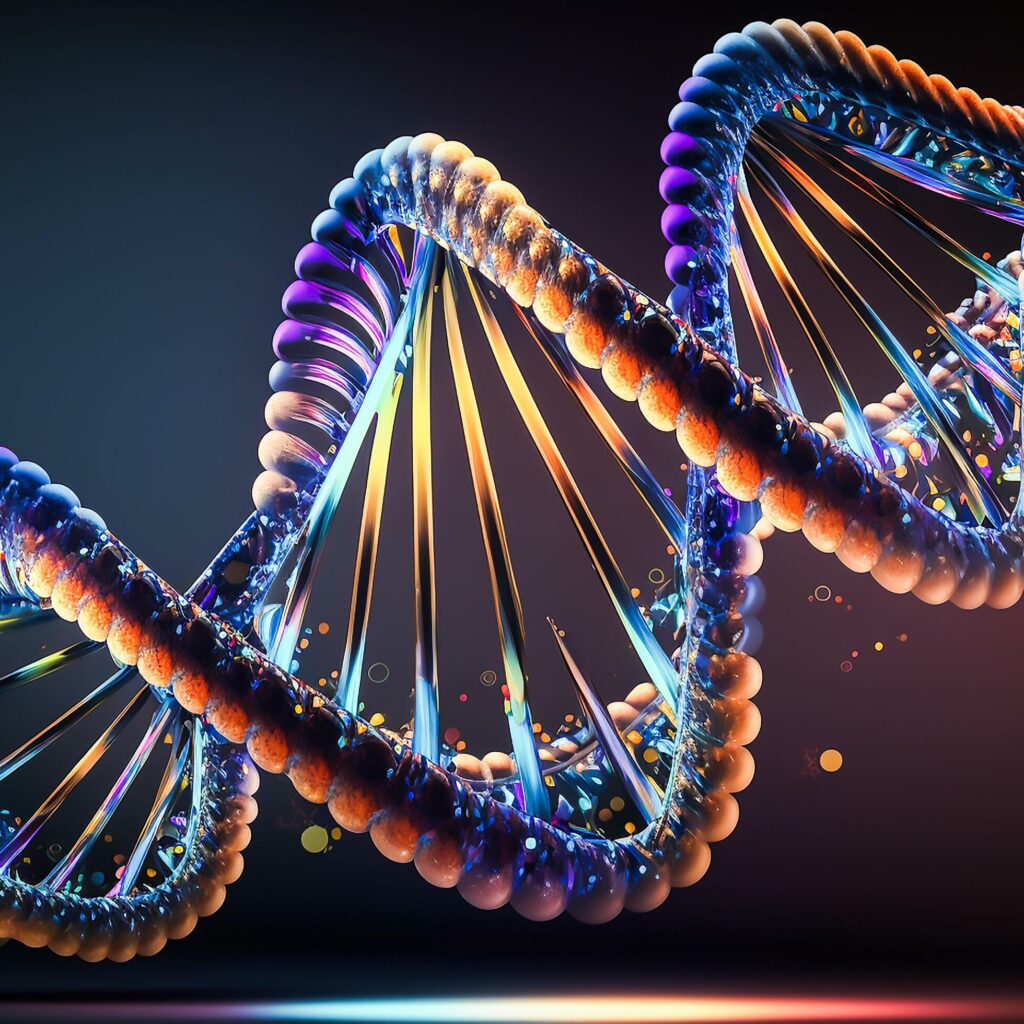
DNA scaffolds refer to the use of deoxyribonucleic acid structures as frameworks or templates in the construction of nanoscale devices, particularly in the field of nanoelectronics. Beyond its biological role in genetic information storage and transmission, DNA’s unique molecular architecture enables it to serve as a versatile building block for assembling complex nanostructures.
- DNA Structure:
Composed of nucleotide bases arranged in a double helix, DNA can fold into intricate three-dimensional shapes, making it ideal for precise nanoscale engineering. - Scaffolding Role:
DNA acts as a programmable template that can organize nanoparticles and molecules with high spatial accuracy, facilitating the creation of nano circuits and devices.
Mechanisms Behind DNA-Based Nano Circuits
The foundation of DNA scaffolding in nanoelectronics lies in its ability to self-assemble and form predetermined shapes through base-pair complementarity. This property allows DNA strands to selectively bind and fold into complex configurations, which can then be used to position conductive or functional components at the nanoscale.
- Self-Assembly:
DNA strands recognize complementary sequences, enabling autonomous formation of desired structures without external manipulation. - DNA Origami:
A technique where long single strands of DNA are folded into specific shapes using shorter “staple” strands, providing a customizable blueprint for nano device fabrication.
Applications and Practical Examples
DNA scaffolds have been successfully employed to arrange nanoparticles such as gold or quantum dots with nanometer precision, paving the way for innovative electronic and sensing devices.
- Nanoparticle Assembly:
DNA origami has been used to position gold nanoparticles in defined patterns, enabling the creation of nanoscale circuits with enhanced electrical properties. - Biosensors:
DNA-based architectures integrated with sensing elements can detect biological markers, pathogens, or environmental toxins with high sensitivity and specificity. - Flexible Electronics:
DNA’s chemical stability and adaptability allow for the development of circuits that can operate under diverse conditions, including biological environments.
Scientific Principles and Mathematical Framework
The design and function of DNA nano circuits rely on principles of molecular recognition and thermodynamics. The hybridization of complementary DNA strands follows predictable kinetics and equilibrium constants, which can be modeled mathematically to optimize assembly conditions.
- Hybridization Thermodynamics:
The Gibbs free energy change (ΔG) governs the stability of DNA duplex formation, influencing the efficiency of scaffold assembly. - Spatial Arrangement:
Geometric modeling of DNA origami structures allows precise control over nanoparticle placement, critical for circuit functionality.
Challenges and Limitations
Despite its promise, the integration of DNA scaffolds into nanoelectronics faces several obstacles related to stability, reproducibility, and ethical considerations.
- Stability Concerns:
DNA-based circuits must maintain structural integrity under varying environmental conditions, which remains a significant hurdle compared to traditional silicon electronics. - Manufacturing Complexity:
While self-assembly reduces some fabrication steps, ensuring consistent and scalable production of DNA nano devices is still challenging. - Ethical and Safety Issues:
The use of biological molecules in technology raises questions about biocompatibility, potential unintended interactions, and societal acceptance.
Common Misconceptions About DNA Nano Circuits
DNA circuits can immediately replace silicon-based electronics.
DNA scaffolds are still in experimental stages and face significant technical challenges before they can rival traditional electronics.
DNA-based devices are inherently unstable.
While DNA is sensitive to environmental factors, advances in chemical modification and protective coatings are improving their durability.
Significance and Future Prospects
The exploration of DNA scaffolds in nanoelectronics represents a groundbreaking convergence of biology and technology, with the potential to revolutionize device miniaturization, energy efficiency, and biosensing capabilities. As research progresses, these bio-nanostructures could lead to ultra-compact, flexible, and highly programmable electronic systems that surpass current limitations.
Moreover, the ethical framework surrounding this technology will be crucial in guiding responsible development and societal integration. The ongoing dialogue between scientific innovation and ethical considerations will shape the trajectory of DNA-based nano circuits, determining whether they become a cornerstone of future electronics or remain a niche research endeavor.
FAQ
What are DNA scaffolds?
DNA scaffolds are DNA structures used as templates for assembling nanoscale devices.
What are the applications of DNA scaffolds?
They are used in nanoparticle assembly, biosensors, and flexible electronics.
What challenges do DNA scaffolds face?
Challenges include stability, manufacturing complexity, and ethical concerns.
What is the significance of DNA scaffolds in technology?
They represent a convergence of biology and technology with potential for groundbreaking innovations.




Leave a Reply