Why do Quantum Computers need to be cooled to?

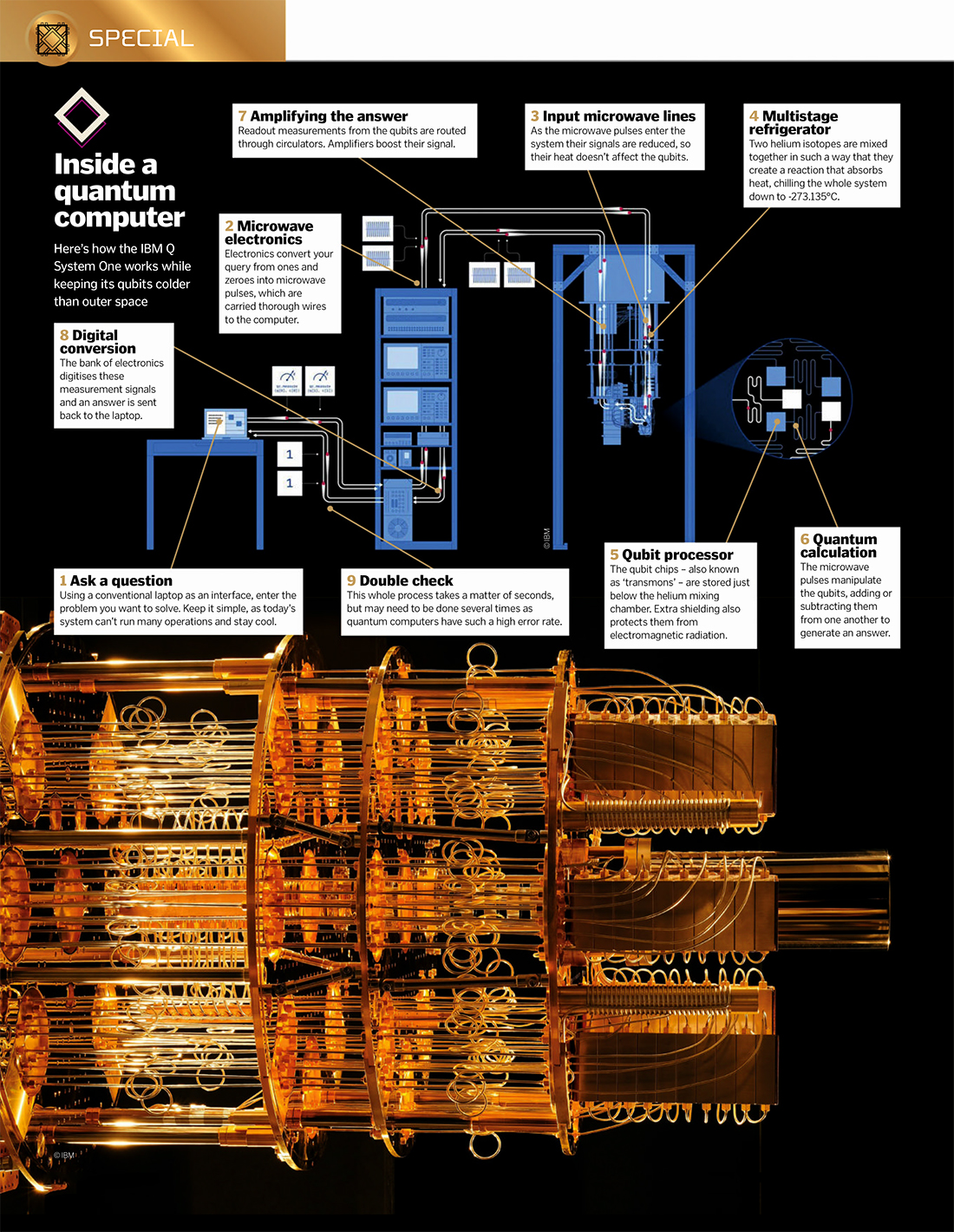
Definition of Quantum Computer Cooling Quantum computers represent a revolutionary advancement in computational technology, leveraging the unique principles of quantum mechanics to perform calculations beyond the reach of classical machines. A critical prerequisite for their operation is maintaining the quantum processors at temperatures close to absolute zero. This extreme cooling is essential to protect the […]
Read More →

What is the current state of quantum computers?

Understanding Quantum Computing Quantum computing represents a rapidly evolving domain that challenges traditional computational frameworks. While its foundational principles hold immense promise, there remains an ongoing debate: Is quantum computing truly the dawn of a revolutionary technology, or is it an alluring concept fueled by the enthusiasm of digital pioneers? Central to this discourse is […]

Read More →

What’s so good about quantum computers?

Understanding Quantum Computing Quantum computing represents a revolutionary leap in computational technology, driven by the principles of quantum mechanics. Unlike classical computers that operate using bits as the smallest unit of data, quantum computers utilize quantum bits, or qubits, which possess unique properties enabling them to perform complex calculations far beyond the reach of traditional […]

Read More →

Why don’t they use quantum computers as the heart of AI?

Understanding Quantum Computing and Artificial Intelligence As technology advances at a rapid pace, the intersection of quantum computing and artificial intelligence (AI) presents a fascinating yet complex challenge. Both fields hold immense promise, but their integration has not yet propelled them to the forefront of computing innovation. This article delves into the reasons behind the […]

Read More →

What is the CAP theorem? Can quantum computers solve it?

Understanding the CAP Theorem The CAP theorem, also referred to as Brewer’s theorem, is a foundational concept in the realm of distributed systems and database management. Introduced by Eric Brewer in 2000, it asserts a critical limitation: within a distributed data storage system, it is impossible to simultaneously guarantee all three of the following attributes-Consistency, […]

Read More →

Can computer engineers work on quantum computers?

Understanding Quantum Computing Quantum computing marks a revolutionary shift in the field of computer engineering, diverging fundamentally from classical computing. While traditional computers operate using bits that represent either a 0 or a 1, quantum computers utilize quantum bits, or qubits, which exploit the principles of quantum mechanics. This allows qubits to exist in multiple […]

Read More →

When will quantum computers be publicly used?

Understanding Quantum Computing Quantum computing represents a revolutionary leap in computational technology, often compared to the transformative impact of the Internet’s emergence. Unlike classical computers that rely on binary bits, quantum computers utilize quantum bits, or qubits, which enable them to process vast amounts of information simultaneously. This capability stems from the principles of quantum […]

Read More →

Why are quantum computers so special?

Understanding Quantum Computing Quantum computing represents a groundbreaking shift in the field of computation, distinguished by its foundation in quantum mechanics rather than classical binary logic. Unlike traditional computers that operate using bits confined to either 0 or 1, quantum computers utilize quantum bits, or qubits, which can exist in multiple states simultaneously. This fundamental […]

Read More →

Are quantum computers capable of running a C++ code?

Understanding Quantum Computing Quantum computing marks a revolutionary shift in how computations are performed, utilizing the principles of quantum mechanics to achieve processing speeds far beyond those of traditional computers. Unlike classical systems that rely on binary bits, quantum computers operate with quantum bits, or qubits, which can exist simultaneously in multiple states due to […]

Read More →

Why are Quantum Computers so interesting?

Understanding Quantum Computing Quantum computing represents a revolutionary approach to processing information, captivating scientists, engineers, and futurists worldwide. Rooted in the principles of quantum mechanics, this technology promises to transform computation by harnessing phenomena that defy classical logic. Its potential applications span diverse fields such as cryptography, optimization, and materials science, signaling a profound shift […]

Read More →