
Short Answer
Understanding Quantum Computing
Quantum computing represents a revolutionary leap in computational technology, often compared to the transformative impact of the Internet’s emergence. Unlike classical computers that rely on binary bits, quantum computers utilize quantum bits, or qubits, which enable them to process vast amounts of information simultaneously. This capability stems from the principles of quantum mechanics, allowing quantum systems to explore multiple possibilities at once, vastly outperforming traditional machines in certain complex tasks.
Fundamental Principles of Quantum Computing
At the core of quantum computing lies the qubit, a unit that can exist in multiple states simultaneously due to superposition. This contrasts sharply with classical bits, which are strictly binary (0 or 1). Additionally, quantum entanglement links qubits in ways that classical bits cannot replicate, enabling intricate correlations that enhance computational power. To visualize this, imagine classical computers as libraries where books are read one at a time, whereas quantum computers resemble a multiverse where countless realities are explored concurrently, accelerating problem-solving processes.
Challenges in Quantum Technology Development
Despite its promise, quantum computing faces significant technical hurdles. One of the primary obstacles is maintaining quantum coherence-the delicate state in which qubits retain their quantum properties. This state is highly vulnerable to environmental disturbances, leading to decoherence and errors. Researchers worldwide are actively pursuing methods to improve qubit stability, develop effective error correction techniques, and create more resilient quantum architectures. Various qubit technologies are under investigation, including superconducting circuits, trapped ions, and topological qubits, each with unique advantages and challenges. Overcoming quantum noise is akin to calming a turbulent storm, requiring persistent innovation and precision engineering.
Current State of Quantum Computing
Today, several organizations have introduced prototype quantum processors, such as Google’s Sycamore and IBM’s Quantum Hummingbird. While these devices mark significant milestones, their practical applications remain largely experimental and confined to research environments. The advent of cloud-based quantum platforms like IBM Q and Amazon Braket has begun to democratize access, allowing researchers and developers to experiment with quantum algorithms remotely. However, these services are not yet accessible to the general public, indicating that widespread consumer use is still in the future.
Anticipated Milestones and Industry Impact
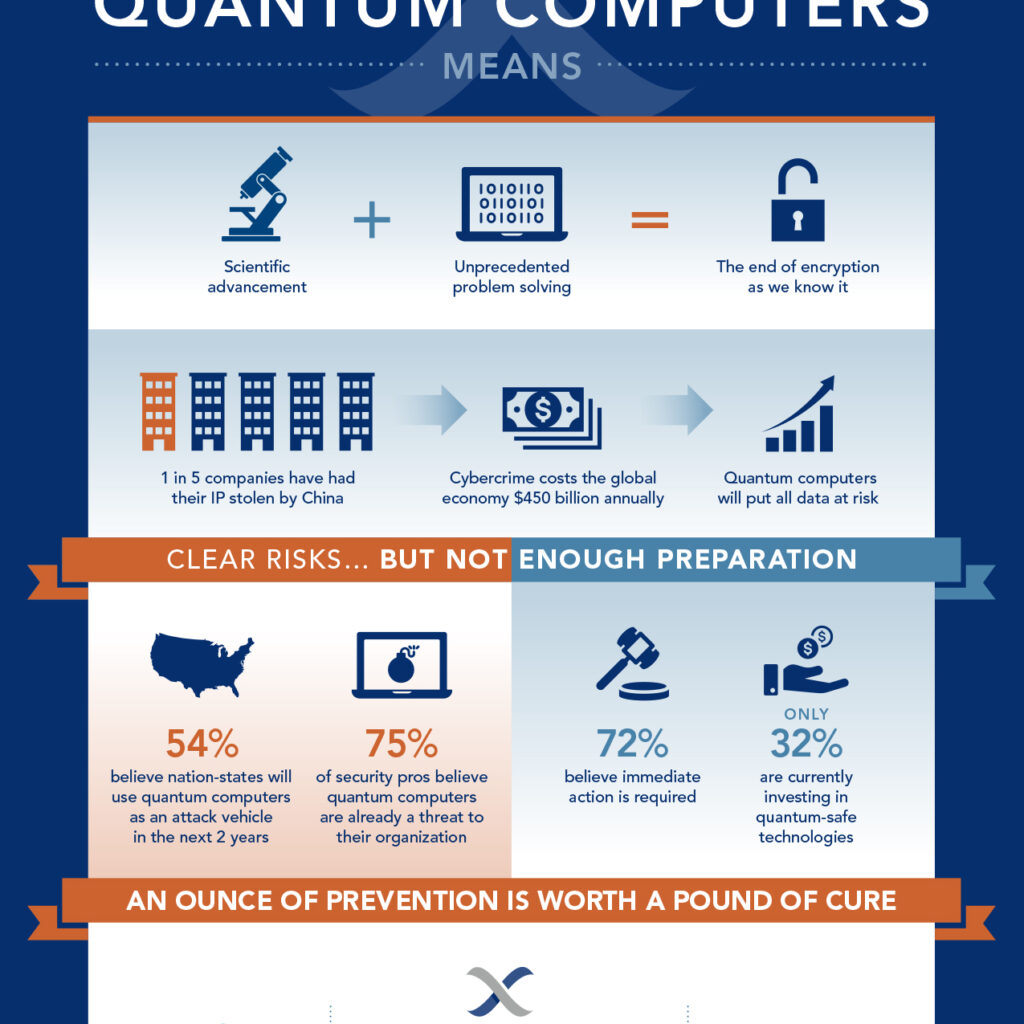
The concept of quantum advantage-where quantum computers outperform classical ones in solving real-world problems-is expected to materialize within the next decade. Achieving this milestone will likely shift quantum computing from a specialized research domain to a foundational technology across multiple sectors. Industries such as pharmaceuticals could leverage quantum simulations to accelerate drug discovery, finance might optimize complex portfolios, materials science could innovate new compounds, and cryptography will evolve to address emerging security challenges.
Socio-Economic Implications of Quantum Computing
The widespread adoption of quantum technology will bring about significant socio-economic changes. Initially, access to quantum resources may be limited to well-funded organizations, mirroring the early days of personal computing when technology was predominantly available to affluent institutions. To ensure equitable participation, it is crucial to promote educational initiatives, collaborative research efforts, and supportive policies that broaden access and foster diversity within the quantum community. Such measures will help bridge gaps and enable a wider range of stakeholders to benefit from quantum advancements.
Geopolitical Dynamics and Quantum Supremacy
Quantum computing has become a focal point of international competition, with nations striving to achieve quantum supremacy-the ability to perform tasks beyond the reach of classical computers. This race carries profound implications for national security, economic leadership, and technological influence. The situation parallels historical competitions like the space race, where innovation and investment drive progress. As quantum capabilities grow, global cooperation and regulatory frameworks will be essential to manage risks and promote responsible development of this powerful technology.
Conclusion: The Future of Quantum Computing in Society
The integration of quantum computing into everyday life remains an exciting yet uncertain prospect. While recent technological strides suggest a promising future, realizing the full potential of quantum systems will require overcoming technical challenges, ensuring fair access, and fostering international collaboration. Observers and stakeholders alike await the moment when quantum computing transitions from a scientific curiosity to a transformative force shaping industries and society. As with many quantum phenomena, the precise timing of this transition is inherently uncertain, but the horizon is undeniably approaching.
FAQ
What is quantum computing?
Quantum computing is a type of computation that uses quantum bits (qubits) which can represent and process information in ways that classical bits cannot, enabling exponential increases in computational power for certain problems.
When will quantum computers be publicly accessible?
Currently, quantum computers are accessible mostly via cloud platforms for researchers. Public access is expected to expand significantly within the next decade after achieving quantum advantage.
What limits the current use of quantum computers?
Limitations include fragile quantum coherence, errors due to noise, and the complexity of scaling qubit systems for practical applications.
Which industries will benefit from quantum computing?
Industries such as pharmaceuticals, finance, materials science, and cryptography stand to gain significantly from quantum computing.
What are the socio-economic implications of quantum computing?
Quantum computing may initially be accessible only to wealthy organizations, raising equity concerns, while also impacting national security and global technological competition.






Leave a Reply