

Short Answer
Understanding the Greatest Enigma in Physics
One of the most profound and enduring puzzles in the realm of physics is nearing a potential breakthrough. This enigma, which has challenged scientists for decades, is no longer confined to theoretical speculation. Instead, it is becoming increasingly tangible as new theoretical insights and experimental advancements begin to converge. The possibility that the key to unlocking the universe’s deepest mysteries lies just beyond the limits of current scientific knowledge presents both a formidable intellectual challenge and a transformative moment in the evolution of modern physics.
Definition: The Core Conflict in Modern Physics
The central mystery in physics revolves around the difficulty of reconciling two foundational theories that govern vastly different scales of the universe:
- Quantum Mechanics:
Governs the behavior of particles at the smallest scales, describing phenomena with probabilistic precision. - General Relativity:
Explains the gravitational interaction and the curvature of spacetime on cosmic scales.
Despite their individual successes, these frameworks remain fundamentally incompatible, posing the question: how can the universe simultaneously adhere to the principles of both quantum mechanics and general relativity? This unresolved tension suggests the existence of an underlying framework that unites the fabric of reality.
The Quest for a Unified Theory
The pursuit of a “theory of everything” is not merely an abstract intellectual exercise but a profound inquiry into the nature of space, time, and existence itself. Key questions driving this quest include:
- What quantum processes occurred during the universe’s inception at the Big Bang?
- How does gravity behave under conditions dominated by quantum effects?
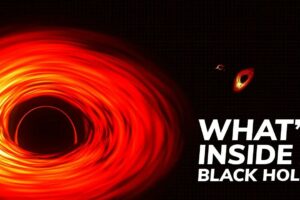
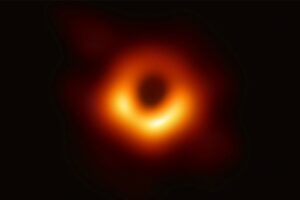
- Do black holes, traditionally viewed as cosmic voids, contain vital clues about quantum information and the topology of spacetime?
These inquiries form the foundation of global scientific efforts aimed at synthesizing a coherent understanding that could revolutionize our conception of the physical world.
Emerging Approaches and Experimental Advances
Recent progress indicates that the divide between quantum mechanics and general relativity may soon diminish. One promising direction involves the exploration of quantum gravity through innovative experimental techniques. High-energy particle accelerators are pushing the boundaries where particle physics intersects with gravitational phenomena, potentially revealing subtle indicators of spacetime’s quantum characteristics-effects that have been theorized but not yet observed directly.
Simultaneously, investigations into dark matter and dark energy-components that constitute roughly 95% of the universe’s total mass-energy-offer another frontier. These elusive substances influence cosmic expansion and the structure of galaxies, yet their fundamental properties remain largely unknown. Cutting-edge detection methods, ranging from underground laboratories to space-based observatories, aim to uncover the nature of these mysterious forces, potentially linking their understanding to the broader quest for unification.
Interconnection Between Particle Physics and Cosmology
The interplay between discoveries in particle physics and cosmological observations holds the potential to trigger paradigm shifts. Validated anomalies-such as unexpected particle behaviors or novel gravitational wave patterns-could transform physics from a fragmented set of theories into a unified framework. This transformation would not only reshape scientific knowledge but also impact technological innovation and philosophical perspectives on existence.
Challenges in Theoretical Frameworks
The mathematical complexity involved in describing quantum gravity is immense, often extending into abstract realms with additional dimensions and intricate symmetries that defy intuitive understanding. Various theoretical models, including string theory and loop quantum gravity, propose distinct mechanisms to bridge the gap between quantum mechanics and general relativity. Achieving consensus requires both rigorous empirical evidence and conceptual clarity that withstands interdisciplinary scrutiny.
Philosophical and Technological Implications
Beyond scientific inquiry, this grand mystery invites reflection on humanity’s place in the cosmos. Understanding the fundamental structure of reality could profoundly influence future technologies, such as quantum computing and interstellar travel, and provoke new questions about consciousness, causality, and the possibility of multiple universes. The resolution of this enigma may redefine not only physics but also our broader worldview.
The Ongoing Journey of Discovery
Each breakthrough in this field tends to reveal deeper layers of complexity, illustrating the paradox of profound mysteries: solving one often leads to new questions. Nevertheless, advancements in precision instrumentation, computational modeling, and collaborative research foster optimism. The scientific community stands at a pivotal juncture where decades of theoretical speculation may soon crystallize into concrete understanding.
Conclusion: Embracing the Unknown
The universe remains an endlessly captivating puzzle, inviting explorers to expand the horizons of human knowledge and imagination. The greatest mystery in physics is not just a challenge but an open invitation to rethink fundamental concepts and embrace uncertainty with intellectual courage and creativity. As experimental and theoretical breakthroughs accumulate, we edge closer to insights once deemed unattainable, promising to transform both science and our understanding of existence itself.
FAQ
What is quantum mechanics?
Quantum mechanics is a fundamental theory in physics that describes the behavior of matter and energy at the smallest scales.
What are dark matter and dark energy?
Dark matter and dark energy are mysterious components of the universe that influence its structure and expansion but remain largely uncharacterized.

Leave a Reply