
Short Answer
Definition of Black Holes and Sagittarius A*
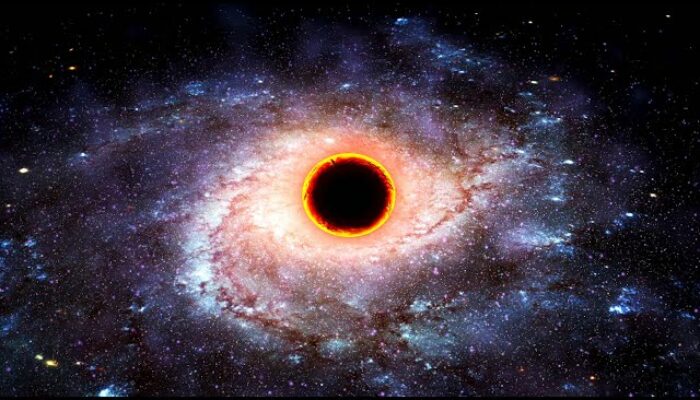
Black holes are regions in space where gravity is so intense that nothing, not even light, can escape their pull. At the center of our Milky Way galaxy resides Sagittarius A* (Sgr A*), a supermassive black hole with a mass roughly four million times that of the Sun. This colossal object exerts a powerful gravitational influence over nearby stars and gas clouds, yet it remains invisible to direct observation.
Why Black Holes Are Invisible
Unlike luminous stars that emit light across various wavelengths, black holes do not produce or reflect any light. Their defining characteristic is an escape velocity exceeding the speed of light, making them inherently dark and undetectable by conventional optical telescopes. The term “black hole” literally describes a void from which photons cannot return, so their presence is inferred through their gravitational effects on surrounding matter rather than direct visual detection.
Obscuring Effects of the Galactic Center Environment
The core of the Milky Way is enveloped by dense clouds of interstellar dust and gas, which absorb and scatter visible light. This cosmic shroud acts like a thick fog, preventing optical telescopes from seeing the black hole’s immediate surroundings. Only longer wavelengths such as infrared, radio, and X-rays can penetrate this veil, necessitating specialized instruments and observational methods to study Sagittarius A*.
Challenges in Detecting Sagittarius A*
Even when using wavelengths capable of passing through the dust, astronomers face significant difficulties. The galactic center is a complex environment filled with electromagnetic emissions from stars, supernova remnants, pulsars, and the accretion disk of the black hole itself. These overlapping signals create a noisy background, making it challenging to isolate the subtle signatures of the black hole. The accretion disk emits high-energy radiation as matter spirals inward and heats up, but these emissions can be transient and often obscured by other galactic phenomena.
Technological Barriers and Advances
Sagittarius A* lies approximately 26,000 light-years away, appearing as a tiny point in the sky. Achieving the angular resolution necessary to image structures near the event horizon requires cutting-edge technology. The Event Horizon Telescope (EHT) collaboration’s groundbreaking image of the black hole in the M87 galaxy demonstrated the potential of very long baseline interferometry (VLBI) to overcome these challenges. However, capturing similar detail for Sagittarius A* demands further technological progress, including the synchronization of data from observatories worldwide.
Relativistic Effects Near the Event Horizon
The extreme gravitational field near the black hole distorts spacetime, bending the paths of light in a phenomenon known as gravitational lensing. This warping can magnify or obscure features around the event horizon, creating complex visual effects that require sophisticated computational models to interpret. Observing Sagittarius A* is therefore not merely about collecting photons but decoding the intricate interaction between gravity and light as described by Einstein’s General Relativity.
Indirect Evidence Through Stellar Orbits
One of the most compelling proofs of Sagittarius A*’s existence comes from tracking the orbits of stars near the galactic center. Some stars move at extraordinary speeds in tight elliptical paths, influenced by a massive, compact object invisible to direct observation. Decades of precise astrometric measurements have mapped these stellar trajectories, providing a gravitational “fingerprint” that confirms the presence and mass of the supermassive black hole.
Philosophical and Observational Implications
The difficulty in directly “seeing” the black hole challenges traditional ideas of observation, which rely on detecting emitted or reflected light. Instead, the existence of Sagittarius A* is understood through its gravitational interactions and the distortions it causes in its environment. This shift in perspective highlights the importance of indirect observation methods and expands our conceptual framework for understanding cosmic phenomena.
Future Prospects for Observing Sagittarius A*
Ongoing advancements in interferometry, detector sensitivity, and data analysis promise to enhance our ability to study the Milky Way’s central black hole. Upcoming missions and observatories aim to penetrate deeper through interstellar dust and capture transient high-energy events, potentially revealing new details about Sagittarius A*’s structure and behavior. These technological strides will bring us closer to unveiling the mysteries hidden at our galaxy’s core.
Significance of Understanding Galactic Black Holes
Studying Sagittarius A* is crucial for astrophysics, as it provides insights into the nature of gravity, the behavior of matter under extreme conditions, and the evolution of galaxies. Black holes influence star formation, galactic dynamics, and the distribution of matter in the universe. Understanding their properties helps refine fundamental physics theories and enhances our comprehension of the cosmos.
Common Misconceptions About Black Holes
Black holes suck in everything around them like cosmic vacuum cleaners.
Black holes exert gravitational pull like any massive object; objects must cross the event horizon to be irreversibly captured.
Black holes are visible as dark spots in the sky.
Black holes emit no light and cannot be seen directly; their presence is inferred through effects on nearby matter and radiation.
The black hole at the Milky Way’s center can be easily observed with optical telescopes.
Dense interstellar dust obscures visible light, requiring observations in radio, infrared, and X-ray wavelengths.
FAQ
Why can't we see Sagittarius A* directly?
Sagittarius A* cannot be seen directly because it does not emit light and is obscured by interstellar dust.
What methods do astronomers use to study black holes?
Astronomers study black holes through their gravitational effects on nearby stars and gas, as well as using advanced observational techniques like radio and infrared telescopes.
What is the significance of studying Sagittarius A*?
Studying Sagittarius A* is crucial for understanding gravitational dynamics, black hole behavior, and the evolution of galaxies.


Leave a Reply