
Short Answer
Understanding Quantum Computing
Quantum computing represents a rapidly evolving domain that challenges traditional computational frameworks. While its foundational principles hold immense promise, there remains an ongoing debate: Is quantum computing truly the dawn of a revolutionary technology, or is it an alluring concept fueled by the enthusiasm of digital pioneers? Central to this discourse is the relationship between quantum computing and cryptography, which questions the current paradigms of computation and the security of information.
Definition and Core Concepts
To appreciate the current landscape of quantum computing, it is essential to distinguish it from classical computing:
- Classical Computing:
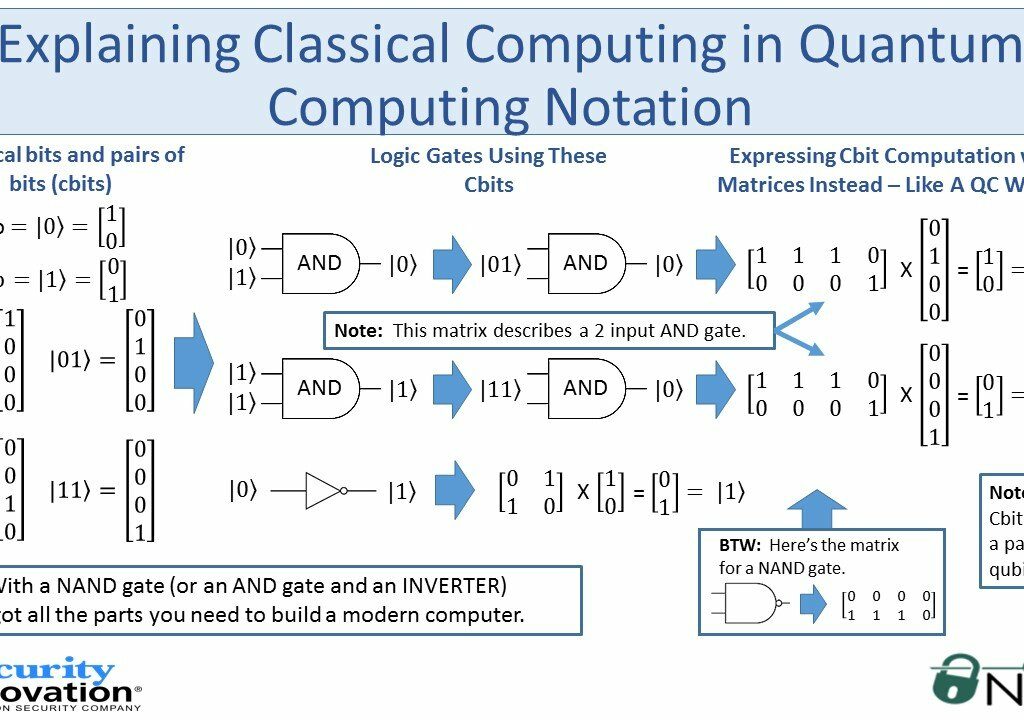
Utilizes bits as the smallest unit of data, which exist in binary states of either 0 or 1. - Quantum Computing:
Employs quantum bits, or qubits, which can exist simultaneously in multiple states through superposition, enabling exponentially greater computational power for certain complex problems.
Mechanics of Quantum Computing
Quantum computers leverage unique quantum phenomena such as superposition and entanglement to process information in ways unattainable by classical machines. Superposition allows qubits to represent multiple states at once, while entanglement creates correlations between qubits that enable them to work synergistically rather than independently. These properties underpin the enhanced efficiency of quantum algorithms, especially for tasks that are computationally intensive for classical systems.
Challenges in Quantum Technology
Despite its potential, quantum computing faces significant technical obstacles:
- Decoherence:
The loss of quantum information due to environmental interference, which disrupts qubit states and limits computation time. - Error Rates:
Quantum operations are prone to errors, necessitating complex error-correction methods that often require additional qubits, complicating scalability. - Entanglement Management:
Maintaining entanglement across multiple qubits is technically demanding, requiring precise control to preserve the quantum correlations essential for computational advantage.
Quantum Supremacy vs. Quantum Advantage
The concept of quantum supremacy refers to a quantum computer performing a task beyond the reach of any classical computer. However, the focus has shifted towards quantum advantage, which recognizes that quantum systems may not always surpass classical computers in speed but can outperform them in specific applications with greater efficiency. This nuanced understanding shapes expectations for the future of computational dominance.
Quantum Computing and Cryptography
The intersection of quantum computing and cryptography presents both opportunities and threats:
- Quantum Key Distribution (QKD):
Utilizes quantum mechanics to enable secure communication channels that are theoretically immune to eavesdropping, as any measurement of quantum states alters them, revealing interception attempts. - Quantum Decryption Threats:
Algorithms like Shor’s algorithm pose a risk to current encryption standards such as RSA by efficiently factoring large numbers, necessitating the development of quantum-resistant cryptographic methods.
Global Initiatives and Security Preparedness
Recognizing the dual-edged nature of quantum technology, governments and organizations worldwide are investing heavily in research to mitigate potential risks. Programs such as the European Quantum Flagship and the U.S. National Quantum Initiative exemplify efforts to build resilience against quantum-enabled cyber threats, emphasizing the critical importance of securing sensitive data in a future shaped by quantum advancements.
Applications and Industry Impact
Quantum computing is gradually transitioning from theoretical research to practical applications across various sectors:
- Finance:
Quantum algorithms offer promising improvements in optimizing trading strategies and conducting risk assessments, significantly reducing computation times compared to classical methods. - Pharmaceuticals and Materials Science:
Quantum simulations can accelerate drug discovery and the design of new materials by modeling molecular interactions with unprecedented accuracy. - Logistics and Optimization:
Quantum approaches can enhance complex scheduling and resource allocation problems, improving efficiency in supply chains and transportation.
Societal Implications and Future Outlook
As quantum computing advances, it raises important questions about its broader impact on society. Will it drive unparalleled innovation, or could it exacerbate existing inequalities? Ensuring widespread quantum literacy and equitable access to this technology will be crucial to distributing its benefits fairly. Collaborative efforts among researchers, policymakers, and industry leaders will shape how quantum computing integrates into everyday life.
Conclusion: Navigating the Quantum Frontier
The current state of quantum computing is characterized by a blend of extraordinary promise and significant challenges. Progress depends on overcoming technical hurdles, developing robust cryptographic defenses, and fostering inclusive growth. As the field evolves, the journey into quantum computing will continue to push the boundaries of what is computationally achievable, heralding a transformative era in technology and information security.
FAQ
What is quantum supremacy?
Quantum supremacy is the point at which a quantum computer can perform a specific task faster than the most powerful classical supercomputers.
What are the main obstacles in quantum computing today?
Main obstacles include qubit decoherence, high error rates, and difficulty in scaling quantum systems with effective error correction.
How do quantum computers affect current encryption methods?
Quantum computers threaten current encryption methods like RSA by potentially breaking them using algorithms such as Shor's algorithm, necessitating the development of quantum-resistant cryptography.
What industries could benefit from quantum computing?
Industries such as finance, pharmaceuticals, logistics, and materials science could see transformative benefits from quantum computing.
What is Quantum Key Distribution (QKD)?
QKD is a quantum cryptographic method that uses quantum mechanics principles to securely distribute encryption keys, detecting any interception attempts.






Leave a Reply