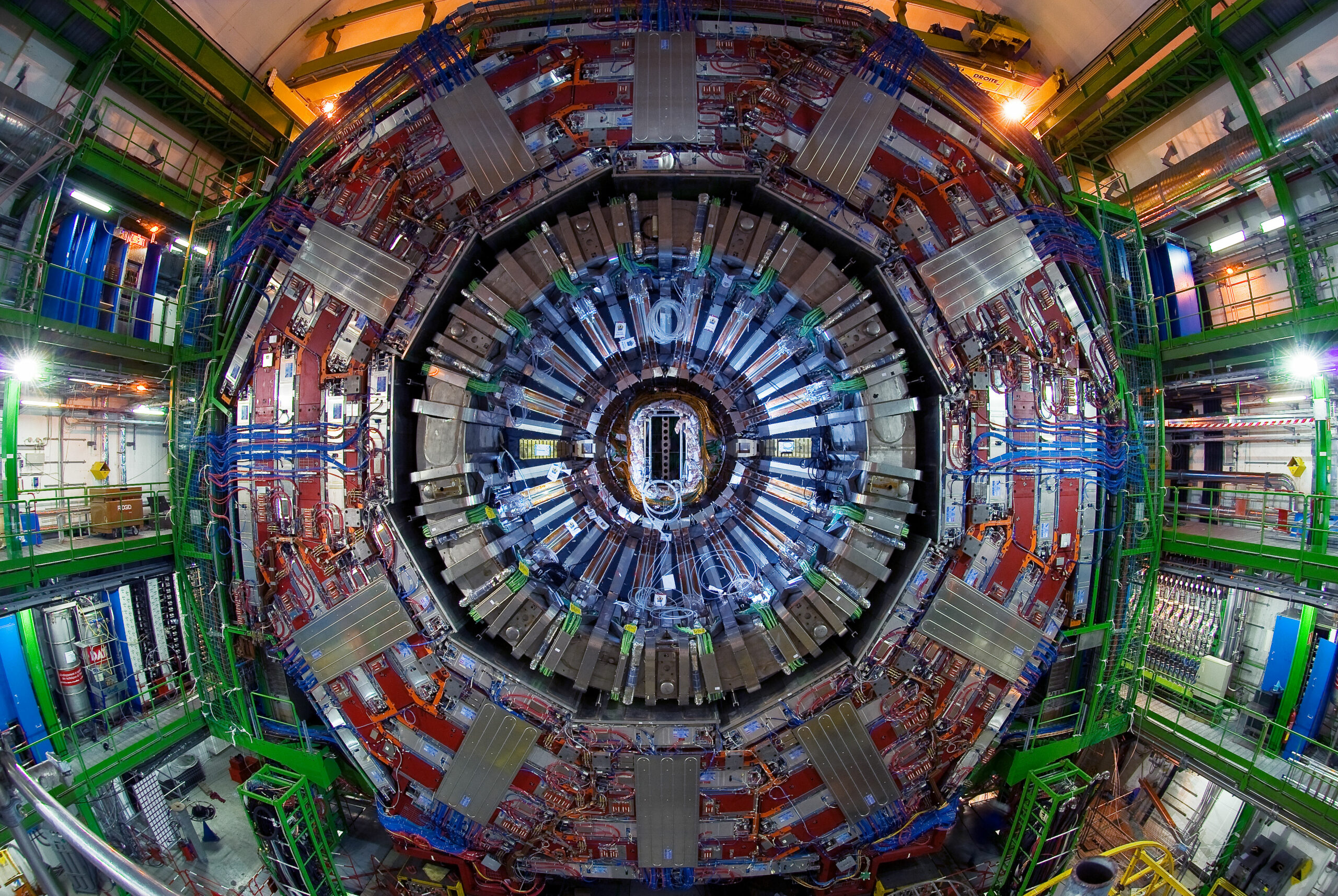
Can the LHC detect particles with mass but no charge?

Definition of Particles with Mass but No Electric Charge Particles that possess mass yet lack an electric charge form a unique category within particle physics. These entities do not interact electromagnetically, distinguishing them from charged particles, and often require specialized methods for detection. Examples include neutrinos, the Higgs boson, and theoretical candidates for dark matter […]

Read More →

Is the Wilson Loop Just for Particle Physics? Not Anymore!

Definition and Origin of the Wilson Loop The Wilson loop is a fundamental gauge-invariant quantity in theoretical physics, originally introduced by Kenneth Wilson in the early 1970s. It is defined as the path-ordered exponential of the gauge field integrated along a closed loop in spacetime. This mathematical construct captures essential information about gauge fields and […]

Read More →

How can neutrino research be used to better humanity?

Definition of Neutrinos Neutrinos are fundamental subatomic particles distinguished by their extremely weak interaction with matter, occurring solely via the weak nuclear force. Despite being the most plentiful particles in the cosmos, their elusive nature makes them exceptionally challenging to detect. These nearly massless, electrically neutral particles permeate the universe, passing through ordinary matter almost […]

Read More →

What is meant by a subatomic particle?

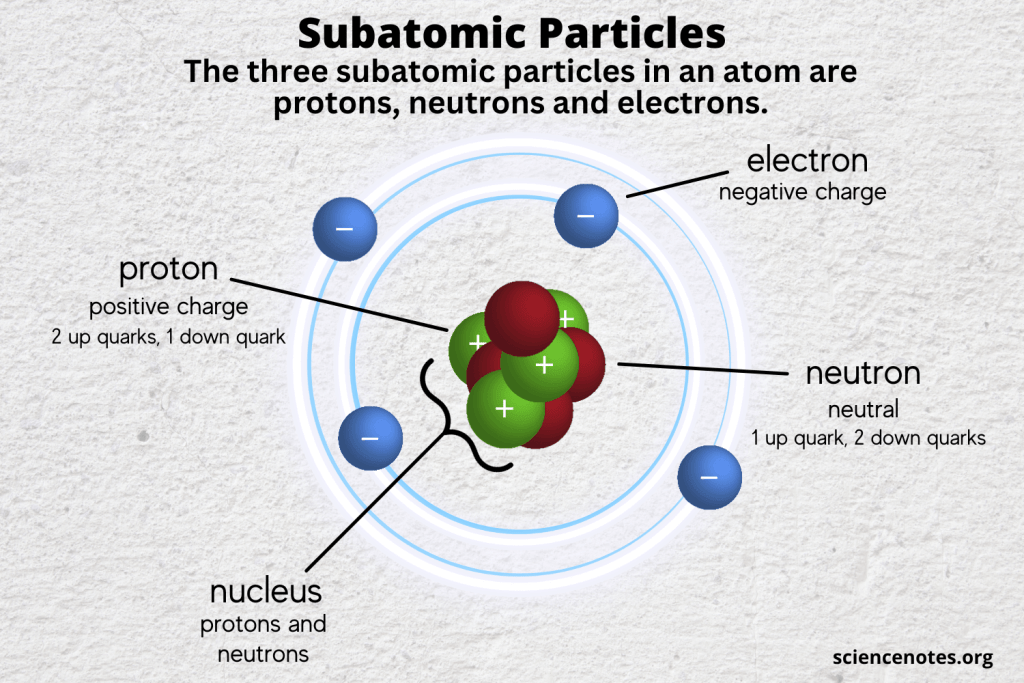
Definition of Subatomic Particles Subatomic particles are the minute constituents that form matter, existing at scales significantly smaller than atoms. These particles are the foundational elements studied in particle physics, revealing the intricate forces and interactions that shape the universe. They include a variety of entities, each with distinct properties and roles in the composition […]

Read More →

Are Dark Matter and Energy derived from the same particle?

Understanding the Universe’s Hidden Components The universe presents an immense and mysterious expanse that challenges our comprehension with its unseen elements. Among these enigmatic constituents, dark matter and dark energy stand out as two of the most fascinating. Together, they constitute nearly 95% of the total content of the cosmos. This raises a compelling question: […]

Read More →

Do hadrons feel the weak force?

Definition of Hadrons and the Weak Force Hadrons are composite subatomic particles made up of quarks held together by the strong nuclear force. They are primarily divided into two groups: baryons and mesons. Baryons, including protons and neutrons, consist of three quarks, whereas mesons are formed from a quark-antiquark pair. The weak force, one of […]

Read More →

How does nanotechnology work in High Energy Physics?

Definition of Nanotechnology in High Energy Physics Nanotechnology involves the manipulation and control of matter at an incredibly small scale, typically between 1 and 100 nanometers. At this dimension, materials exhibit distinct quantum behaviors that differ markedly from their larger-scale properties. In the context of high energy physics (HEP), nanotechnology serves as a transformative tool, […]

Read More →