
Short Answer
Overview of the Cyclotron and Its Role in Particle Physics
The cyclotron stands as a pivotal instrument in particle physics, renowned for its capability to accelerate charged particles to extremely high speeds. These particles, though minuscule in size, possess immense energy and play crucial roles in advancing our comprehension of the subatomic world. This article explores the various types of particles accelerated within a cyclotron, their distinctive characteristics, and the broader scientific and practical implications of their high-energy interactions.
Fundamental Principles of Cyclotron Operation
At the heart of the cyclotron’s function lies the principle of electromagnetic induction. Charged particles are propelled along a spiral trajectory within a magnetic field, gaining kinetic energy through repeated exposure to alternating electric fields. This cyclical acceleration process enables particles to reach velocities sufficient for probing the fundamental constituents of matter. The cyclotron is capable of accelerating a diverse range of particles, including protons, deuterons, alpha particles, and heavy ions, each contributing uniquely to both experimental research and applied technologies.
Key Particles Accelerated in a Cyclotron
Protons: Essential Constituents of Atomic Nuclei
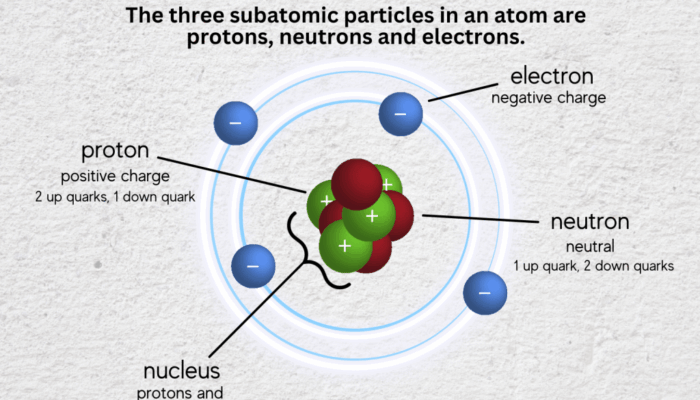
Protons, positively charged particles residing in atomic nuclei, are among the most commonly accelerated particles in cyclotrons. Carrying a charge of +1 elementary charge and possessing a rest mass near 938 MeV/c2, protons are fundamental to numerous scientific investigations. Their acceleration to high energies facilitates the study of nuclear reactions, particle interactions, and astrophysical processes.
Beyond research, protons have practical applications, notably in proton therapy for cancer treatment. This technique leverages the proton’s ability to precisely target tumors, thereby sparing adjacent healthy tissues from radiation damage. The cyclotron’s role in producing high-energy protons has thus been instrumental in both advancing physics and enhancing medical therapies.
Deuterons: Hydrogen Isotopes with Unique Nuclear Properties
Deuterons, stable isotopes of hydrogen composed of one proton and one neutron, are another important particle type accelerated in cyclotrons. With a rest mass approximately 1876 MeV/c2, deuterons exhibit favorable interaction characteristics in nuclear experiments, often surpassing protons in efficiency for certain reaction studies.
These particles are vital in applications such as neutron generation and fusion research. Deuterium, the element containing deuterons, plays a critical role in experimental fusion reactors and thermonuclear devices. Consequently, cyclotrons serve as essential tools in exploring nuclear fusion as a potential sustainable energy source.
Alpha Particles: Helium Nuclei in Nuclear Processes
Alpha particles, consisting of two protons and two neutrons, are essentially helium nuclei with a +2 charge. Their greater mass compared to protons and deuterons imparts distinctive interaction properties, making them significant in nuclear physics.
Alpha particles are central to alpha decay, a radioactive process where unstable nuclei emit these particles. In cyclotrons, alpha particles are accelerated for investigations into nuclear structure and the synthesis of heavier elements. Additionally, their controlled use in radiotherapy offers promising treatment options for cancers sensitive to alpha radiation.
Heavy Ions: Large Nuclei for Advanced Research and Therapy
Heavy ions, defined as nuclei containing multiple protons and neutrons beyond simple particles like protons or alpha particles, encompass elements from carbon to lead and heavier. Their substantial mass and multiple charge states enable detailed studies of nuclear matter and astrophysical phenomena such as nucleosynthesis-the formation of elements within stars.
In medical contexts, heavy ion therapy utilizes accelerated heavy ions to deliver highly targeted radiation doses to tumors, often with greater efficacy and reduced side effects compared to conventional treatments. The cyclotron’s ability to accelerate these ions has thus opened new frontiers in both fundamental science and clinical oncology.
Interactions and Dynamics of Particles Within the Cyclotron
The diverse particles accelerated in a cyclotron engage in complex interactions as they spiral through magnetic and electric fields. These interactions can produce a variety of secondary particles and radiation, enriching our understanding of subatomic forces and particle behavior. The intricate interplay among protons, deuterons, alpha particles, and heavy ions exemplifies the dynamic nature of particle physics and fuels ongoing discoveries in the field.
Significance of Cyclotron-Accelerated Particles in Science and Technology
The particles energized by cyclotrons are not only fundamental to theoretical physics but also have profound practical applications. From elucidating the structure of matter and the forces governing the universe to enabling cutting-edge medical treatments, these particles embody the intersection of scientific inquiry and technological innovation. The cyclotron remains a cornerstone instrument, driving progress across multiple disciplines and promising future breakthroughs in energy, medicine, and materials science.
FAQ
What particles are commonly accelerated inside a cyclotron?
Common particles accelerated in a cyclotron include protons, deuterons, alpha particles, and heavy ions.
How does a cyclotron accelerate particles?
A cyclotron accelerates charged particles using a magnetic field to force a spiral path and alternating electric fields to increase their energy with each pass.
What are some practical applications of cyclotron-accelerated particles?
Cyclotron-accelerated particles are used in medical treatments such as proton therapy and heavy ion therapy, as well as in nuclear physics research and fusion experiments.
Why are heavy ions important in cyclotron experiments?
Heavy ions, being larger nuclei with multiple protons and neutrons, help simulate stellar nucleosynthesis and offer improved options for cancer therapy compared to conventional radiation.





Leave a Reply