Is biophysics a form of condensed matter physics?

Definition of Biophysics and Condensed Matter Physics Biophysics and condensed matter physics are two intertwined yet distinct branches of physical science. Condensed matter physics primarily investigates the properties and behaviors of matter in its solid and liquid states, focusing on the collective interactions of vast numbers of particles. It encompasses phenomena such as superconductivity, magnetism, […]


Read More →

What is Dirac semimetal?

Definition of Dirac Semimetals Dirac semimetals represent a distinctive phase of matter in condensed matter physics, where the electronic band structure features unique nodal points known as Dirac points. These materials embody a fascinating intersection of relativistic quantum mechanics and solid-state physics, exhibiting electronic behaviors that challenge traditional frameworks. Understanding Dirac semimetals requires exploring the […]

Read More →

What Is the Kondo Problem and Why It Still Matters

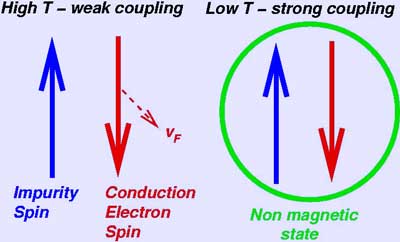
Definition of the Kondo Problem The Kondo problem represents a fundamental challenge in condensed matter physics, focusing on the unusual behavior of magnetic impurities embedded within metallic hosts. It explores how localized magnetic moments interact with the sea of conduction electrons, leading to unexpected physical phenomena. This problem is pivotal in understanding many-body interactions and […]

Read More →

What are topological semimetals?

Definition of Topological Semimetals Topological semimetals are an intriguing class of materials situated at the intersection of condensed matter physics, quantum mechanics, and materials science. Unlike conventional semiconductors, these materials exhibit partially filled conduction and valence bands, allowing electrons to move between them with minimal energy input. The incorporation of topological principles reveals that certain […]

Read More →

Why the World Runs on Condensed Matter—and You Probably Didn’t Notice

Definition of Condensed Matter Condensed matter refers to a broad category of physical states primarily encompassing solids and liquids, distinguished by the close proximity and interactions of their constituent particles. Unlike gases or plasmas, condensed matter exhibits collective behaviors arising from the dense arrangement of atoms or molecules, leading to complex and often emergent phenomena […]

Read More →

Why do we need to study condensed matter?

Definition of Condensed Matter Condensed matter encompasses states of matter characterized by large assemblies of atoms, molecules, or particles arranged in complex structures such as lattices or other material frameworks. This field primarily investigates solids and liquids, exploring their physical properties and behaviors. Condensed matter physics serves as a bridge between microscopic quantum phenomena and […]

Read More →

In layman’s terms what is ‘condensed matter physics’?

Definition of Condensed Matter Physics Condensed matter physics is a vast and vital branch of physics dedicated to studying the diverse behaviors and properties of matter in solid and liquid states. It integrates principles from quantum mechanics, statistical mechanics, and materials science to explain how matter behaves at microscopic and macroscopic scales. This field investigates […]

Read More →

Solid State Physics vs Condensed Matter Physics: Are They the Same?

Definition and Scope Solid state physics and condensed matter physics are closely related branches of physics that study the properties and behaviors of matter, yet they differ in scope and focus. Solid state physics primarily concentrates on the physical characteristics of solid materials, especially crystalline solids, examining their atomic arrangements, electronic structures, and thermal properties. […]

Read More →

Condensed Matter Physics Explained in Plain English (No Jargon Required)

Definition of Condensed Matter Physics Condensed matter physics is a broad and intriguing branch of physics dedicated to studying the physical properties and behaviors of matter in its solid and liquid states. This field investigates how atoms, molecules, and ions, when densely packed, interact to produce complex phenomena that cannot be explained by examining individual […]

Read More →

What is the Kondo problem in condensed matter physics?

Definition of the Kondo Problem The Kondo problem is a complex and intriguing phenomenon in condensed matter physics that arises from the interaction between localized magnetic moments-often due to impurity atoms-and conduction electrons within a metallic host. This interaction, though seemingly straightforward, leads to a variety of subtle and rich physical effects, making the Kondo […]

Read More →