
Short Answer
Definition of Black Holes
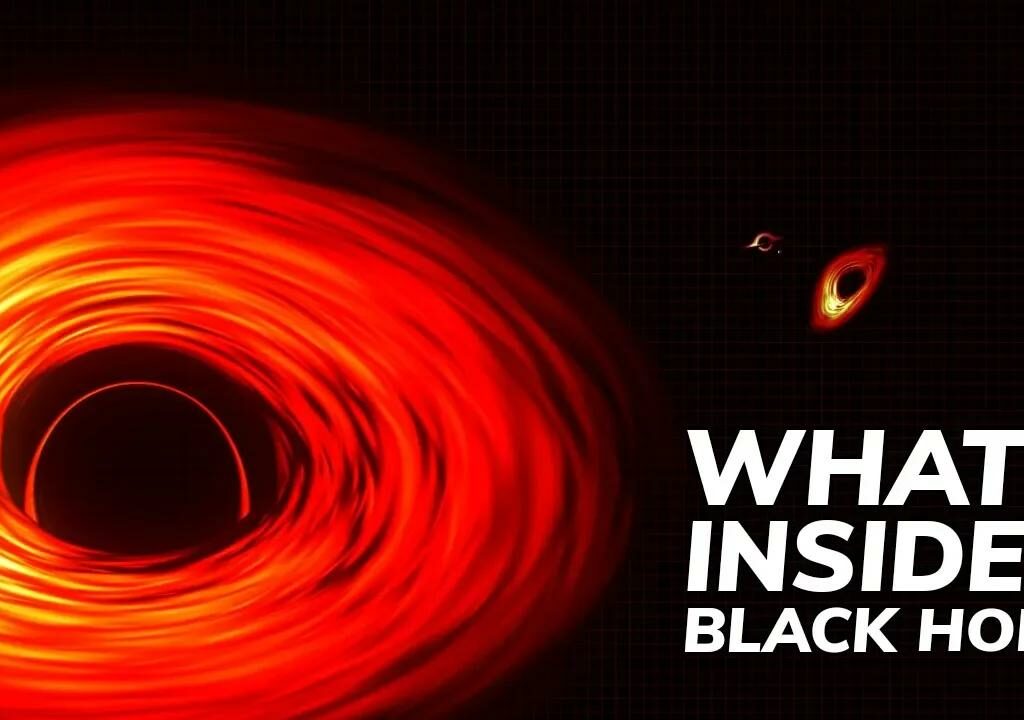
Black holes are extraordinary cosmic phenomena characterized by gravitational fields so intense that nothing, not even light, can escape their grasp. These enigmatic objects have fascinated scientists and the public alike for decades, representing regions in space where conventional physics reaches its limits. At their core, black holes contain a singularity-a point of infinite density-surrounded by an event horizon, the boundary beyond which escape is impossible.
- Event Horizon:
The invisible boundary around a black hole marking the point of no return. - Singularity:
A theoretical point at the center of a black hole where density becomes infinite and known physical laws cease to apply.
Fundamental Nature and Structure
At the heart of a black hole lies a region where gravity dominates to such an extent that it warps the fabric of spacetime itself. This distortion creates the event horizon, beyond which all matter and radiation are inexorably drawn inward toward the singularity. From an external viewpoint, black holes appear as dark voids against the luminous backdrop of stars, but their interiors remain shrouded in mystery.
Einstein’s general theory of relativity predicts the existence of singularities within black holes, describing them as points of zero volume and infinite density. However, this theory does not provide a complete picture of the physical conditions inside, leaving many questions unanswered and prompting ongoing scientific inquiry.
Transformation of Space and Time Inside Black Holes
One of the most intriguing aspects of black holes is the radical alteration of the nature of space and time within their boundaries. Unlike our everyday experience where time flows forward and space is navigable, inside a black hole these roles reverse. Time behaves like a spatial dimension, while space takes on characteristics akin to time. This inversion means that moving toward the singularity is as inevitable as the passage of time itself, making escape impossible.
Quantum Mechanics and the Singularity Paradox
The intersection of quantum mechanics and general relativity inside black holes presents a profound theoretical conflict. While relativity predicts an infinite-density singularity, quantum theory argues that such infinities are physically unrealistic. This contradiction has led to hypotheses suggesting that quantum gravitational effects could prevent the formation of a true singularity, instead creating a novel quantum state within the black hole.
Planck Star Hypothesis
One such theoretical model is the concept of a “Planck star,” a phase where the collapsing matter reaches an equilibrium between gravitational forces and quantum repulsion. This balance could halt the collapse before a classical singularity forms, offering a potential bridge between quantum mechanics and gravity and opening new avenues for understanding black hole interiors.
Extreme Gravitational Effects: Tidal Forces
As matter approaches the singularity, it experiences intense gravitational gradients known as tidal forces. These forces stretch and compress objects in a process colloquially termed “spaghettification,” where matter is elongated and distorted to extreme degrees. This phenomenon exemplifies the extraordinary physical conditions near a black hole’s core, fundamentally altering the nature of matter.
The Information Paradox and Its Implications
Black holes also raise critical questions about the fate of information. Classical physics suggests that information entering a black hole is lost forever, contradicting quantum mechanics’ principle that information cannot be destroyed. This conflict, known as the information paradox, has inspired various theoretical solutions.
- Holographic Principle:
Proposes that all information swallowed by a black hole is encoded on its event horizon, preserving it in a transformed form rather than destroying it.
Scientific and Philosophical Significance
Black holes challenge our understanding of reality, information, and the fundamental laws governing the universe. They represent both an ultimate endpoint for matter and energy and a frontier for new physics, inspiring philosophical reflection and scientific exploration. Their study pushes the boundaries of knowledge, inviting us to reconsider the nature of existence itself.
Advancements in Black Hole Observation
Recent technological breakthroughs, such as the Event Horizon Telescope and gravitational wave observatories, have begun to provide empirical insights into black holes. These tools allow scientists to test theoretical predictions and deepen our understanding of black hole properties, transforming them from mere theoretical constructs into observable astrophysical laboratories.
Conclusion: The Enduring Mystery of Black Holes
Far from being simple cosmic vacuums, black holes are complex arenas where spacetime, matter, and quantum phenomena interact in extraordinary ways. Each discovery reveals new layers of complexity, suggesting a grand cosmic narrative that we are only beginning to unravel. The allure of black holes lies in their profound mystery, driving humanity’s quest to comprehend the universe and our place within it.


Leave a Reply